
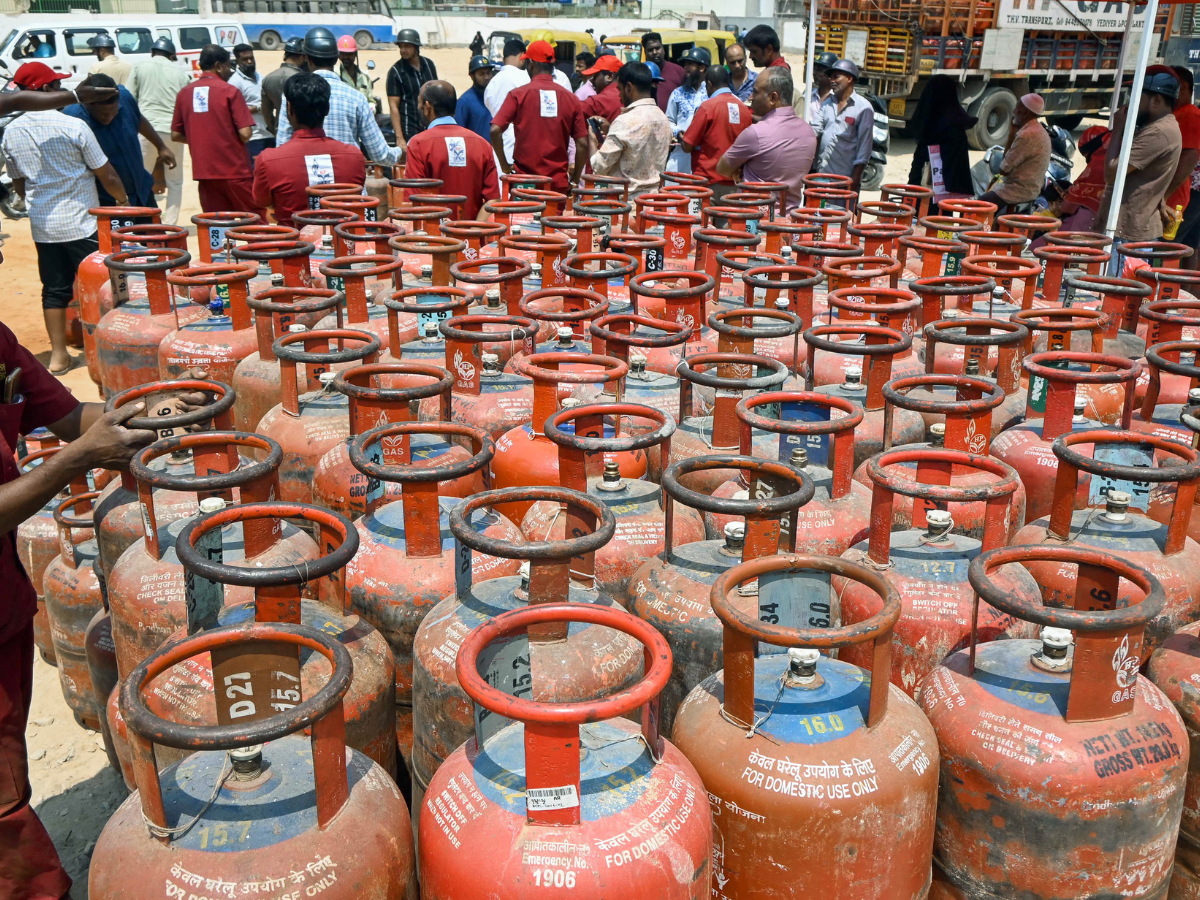

The Ministry of Petroleum and Natural Gas announced that the Centre has increased gas allocations to states to 50% of pre-crisis levels, with an additional 20% supply starting March 23.
Petroleum Secretary Neeraj Mittal stated that this enhanced allocation will prioritize key sectors, including food supply and public welfare, ensuring essential services and industries receive adequate gas during the ongoing supply challenges.
“I wish to now inform you that w.e.f 23.3.26 till further notification, another 20% is being allotted to the State, which would take the overall allocation to 50% of the pre-crisis level. The additional allocation of 20% shall be given on priority to the following sectors: restaurants, dhabas, hotels, industrial canteens, food processing/dairy, subsidised canteens/outlets run by state governments or local bodies for food, community kitchens, 5kg FTL for migrant labourers, along with measures to ensure no diversion,” the letter read.
From March 23, the additional 20 per cent allocation will bring the overall supply to 50 per cent of pre-crisis levels. Priority will be given to restaurants, dhabas, hotels, industrial canteens, food processing and dairy units, subsidised canteens or outlets run by state governments or local bodies, community kitchens, and 5 kg free trade LPG for migrant labourers.
“The additional allocation of 20% shall be given on priority to the following sectors: restaurants, dhabas, hotels, industrial canteen, food processing/dairy, subsidised canteens/outlets run by state governments or local bodies for food, community kitchens, 5kg FTL for migrant labourers along with measures to ensure no diversion,” the letter said.
The Ministry emphasised that measures will be implemented to prevent diversion of supply. All industrial and commercial LPG consumers must register with oil marketing companies (OMCs) to be eligible for allocation under the 50 per cent supply. OMCs will maintain records of each consumer, including sector, LPG end-use, and annual LPG requirements.
“All commercial/industrial LPG consumers shall have to register with OMCs before they can be eligible to be allotted any commercial LPG from the overall 50% allocation. OMCs shall register such customers and keep a record of the sector they operate in the end-use of LPG and the annual weight requirement of LPG of that customer in the respective database(s),” the letter read.
Furthermore, these consumers are required to apply for piped natural gas connections with the respective city gas distribution entity and take all necessary steps to be ready for PNG supply before they can receive commercial LPG under the overall 50 per cent allocation.
“All commercial/industrial LPG consumers shall have to apply for PNG with the City Gas Distribution entity in their city as applicable and take all actions that will take them to a state of readiness for receiving PNG before they can be eligible to be allotted any commercial LPG from the overall 50% allocation,” said the letter.
The Ministry of Petroleum and Natural Gas on Friday said that panic booking of LPG cylinders has declined significantly, with only 55 lakh bookings reported on Thursday.
The government held an inter-ministerial briefing today to update on the current situation regarding the availability of essential commodities, particularly fuel and gas, amidst the ongoing geopolitical tensions.
Speaking at an Inter-Ministerial briefing today, Sujata Sharma, Joint Secretary, Ministry of Petroleum and Natural Gas, highlighted an improvement in the LPG crisis, saying, “There is no panic booking now. Only 55 lakh LPG booking reported yesterday.”
Reassuring consumers, Sharma also said that there is no shortage of supply across the country. “There is adequate stock available, no outlets are dry out,” she stated.
However, she acknowledged that concerns still remain.”LPG issue is still worrisome,” she said.
Highlighting a shift in consumer behaviour, Sharma noted that many users are moving to piped gas. “7.5 lakh LPG customers shifted to PNG,” she said.
(With ANI Inputs)
Sofia Babu Chacko is a journalist with over five years of experience reporting on Indian politics, crime, human rights, gender issues, and stories about marginalized communities. She believes journalism plays a crucial role in amplifying unheard voices and bringing attention to issues that truly matter. Sofia has contributed articles to The New Indian Express, Youth Ki Awaaz, and Maktoob Media. She is also a recipient of the 2025 Laadli Media Awards for gender sensitivity. Beyond the newsroom, she is a music enthusiast who enjoys singing. Connect with Sofia on X: https://x.com/SBCism




