
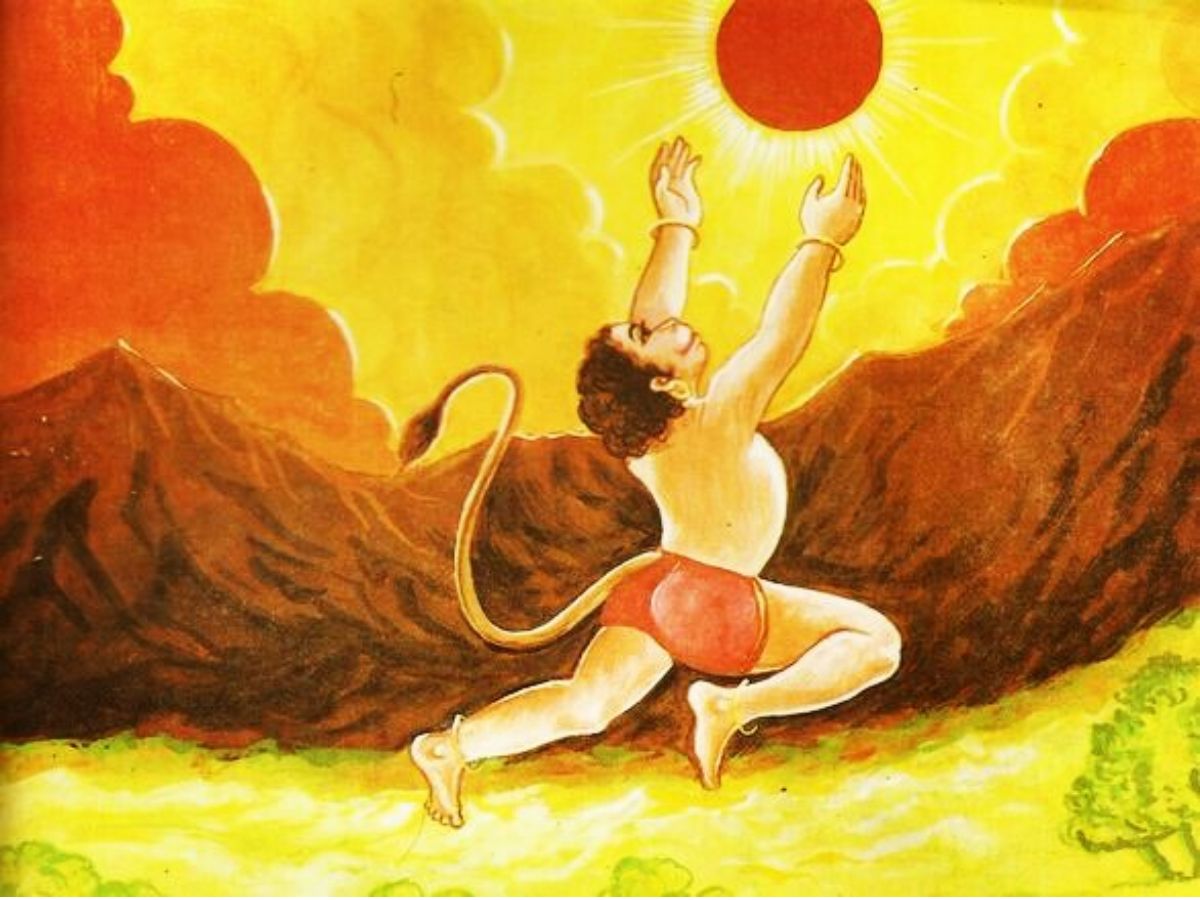

Hanuman Chalisa, composed by the 16th-century saint Gosvami Tulsidas, is a revered prayer in praise of Lord Hanuman (An incarnation of Lord Shiva). Among its many verses, one line intriguingly references the distance Hanuman jumped to reach the Sun, metaphorically described as a sweet fruit. Scholars and devotees alike have been fascinated by this verse, suggesting it encodes an accurate measurement of the distance between the Sun and Earth, long before modern science established it.
The Timeless Wisdom of Tulsidas
Historically, Greek astronomers such as Archimedes, Hipparchus, and Ptolemy made early attempts to calculate the Sun-Earth distance but their estimates varied widely and were often too low. It was only after Johannes Kepler’s 17th-century planetary laws and the invention of the telescope that more accurate calculations became possible. Today, modern science places the average distance at about 149 million kilometers (92 million miles), with Earth’s elliptical orbit causing slight variations.
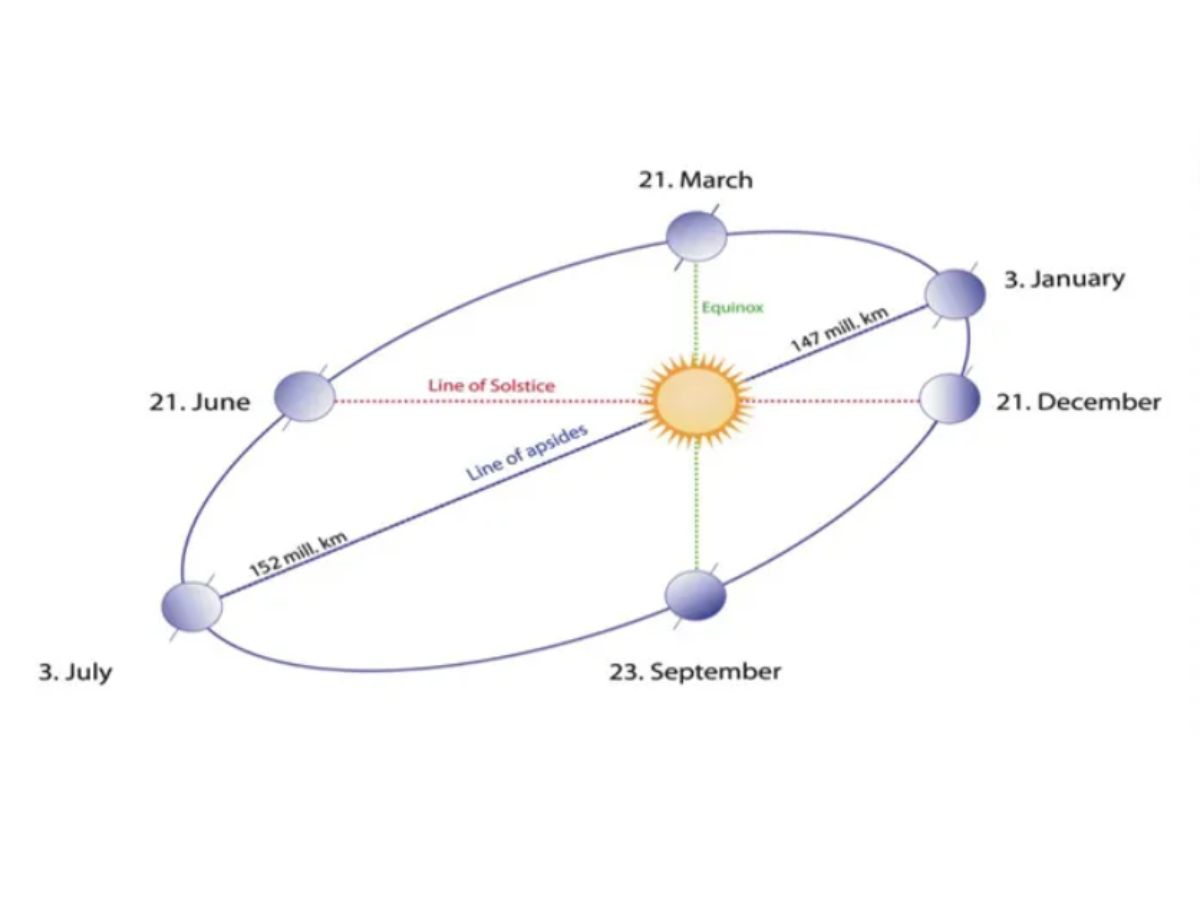
The Earth’s orbit around the Sun is not a perfect circle but an ellipse, causing the distance between the two to vary throughout the year. At its closest point, called perihelion (early January), Earth is about 91 million miles (147 million kilometers) away. At its farthest, known as aphelion (early July), the distance stretches to roughly 94.5 million miles (152 million kilometers). Remarkably, Tulsidas, who lived in the 16th century, provided an estimation of this distance that closely matches measurements made by 20th-century astronomers, an astonishing feat given the era.
Decoding the Hanuman Chalisa Verse
The key line from the Hanuman Chalisa reads:
yuga-sahasra-yojana para bhanu
leelyo tahi madhura phala janu
Here, “yuga-sahasra-yojana” can be broken down: a “yuga” in Vedic time is 12,000 divine years, and a “yojana” is an ancient measure of distance roughly equal to 8 miles. Multiplying 12,000 by 1,000 yojanas gives about 96 million miles (153.6 million kilometers), an astonishingly close approximation of the modern average Sun-Earth distance.
Bridging Myth and Science
This revelation highlights the incredible foresight embedded in ancient texts like the Hanuman Chalisa. While some assumptions were made regarding exact measurements (like the length of a yojana), the near accuracy of the calculation is remarkable. It suggests that Indian scholars of the 16th century possessed sophisticated knowledge of astronomy, rivaling and perhaps surpassing contemporary Western efforts of the time. The blend of devotion, mythology, and science continues to captivate and inspire seekers of knowledge worldwide.
Also Read: Rahul Gandhi Kissed In Public Amid Bike Yatra In Bihar, Slapped, Watch
Karan Singh Rathod is a dedicated sports journalist known for his sharp attention to detail and flair for storytelling. With over a year of experience in writing and editorial work, he blends thorough research with compelling narratives to deliver engaging sports content. A passionate follower of football and cricket, he starts his mornings with a newspaper to stay updated with sports, fashion, and current affairs. Outside of journalism, Karan enjoys traveling and discovering new destinations.




