

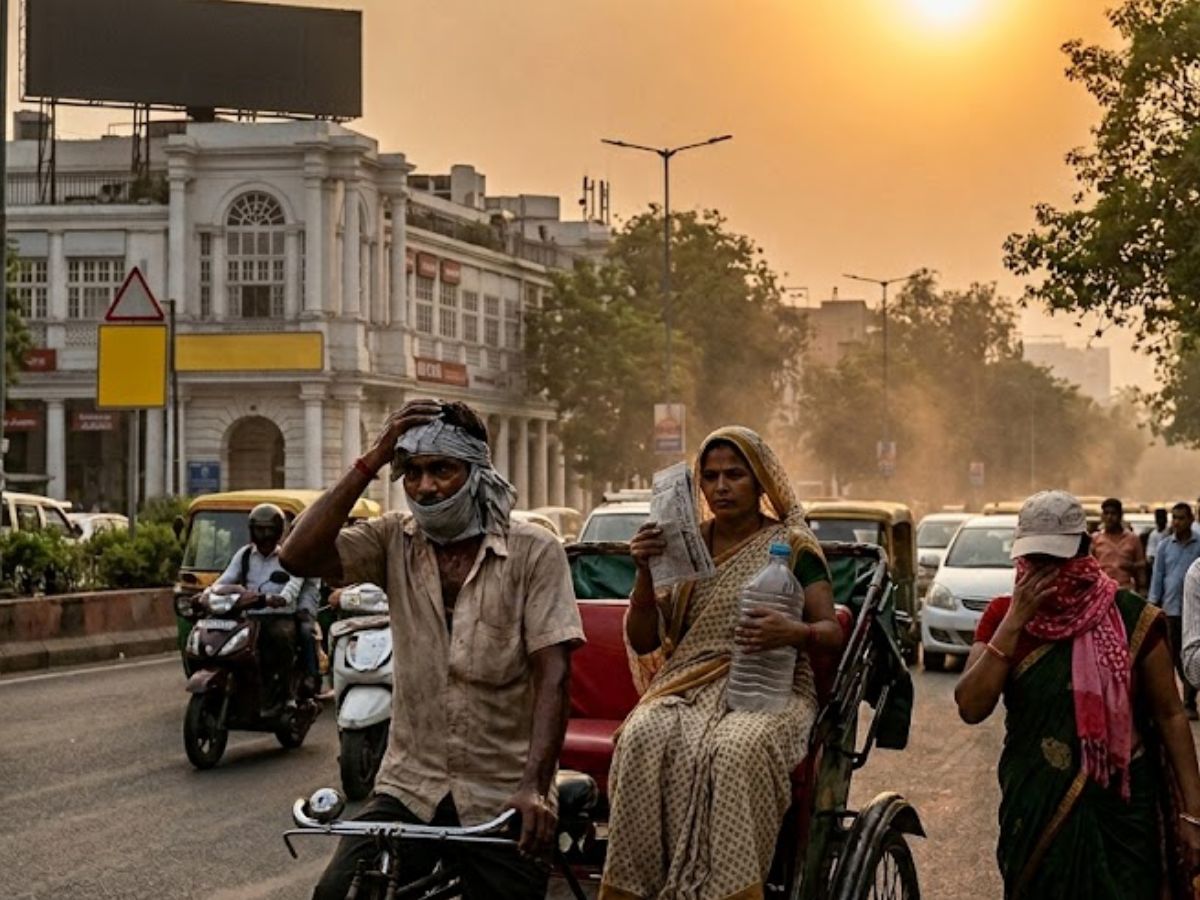
Heatwave ALERT: As summer sets in, the India Meteorological Department has warned that large parts of the country may face more heatwave days than usual between April and June. In several regions, temperatures have already climbed to 42 to 45°C, raising concerns of a harsh season ahead.
But experts say focusing only on temperature can be misleading. Humidity, which is often overlooked, could make conditions far more severe and harder for the body to handle.
Heatwave ALERT: Why Humid Heat Feels More Intense
The human body cools itself through sweating. When sweat evaporates, it helps release heat and keeps body temperature under control. This works better in dry areas like parts of Delhi or Rajasthan, where the air allows sweat to evaporate quickly.
In humid conditions, however, the air is already filled with moisture. This slows down evaporation, making it harder for the body to cool itself. As a result, heat builds up inside the body, increasing the risk of health problems such as high blood pressure, faster heart rate, and in extreme cases, organ damage.
Heatwave ALERT: Understanding The ‘Wet-Bulb’ Factor
To measure how heat and humidity affect the human body together, scientists use a concept called wet-bulb temperature. It reflects how difficult it is for the body to cool down in certain conditions.
Earlier, experts believed that humans could tolerate a wet-bulb temperature of up to 35°C. Beyond this, the body would struggle to cool itself effectively.
However, new findings from the Penn State HEAT Project, led by W Larry Kenney, suggest the danger begins earlier. The study found that even healthy young adults start losing the ability to regulate body temperature at around 31°C wet-bulb temperature.
This means that conditions like 38°C with 60% humidity could already push the human body beyond safe limits.
Heatwave ALERT: India’s Growing Risk From Moist Heatwaves
Research by Akshay Deoras from the University of Reading points out that moist heatwaves in India often go unnoticed compared to dry heat. Yet, they can be more dangerous because people may not realise the risk until it is too late.
India’s geography makes it particularly vulnerable. Studies by the IMD show that wet-bulb temperatures have been rising, especially in coastal regions. Even the monsoon can add to the risk by increasing moisture levels in the air.
Projections suggest that by the end of the century, nearly 70% of India’s population could be exposed to wet-bulb temperatures of 32°C or higher. Around 2% may face levels above 35°C, which are considered extremely dangerous.
Heatwave ALERT: Experts Warn Of A Tough Summer Ahead
Climate experts believe the summer of 2026 could be more intense than the extreme heat seen in recent years. Intergovernmental Panel on Climate Change author Anjal Prakash has cautioned that rising humidity will make the heat feel much worse than what thermometers show.
According to him, a temperature of 40°C can feel closer to 50°C in humid conditions. In such scenarios, living without cooling systems like air conditioners could become increasingly difficult.
Experts are urging people to pay attention not just to temperature forecasts but also to humidity levels, as both together determine how dangerous the heat can be.





