
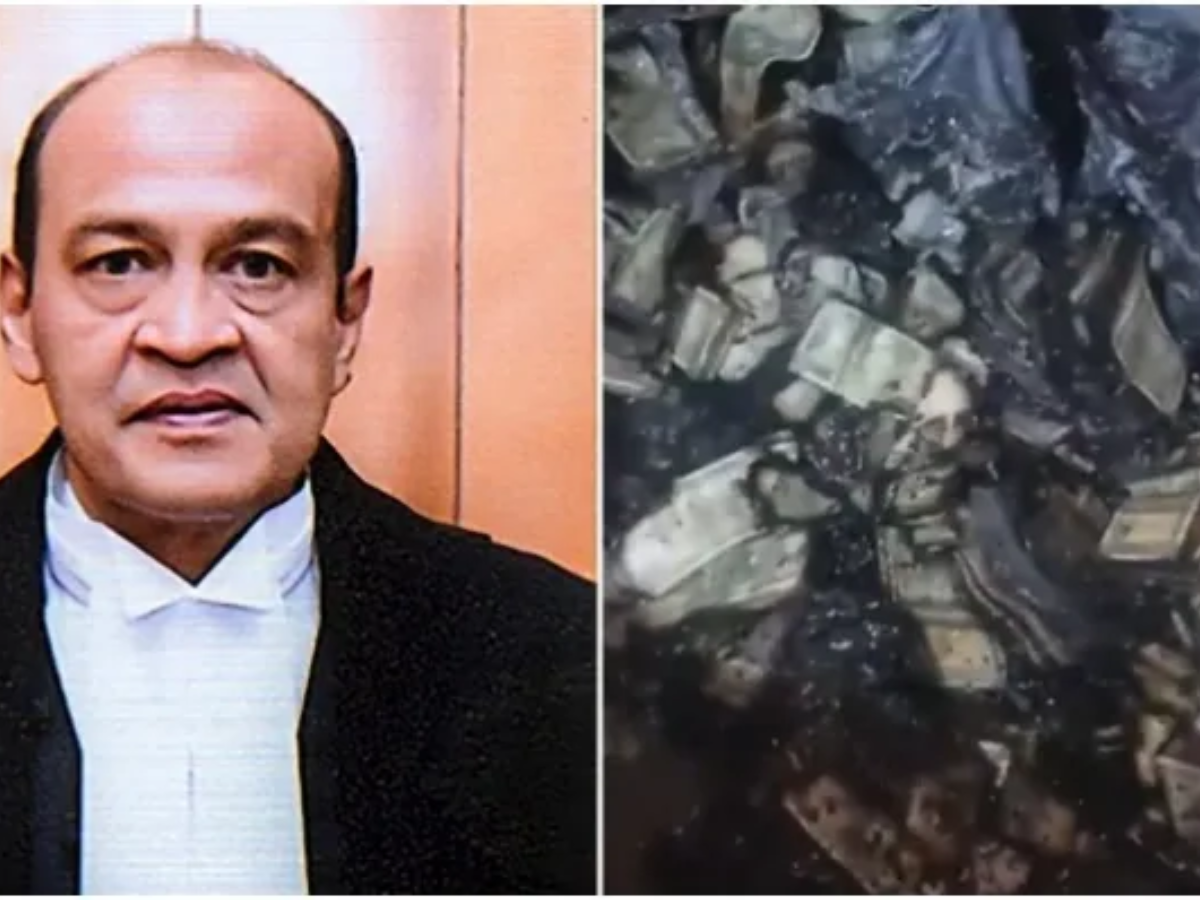

Justice Yashwant Varma, who was caught up in the controversy after a huge cache of burnt currency notes was discovered at his official residence on March 14 this year, is on the verge of his impeachment. The Central Government is planning to bring a motion to remove him during the ongoing Monsoon session of Parliament.
Varma, then a judge of the Delhi High Court, was transferred to the Allahabad High Court on March 28, following the recommendation of the Supreme Court Collegium. The apex court asked the Chief Justice of Allahabad High Court not to assign any judicial work to him when he assumes charge as a Judge of the High Court.
Taking cognisance of the issue, Chief Justice of India Sanjiv Khanna formed a three-member in-house inquiry committee, led by Chief Justice Sheel Nagu of the Punjab and Haryana High Court. On May 3, 2025, the committee submitted its report to the CJI, recommending his removal from office. But he refused to step down from service.
Government Initiated Impeachment Process To Remove Justice Varma
After his refusal, the Government initiated the impeachment process to remove him. At least 145 Lok Sabha and 63 Rajya Sabha MPs have submitted separate notices in their respective Houses on July 21, the first day of the Monsoon session.
Parliamentary proceedings are likely to be commenced as per the Judges’ Inquiry Act, 1968. Union Minister Kiren Rijiju already said the motion has received support from all parties, even the Congress and the INDIA bloc, adding that “Graft in the judiciary is concerning.”
As the news that the Government is planning to impeach Justice Varma on corruption charges came out, it sparked a fierce backlash in the legal fraternity. It created a significant tension among first-generation lawyers who are trying hard to make their way in this highly competitive field where winning the case is considered all about.
To understand the mindset of first-generation lawyers, we talked to some of them. We also tried to know how they see the alleged discovery of burnt current notes at the residence of a Delhi High Court’s judge and his removal process.
How First-Generation Lawyers Reacted To The Trail Of Events
One such lawyer, Advocate Tushar Garg, practising primarily in Delhi, said, “Justice Yashwant Varma’s controversy deeply unsettled me. It struck at the core.” He said that many of us entered the legal field to uphold justice, integrity, and the rule of law, which we studied at the law colleges.
Garg pressed demands to reinforce transparency, external judicial oversight, and reforms. He added, “Yet, even amidst this crisis, I see a crucial opportunity, a call to reassert ethical practice and push for lasting institutional accountability.”
Another first-generation lawyer, Shashank Narayen, who is practising at the Supreme Court, looks at the whole situation with a sceptical eye. He said, “The incident shook the very foundation of what we were taught in law school: that the judiciary is sacrosanct, that justice is blind, and that the robe of a judge symbolises impartiality, integrity, and unwavering commitment to the Constitution.”
This is more than a personal setback; it is a collective crisis of faith, he said, adding that such revelations are not just shocking—they are soul-crushing. “We cannot afford to let the rot deepen under the veil of institutional prestige or procedural delays. As custodians of the law, even in our early careers, we must demand transparency, accountability, and a cleansing of the system—not out of cynicism, but because we still dare to hope that law can be a noble profession and the judiciary a temple of justice, “Narayen further said.
However, Adv Rajat, who is also pursuing LL.M at the University of Delhi, took a different stance and found the impeachment process reasonable and essential for the independent judicial system of the nation. He said judges denote a sense of responsibility in society. “Society perceives judges as impartial, reasonable, fair, equitable and reliable beings and grants them high prestige in the society, “he added.
Ethical Explanation Of The Incident And Message For 1st-generation Law Practitioners
Explaining the ethical aspect behind the alleged discovery of charred notes that led to Justice Varma’s impeachment, Bhagwan Mishra, who teaches Ethics and Integrity at an IAS institute in Delhi, expressed that when the guardians of Nyaya falter, it is not the system that collapses — it is the silence of the honest that breaks it.
Refuting scepticism of the first-generation lawyers, Mishra gave a message to them and judiciary aspirants, which read, “This is your ‘rajadharma’: to rise not with entitlement, but with ethical conviction. “You were not born into robes — you are destined to dignify them. Let others inherit positions; you must inherit purpose, “he added.




