
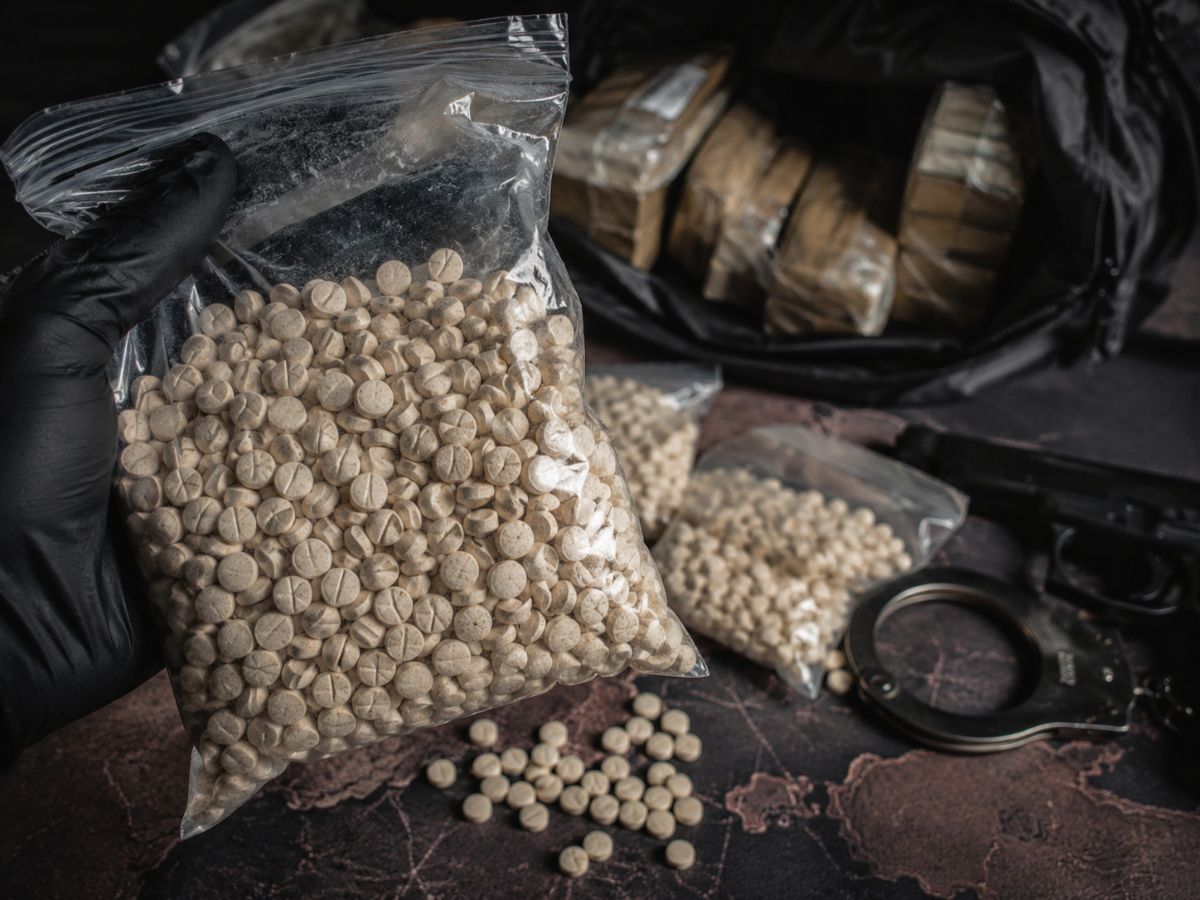
India on Friday announced its first-ever seizure of Captagon, the controversial synthetic stimulant often referred to internationally as the “Jihadi drug.” The major operation was revealed by Union Home Minister Amit Shah, who said the Narcotics Control Bureau (NCB) seized a consignment worth nearly ₹182 crore under “Operation RAGEPILL.” The drug consignment was reportedly meant for the Middle East, and a foreign national has also been arrested in connection with the case. The seizure has now drawn massive attention because Captagon has long been associated with war zones, organised crime syndicates and extremist-linked trafficking networks operating across parts of West Asia. The latest crackdown has also triggered fresh discussions over what Captagon actually is, why it became so notorious globally and why Amit Shah referred to it as a “Jihadi drug.”
Amit Shah says government will show zero tolerance against drug trafficking
Announcing the breakthrough on X, Amit Shah said the Modi government remains committed to building a “Drug-Free India” and warned traffickers against using India as a transit route for narcotics.
“Modi govt is resolved for a ‘Drug-Free India’. Glad to share that through ‘Operation RAGEPILL’, our agencies have achieved the first-ever seizure of Captagon, the so-called “Jihadi Drug”, worth ₹182 crore. The busting of the drug consignment destined for the Middle East and the arrest of a foreign national stand out as shining examples of our commitment to zero tolerance against drugs,” Shah wrote.
“I repeat we will clamp down on every gram of drugs entering India or leaving the country using our territory as the transit route. Kudos to the brave and vigilant warriors of the NCB,” he added.
What exactly is Captagon and why was it originally developed?
Captagon is the street name historically linked to Fenethylline, a synthetic stimulant drug first developed during the 1960s. The medicine was initially created to treat attention disorders and narcolepsy. However, because of its addictive nature and abuse potential, the original pharmaceutical form of Captagon was eventually banned internationally.
Today, most illegal Captagon tablets found in global drug markets are manufactured secretly in underground labs. According to investigators, these tablets often contain dangerous mixtures of amphetamine, caffeine, methamphetamine and other synthetic stimulants. The drug is especially popular in parts of West Asia and the Middle East because of its strong stimulant effects.
Why Captagon became known globally as the ‘Jihadi drug’
Captagon earned the controversial nickname “Jihadi drug” because intelligence agencies and international investigations repeatedly linked the drug’s trafficking and usage to extremist and armed groups operating in conflict-hit regions.
Officials say the stimulant effects of Captagon allegedly helped users stay awake for long periods, suppress fear and exhaustion, increase aggression and continue combat-like activity under stressful conditions. The drug can produce temporary euphoria, heightened alertness, increased confidence, impulsive behaviour and psychological dependence after repeated use.
Over the years, international agencies reportedly recovered Captagon tablets from conflict zones and areas controlled by armed groups. Authorities also believe the illegal trade generates massive profits that help finance organised criminal and extremist-linked networks.
Massive global trade turned Captagon into emerging synthetic drug threat
Due to its low manufacturing cost and huge demand, Captagon is also known in some regions as the “Poor Man’s Cocaine.” International agencies now consider the Captagon trade one of the biggest emerging synthetic drug threats in the Middle East.
The illegal trade reportedly involves secret laboratories, diverted chemicals, hawala funding, forged trade documents, maritime smuggling routes, courier chains and advanced concealment systems. Although official manufacturing stopped during the 1980s, illegal production of Captagon has continued and expanded rapidly across Europe and West Asia in recent years.
Government highlights broader anti-drug crackdown linked to global networks
The Captagon seizure comes shortly after another major anti-drug operation involving Mohammad Salim Dola, a notorious drug trafficker and alleged aide of Dawood Ibrahim. Dola was extradited to India after being arrested in Istanbul on April 25 during a joint operation involving Turkish and Indian agencies.
Amit Shah had praised the operation, saying, “Our anti-narcotics agencies have extended their claws across borders through a robust network of global agencies. Now no matter where they hide, no place is safe for drug kingpins.”
(with inputs from ANI)
Khalid Qasid is a media enthusiast with a strong interest in documentary filmmaking. He holds a Master’s degree in Convergent Journalism from AJK MCRC. He has also written extensively on esports at Sportsdunia. Currently, he covers world and general news at NewsX Digital.





