
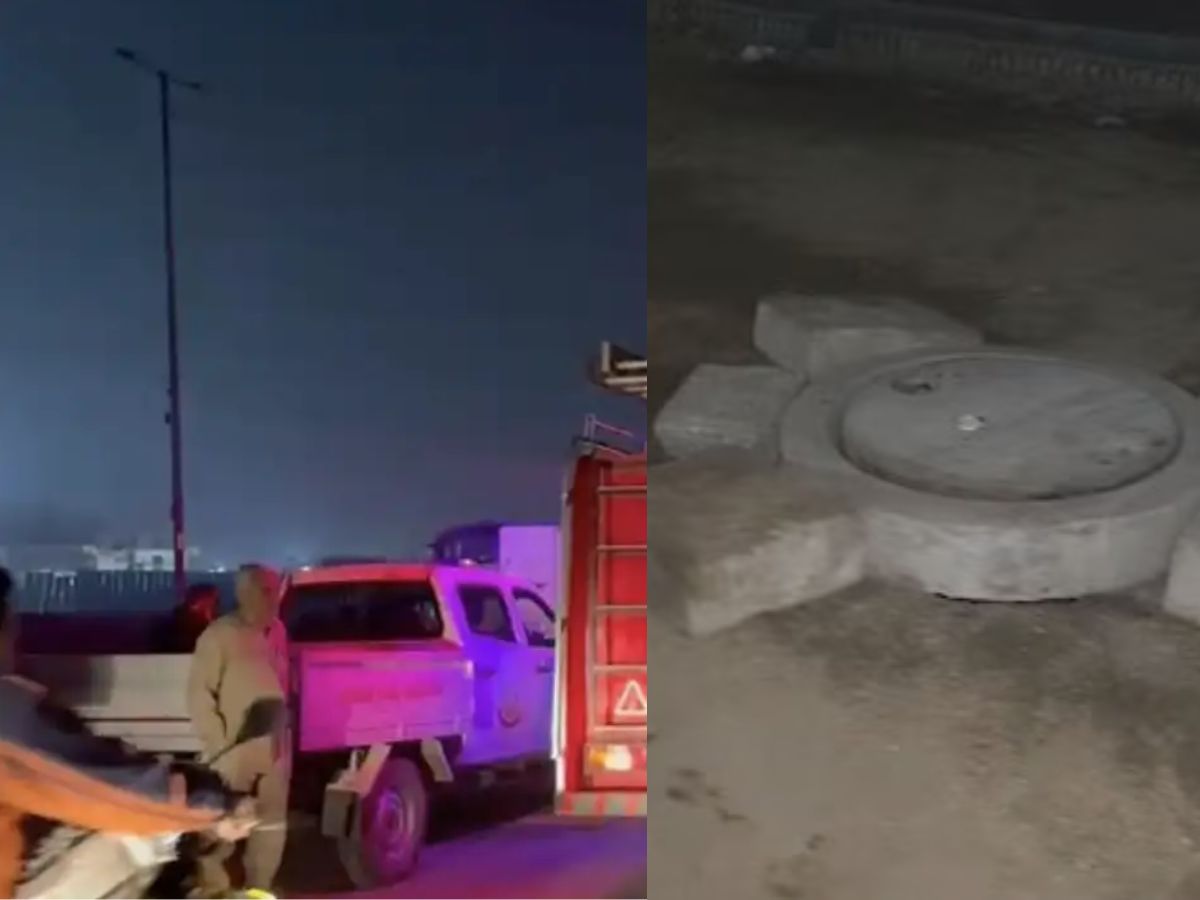

The national capital recorded its second deadly incident because city officials failed to create secure public facilities after Birju Kumar Rai died from falling into an open drain in Rohini’s Sector 32.
The fatal incident occurred on February 10, 2026, near the Mahashakti Kali Temple, which created shock throughout the city that had just suffered another catastrophe.
The 25-year-old bank employee Kamal Dhyani died from nearly identical medical conditions, which affected him in Janakpuri. The two consecutive events have demonstrated how government officials show complete indifference to their duties because unsecured excavation sites and absent manhole covers have transformed Delhi’s streets into dangerous areas that threaten the lives of both residents and commuters.
Civic Negligence and Systematic Failure
The death of Birju Kumar Rai, a laborer originally from Samastipur, Bihar, shows how citizens fail to maintain urban infrastructure.
Birju fell into the deep uncovered manhole while he walked home on Monday night, according to reports. Rescuers delayed their operation, which resulted in his body being discovered the next day. The site lacked essential safety equipment and warning signs because citizens had already reported dangers from previous incidents.
Local bodies like the DDA and Delhi Jal Board show a pattern of leaving construction sites unprotected because they consider “work in progress” to be an acceptable reason for keeping dangerous pits open to public access.
Infrastructure Safety and Urgent Accountability
The existing demand for safety in infrastructure systems together with complete responsibility from administrators has reached its highest point following these fatalities.
The Janakpuri incident, which claimed the life of Kamal Dhyani when his motorcycle plunged into a 15-foot pit, resulted in the suspension of three engineers, yet the Rohini tragedy proves that such reactive measures are insufficient. Current facts reveal a disturbing absence of reflective tapes and blinkers and nighttime lighting at these hazardous locations.
The city needs to implement a complete system that will assess all open drains and excavations across the state, together with laws that will classify all accidental deaths as criminal negligence committed by contractors and oversight officials who bear responsibility.
A recent media graduate, Bhumi Vashisht is currently making a significant contribution as a committed content writer. She brings new ideas to the media sector and is an expert at creating strategic content and captivating tales, having working in the field from past four months.




