
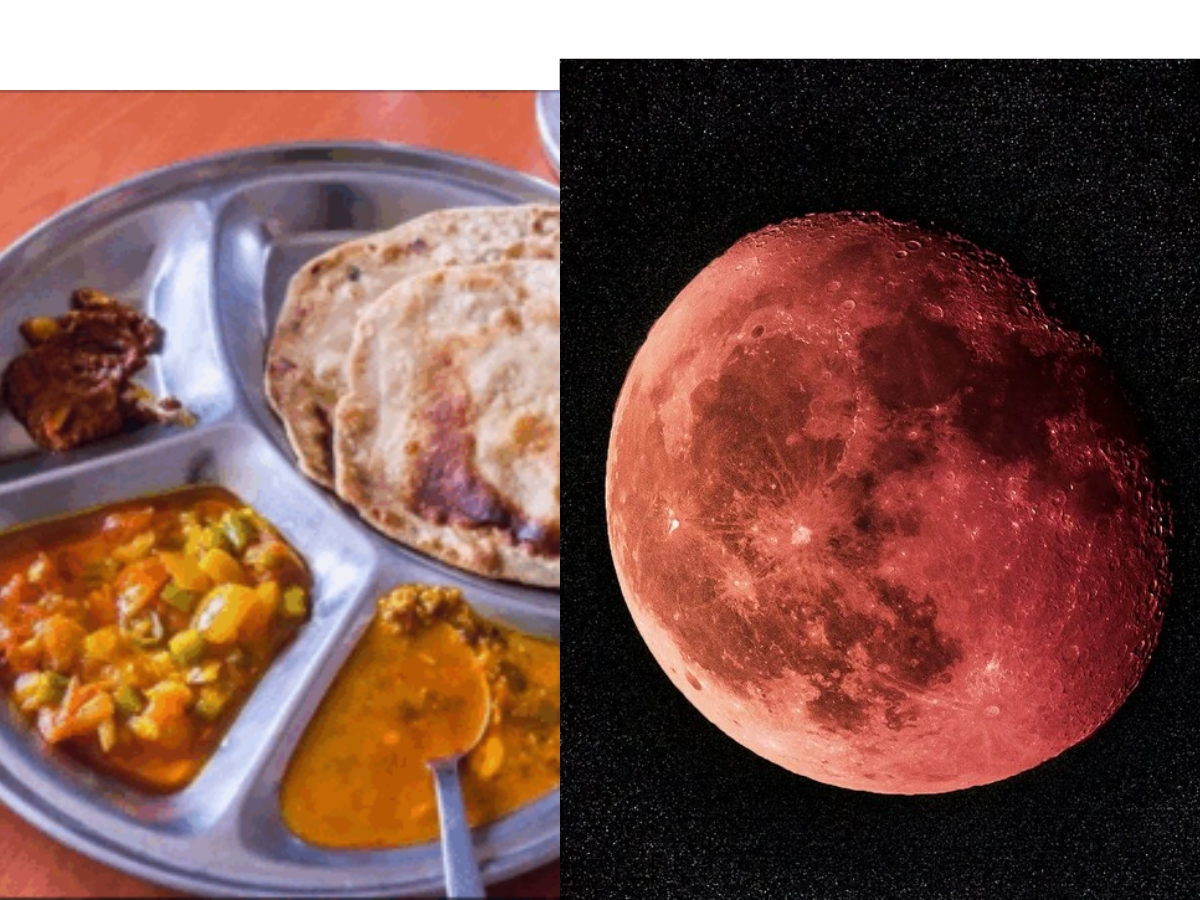

Chandra Grahan, or what is called a lunar eclipse, is here. Across cultural and religious lines, people have associated different beliefs with this event. Certain things are barred during this short period. The most important question that we usually come across during this period is whether it is safe to eat or not. In our homes, we have been advised to avoid eating during this time. India has followed this tradition for centuries. Even cooking is avoided during Chandra Grahan (lunar eclipse). Families usually eat their meals hours before the celestial event kicks in. While modern science has a different approach to this issue, it is our religious and cultural beliefs that influence the practice.
The Sutak Period and Household Practices
In many households, eating is completed before the Sutak period, which starts nine hours before a lunar eclipse. Sutak, according to popular belief, is a time period during which the environment remains impure. Hence, the religious scholars advise against cooking or eating during this time
Families put tulsi leaves in food and water during this time with the belief that it would protect from impurity.
Also Read: Lunar Eclipse 2025: What Could Happen To Vampires During A Blood Moon?
Spiritual, Religous Beliefs Around Eating During Chandra Grahan
According to various religious texts, cosmic energies are disturbed during the eclipse. These texts claim that the body’s natural balance is disrupted if one eats during this time.
This is the reason people fast or consume very little amount of food till the eclipse ends. It is advised to spend the eclipse time in meditation and self-reflection rather than consuming food.
The Scientific Perspective on Chandra Grahan
Science, on the flip side, has a contrarian viewpoint on this issue. According to science, there is no relation between an eclipse and consuming food. Scientific experts assert that such claims flow from the cultural and religious beliefs and do not have a physical necessity.
However, even health specialists advise eating late at night. The reason is that it affects digestion. Sociologists believe that this reason may be behind the custom of fasting during the lunar eclipse.
Health and Pregnancy-Related Beliefs During Chandra Grahan
The most common thing one hears during a lunar or solar eclipse is that pregnant women should not indulge in certain activities during this period. They are advised to exercise extra caution, like staying inside, avoiding eating, or touching sharp objects. Science, again, in these matters has a contrarian view. Such restrictions are not supported by science and hence have been ingrained due to cultural and symbolic practices.
Also Read: Lunar Eclipse 2025: Is It Safe To Travel During The Eclipse?
Zubair Amin is a Senior Journalist at NewsX with over seven years of experience in reporting and editorial work. He has written for leading national and international publications, including Foreign Policy Magazine, Al Jazeera, The Economic Times, The Indian Express, The Wire, Article 14, Mongabay, News9, among others. His primary focus is on international affairs, with a strong interest in US politics and policy. He also writes on West Asia, Indian polity, and constitutional issues. Zubair tweets at zubaiyr.amin




