
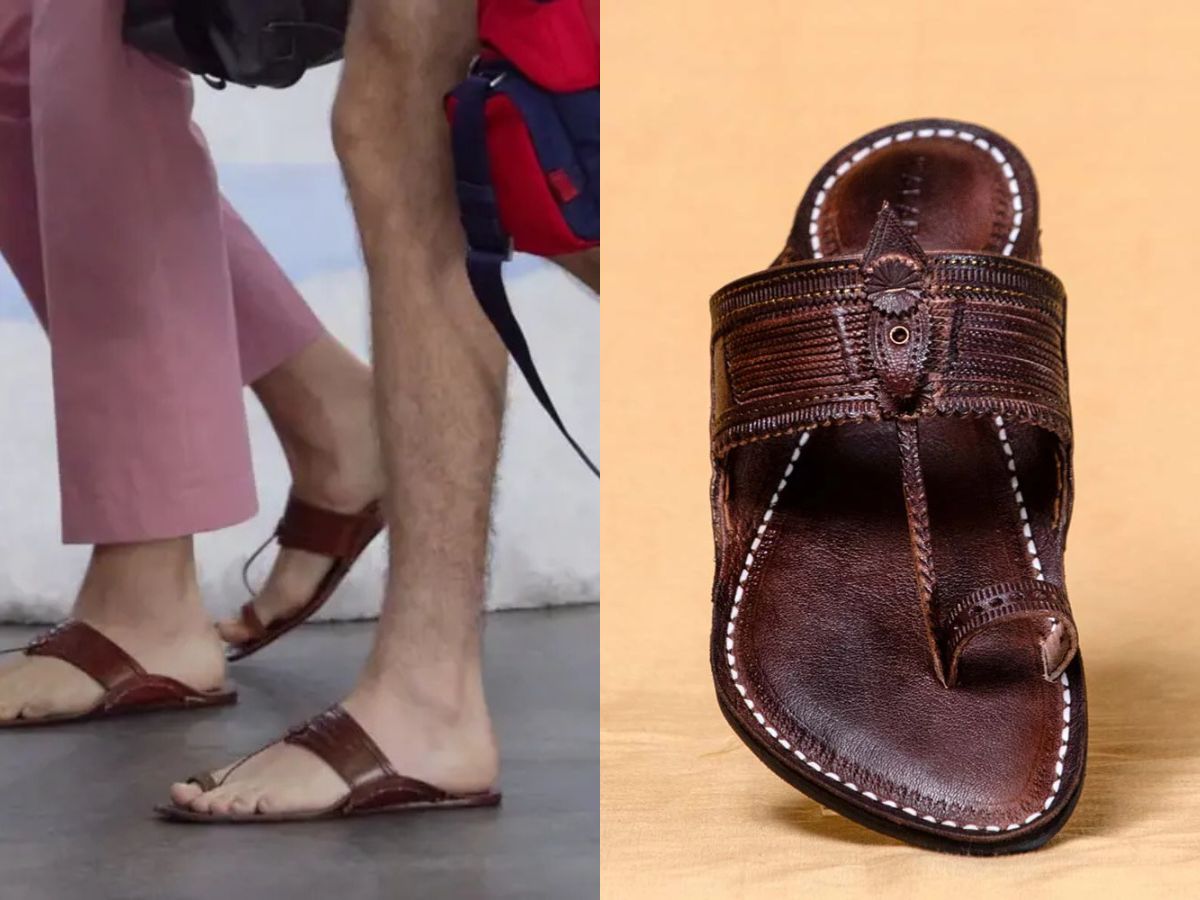

Following the release of a line of sandals at its Spring/Summer 2026 menswear show in Milan that remarkably resemble India’s traditional Kolhapuri chappals, luxury fashion brand Prada has come under fire.
The Italian fashion brand included these leather-strapped, open-toe sandals in their latest collection, but they made no mention of their cultural significance or place of origin.
Indian audiences quickly recognized the hand-finished leather and toe-loop as a virtual replica of the Kolhapuri chappal, a footwear design that dates back a century and is indigenous to Maharashtra.
On the catwalk, the resemblance continued. Even the show invitations featured leather ring-shaped inserts that resembled Kolhapuri designs’ toe rings almost exactly.
Outrage Over Omission
Indian social media quickly condemned Prada for not giving credit where credit was due. Most accused the brand of cultural appropriation and taking indigenous work and selling it as high-end fashion without adequate recognition and compensation.
“Prada appropriating Kolhapuri chappals as high-end fashion and ignoring the generations-long artisans who have kept this tradition going,” one user posted.
Many also compared it to previous occasions when Western companies had taken traditional Indian wear such as dupattas or sarees and repackaged them as scarves or gowns without any reference to their Indian origins.
One Person on the Comment Said, “Oh look! First copy Kolhapuri chappals 😂😂😂”
Another Commented, “Chappal chor😂”
The Legacy of Kolhapuri Chappals
Kolhapuri chappals are not just shoes—they are an embodiment of India’s rich heritage of artisans. Crafted from processed leather and traditionally hand-woven, these sandals won Geographical Indication (GI) tag status in 2019, cementing their cultural identity.
Though they have a rich history and cultural significance, the people who create these items rarely get any recognition or compensation.
A Larger Conversation on Cultural Appropriation
This event contributes to an expanding international dialogue regarding the moral obligations of fashion brands.
Inasmuch as taking inspiration from various cultures is not necessarily evil, not giving credit where credit is due or compensating the source communities has the potential to reinforce systemic disparities in the fashion world.
While Prada’s sandals make global headlines, the question lingers: When will the world of fashion finally respect and empower the traditions it adopts?
ALSO READ: From Viral Sensation To Corporate Uniform: The Rise Of The Tobie Dress At Anthropologie




