
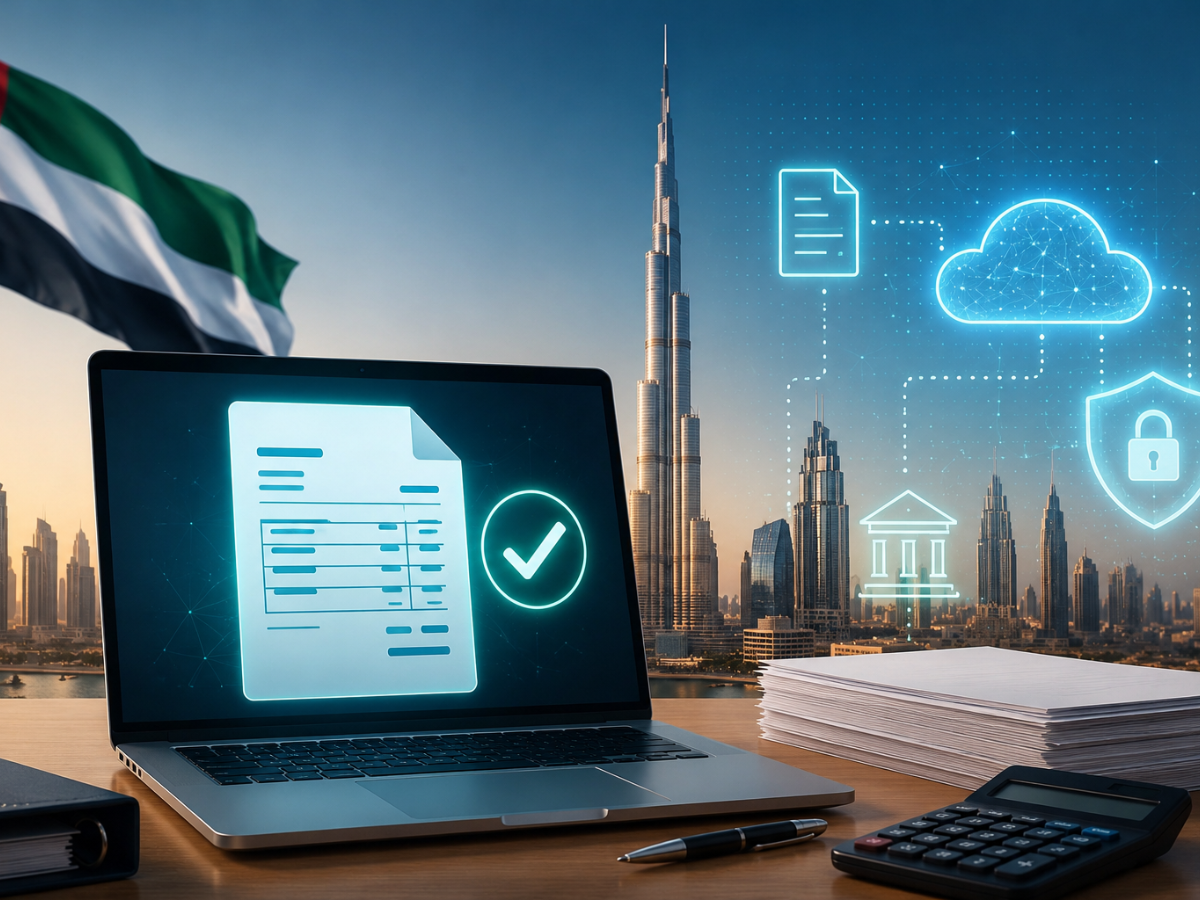
The government of the United Arab Emirates has not said anything about extending the deadlines for the einvoicing rollout that is coming up. The Ministry of Finance and the Federal Tax Authority are still going to launch the invoicing system for the United Arab Emirates in phases. This means that the part of the process that is not required is going to start on July 1 2026. Big companies that make than AED 50 million per year will still have to find an Accredited Service Provider by July 31 2026. Then these big companies will have to use the einvoicing system starting from January 1 2027.
Is There Any United Arab Emirates E-Invoicing Deadline Extension in 2026?
As of May 2026 the government of the United Arab Emirates has not officially said that the deadlines are going to be extended. The Ministry of Finance has given some guidance. Published some technical information that says the timeline for implementing the e-invoicing system is still the same.
People who are experts in this field say that a lot of companies were hoping to have time to get ready because they are having some technical problems and they need to upgrade their systems and work with Accredited Service Providers. However the government of the United Arab Emirates wants to keep moving with its plan to make the tax system more digital. The United Arab Emirates e-invoicing system is a part of this plan. The government of the United Arab Emirates is serious, about the United Arab Emirates einvoicing rollout and wants to make sure that the United Arab Emirates e-invoicing system is working properly.
| Deadline | Requirement |
|---|---|
| July 1, 2026 | Pilot and voluntary phase begins |
| July 31, 2026 | Businesses with revenue above AED 50 million must appoint an ASP |
| January 1, 2027 | Mandatory e-invoicing for large businesses |
| March 31, 2027 | Smaller businesses must appoint an ASP |
| July 1, 2027 | Mandatory e-invoicing for smaller businesses |
| October 1, 2027 | Mandatory rollout for government entities |
What Businesses Need to Know
The UAE has a system for electronic invoices. Traditional PDF invoices sent by email will not be accepted. Businesses must create XML invoices using the Peppol-based PINT AE framework. Send them through approved providers.
This system mainly applies to businesses dealing with businesses and government transactions. For now transactions between businesses and consumers are excluded.
Why Companies Are Seeking Time?
Many businesses, especially small and medium-sized enterprises and free zone companies are worried about the costs, software readiness and complexity of complying with the new system. They are still figuring out how to integrate with their existing systems generate XML invoices and choose a service provider.
Tax experts warn that companies that delay preparations may face risks of not complying with the system especially as more businesses try to get on board later in 2026.
Penalties for Non-Compliance
The UAE government has said that businesses that do not comply with the einvoicing framework may face financial penalties. Some reports suggest that fines could be up to Dh5,000 for problems with invoice processing or system breaches.
What UAE Businesses Should Do Now
Experts say that businesses should start preparing instead of waiting for possible changes to the deadline. Businesses are advised to:
1.Review their existing invoicing systems
2.Check if their enterprise resource planning systems work with the UAE XML standards
3.Choose a service provider that is accredited by the FTA
4.Train their finance and tax teams
5.Ensure tax registration number and invoice data management
The UAE’s move, to e-invoicing is expected to be one of the country’s biggest digital tax reforms. It aims to improve transparency, automation and real-time tax reporting across the business sector. The government of the United Arab Emirates has not said that the deadline for e-invoicing, in 2026 will be longer. So companies will have to keep getting ready according to the plan that was already announced. The United Arab Emirates is making e-invoicing a requirement. It will start in phases from 2027. The United Arab Emirates wants companies to get their systems ready pick service providers that are approved and make sure they are ready to follow the rules.
The United Arab Emirates is working on a plan to change the way taxes are done using computers. If companies get ready on time they can avoid getting in trouble and make a change to the new way of doing e-invoicing.
I am a seasoned writer with 2.5 years of experience who presently works at ITV Digital. I specializes in entertainment journalism, reporting on the newest Bollywood news as well as compelling healthy lifestyle pieces. I am master at creating material around popular issues and internet buzz, bringing unique, reader-friendly viewpoints to every item i write





