
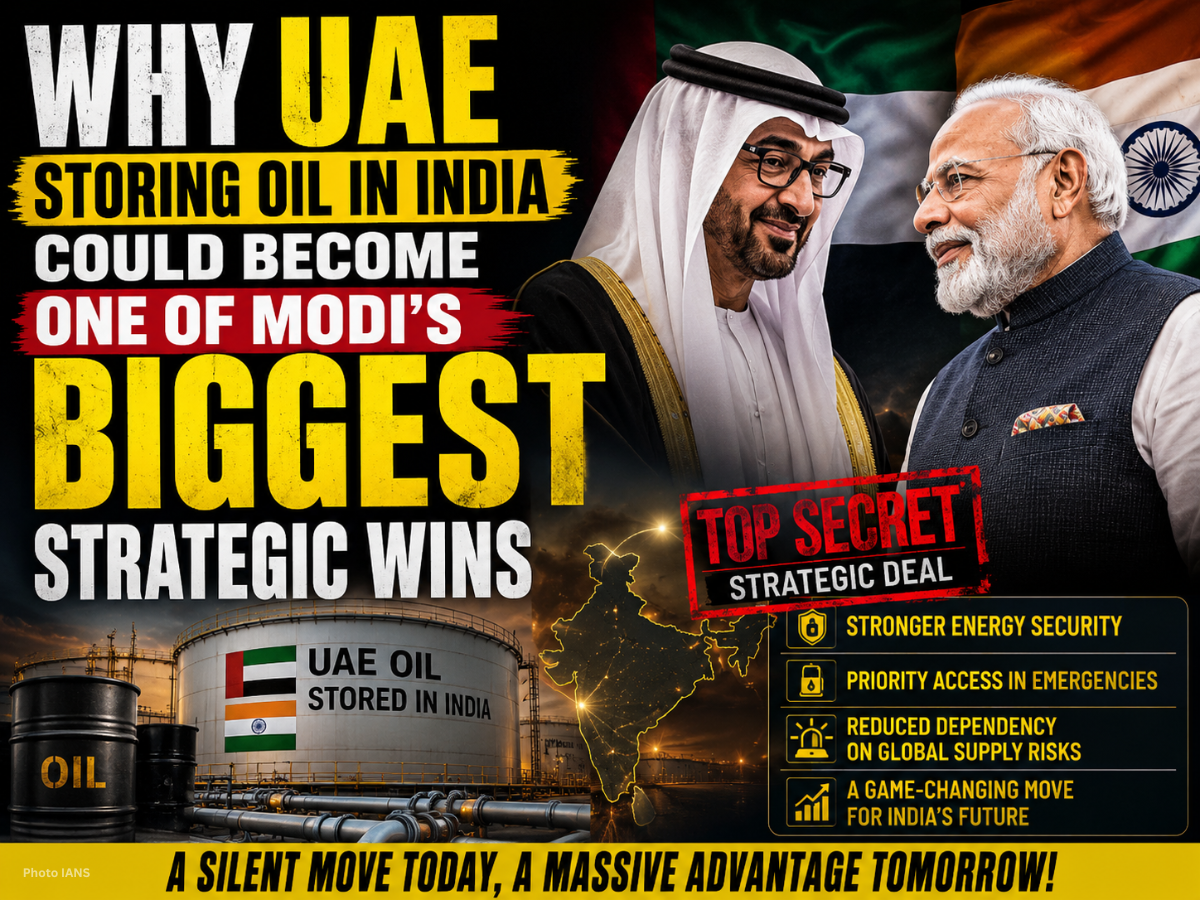
India’s energy security has gotten a shot in the arm as the UAE has pledged to store up to 30 million barrels of crude oil in the Strategic Petroleum Reserve of India after a visit by Indian Prime Minister Narendra Modi to the UAE recently. It is regarded as an important political and economic win for India amid uncertain global oil markets because of the volatile situation in West Asia. Under the arrangement, the UAE, through Abu Dhabi National Oil Company (ADNOC), will store crude oil in India and pay for the cost of storage but will keep the oil in their possession. India will have first right of refusal on the stored oil in emergencies. This is considered a “win-win” situation for India since it will build its strategic reserve of oil without having to spend heavily on the facilities.
Why This Pact Is So Critical To India?
India sources close to 90% of its crude oil needs from outside sources, rendering it susceptible to regional political strife, logistical issues, and unexpected hikes in prices on international platforms. The recent tension in the Strait of Hormuz is yet another example of the vulnerability of the global oil supply chain amid regional conflicts. This pact has greatly enhanced India’s ability to handle any emergency situation that might arise in the future. The pact allows the UAE to double its involvement in India’s petroleum stockpile, increasing it to 30 million barrels. This has been estimated to raise India’s strategic reserve capacity by almost 70%.
Strategic Partnership Moving Away from Petroleum
Besides, the partnership marks the rapid emergence of ties between the two countries. In addition to the deal on establishing the petroleum reserve, the two countries have entered into numerous deals involving defense cooperation, provision of LPG, energy infrastructure, and investments worth several billion dollars. The United Arab Emirates is currently one of India’s largest sources of energy and LPG. The latest partnership comes at a time when other countries are seeking stable energy relationships.
Why Experts Are Calling It A Silent Masterstroke
What makes the deal especially important is that India gets strategic access to emergency oil reserves without directly purchasing or maintaining the entire stock itself. The UAE carries the storage burden while India gains energy security advantages during emergencies. In simple terms, India strengthens its crisis readiness, improves energy resilience, and reduces supply risk all without massive additional storage costs. That is why many analysts are calling this one of the most strategically important outcomes of PM Modi’s UAE visit





