
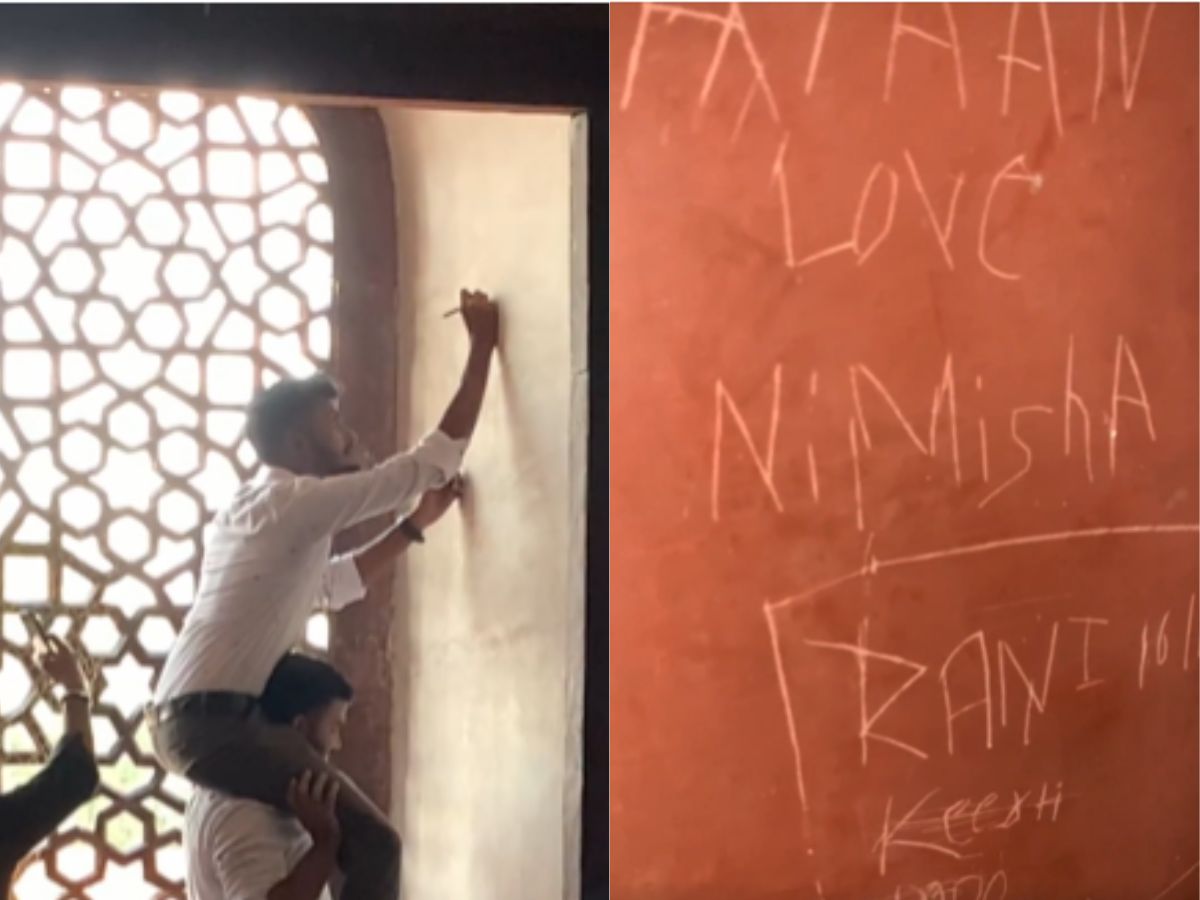

One of the most troubling new threats facing the Tomb of the legendary Humayun, a UNESCO World Heritage site and the masterpiece of Mughal architecture, is a very disturbing community blackboard on its ancient walls. It is a worrying trend of the recent news and images that are viral on the social media, which report people climbing on top of one another to grave their names, initials, and messages on the stone surfaces (delicate sandstone and marble).
Not only is this vandalism the lack of respect for a historic monument but it is a disrespectful outrage to the cultural heritage where we all belong. This comes as quite disappointing since the monument that was once a precursor of the Taj Mahal as well as the symbol of the rich Indian heritage is vandalized by the people who should be the very guardians of it.
They’re Literally Treating Humayun’s Tomb Like a Blackboard 😡[OC]
byu/dev_xoxo_ inIndianCivicFails
The Cost of Defacement
This alarming trend of scratching names and carving messages into the walls of Humayun’s Tomb highlights a significant issue in the preservation of our historical monuments. The very act of carving into these ancient surfaces causes irreversible damage. The soft sandstone and intricate marble inlays are not meant to withstand such abrasion. Each scratch and etch mark permanently mar the aesthetic and historical integrity of the structure.
The price of restoration is enormous, so it takes special conservation work to reverse the damage, and in most instances the original surface can never be completely restored. This brings an amazing burden to the Archaeological Survey of India (ASI) that is already working on several sites in the country with scarce resources.
A Call for Public Accountability
The increase in the vandalism of the Humayun Tomb requires the government and the individuals to provide powerful actions to respond to the situation. Although the ASI is able to implement more surveillance and place more security agents on the ground, the final answer is in the awareness of people and a sense of responsibility. Harsh penalties on defacement and campaigns of educating the society may contribute to making people avoid such actions.
It is also important to bring a greater appreciation of such historical sites not only as a tourist attraction site, but also as a place of worship where we can revisit our history. Their preservation is a community responsibility, and visitors should realize that their names inscribed on a wall are not what can make them immortal but are simply used to ruin the history of an entire nation.
A recent media graduate, Bhumi Vashisht is currently making a significant contribution as a committed content writer. She brings new ideas to the media sector and is an expert at creating strategic content and captivating tales, having working in the field from past four months.




