
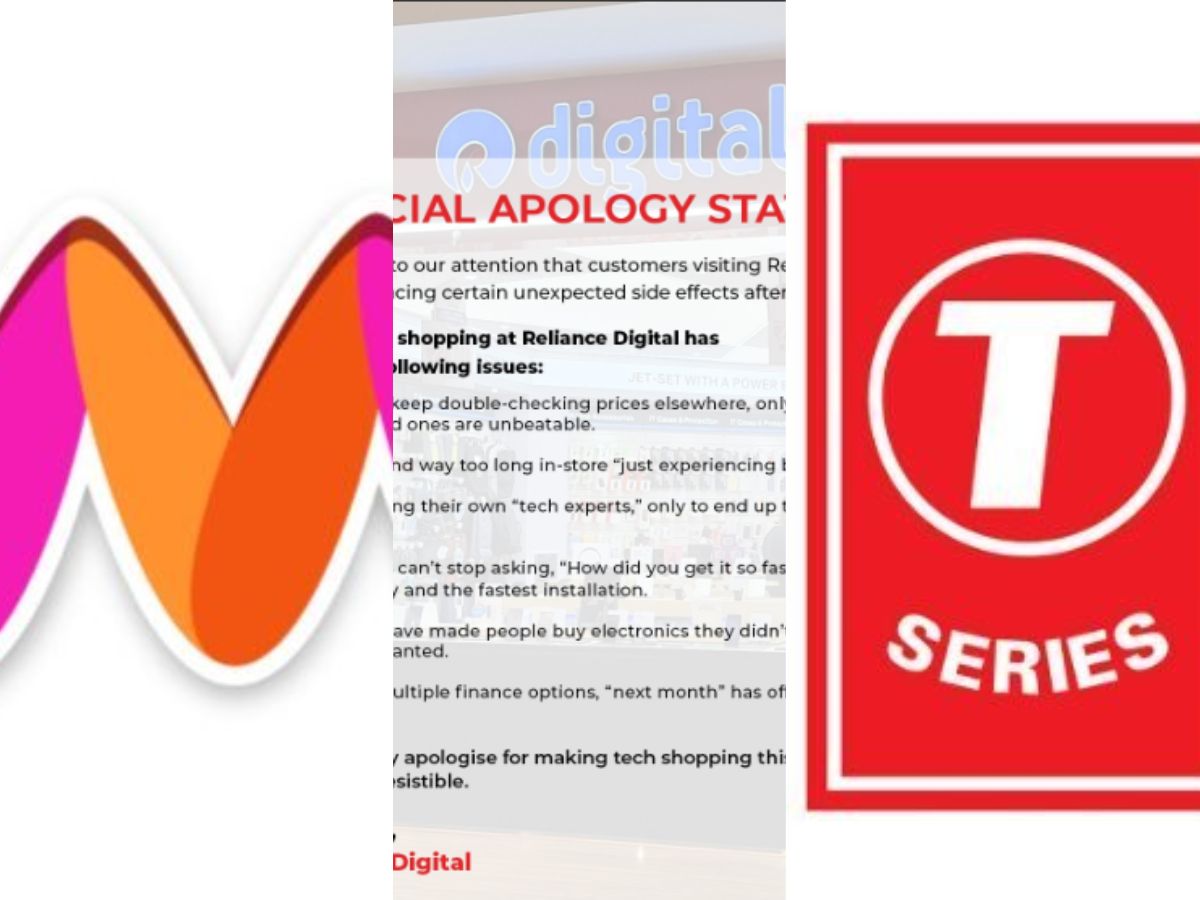

Major Indian companies, such as Myntra, T-Series, and Reliance Digital, have recently made a “public apology” wave through their social media channels, but the reason for this trend is not a corporate scandal. These companies do not apologize, for instance, for a product defect, and data breach or poor service. On the contrary, they are running a very successful, ironic apology advertisement campaign, claiming that their products or services are just too effective or pleasant.
This self-denouncing but self-praising marketing technique replaces the traditional crisis communication with an informal-sounding apology that becomes a moment of customer engagement and subtle boasting.
The letters look official with corporate jargon and lists of their ‘offences’ in bullet points, thus making a very shareable and comical content that appeals to the internet generation. This trend that has its roots outside India has nevertheless been fully adopted by the local powerhouses to give their brand a human face and be noticed in the already crowded digital space.
Viral Marketing Tactic: The Faux Mea Culpa
The foundation of the campaign is built on a false apology. Companies make public announcements where they talk about their ‘unintentional customer delight.’ Take for example an electronic behemoth that might claim sorry for its irresistible deals which make people buy without planning, or Myntra, a fashion retailer, might show ‘remorse’ that their dresses make ‘casual plans feel like red carpets.’
The whole thing is pretty much set up for going viral. It employs the serious corporate communication tone the very rare corporate event of damage control to draw the users’ attention as they scroll down the page, just to deliver a joke that acknowledges the brand’s quality.
The core of the matter is this turned around the other way expectation. This innovative technique not only takes advantage of the situation but also creates organic shares, encourages discussions, and makes huge reach possible without the traditional aggressive advertising costs. That is a smart way of allowing the brand to communicate its customer satisfaction through a light-hearted problem.
Brand Humanization: Flipping Strengths into ‘Flaws’
This pattern is a bold step towards humanizing the brands. The companies are using a self-aware, slightly over-the-top style which makes them not only look like impersonal organizations but also like characters we can easily associate with and who have a quirky sense of humour.
To illustrate, T-Series might ‘apologize’ for producing songs that are so catchy that they are distracting to work. This method is a very fine line to walk; on the one hand, a lot of the online public finds it very funny and sees it as a good way to endorse a brand, while on the other hand, some conservative marketers criticize the practice saying it lacks the authenticity and seriousness of a public apology which should be reserved for true accountability. However, in the contemporary digital environment where attention is the most valuable asset, this “sorry-not-sorry” marketing strategy is clearly winning.
A recent media graduate, Bhumi Vashisht is currently making a significant contribution as a committed content writer. She brings new ideas to the media sector and is an expert at creating strategic content and captivating tales, having working in the field from past four months.




