
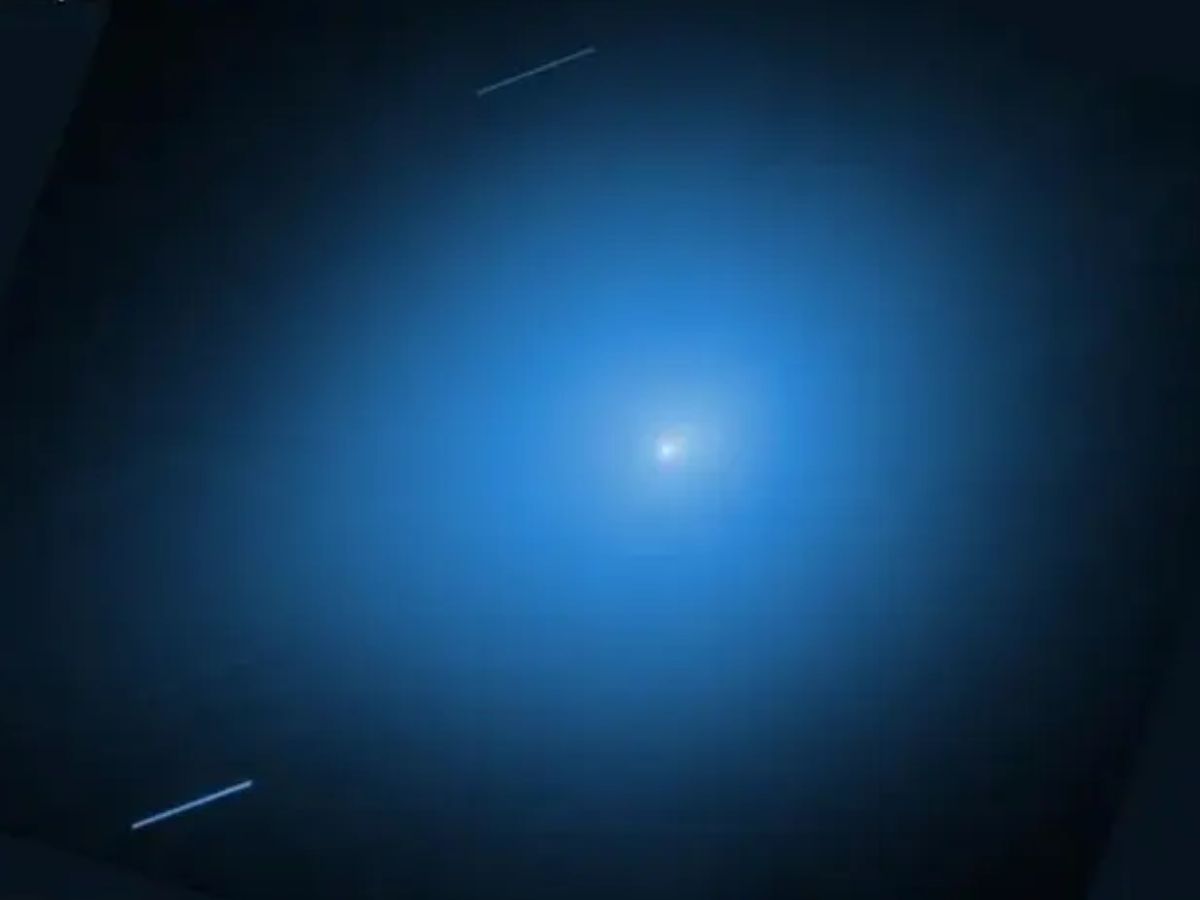

Astronomers have been fascinated by the new image of Comet 3I/ATLAS recently taken by NASA’s Hubble Space Telescope. The photo revealed a giant halo of about 40,000 km surrounding this comet that is composed of dust and gas emanating from a comet nucleus. This comet does not belong to the Solar System as it moves into the Inner Solar System with a hyperbolic trajectory and thus is one of the first examples of such an body to be recorded by Earthlings.
About Comet 3I/ATLAS
Comet 3I/ATLAS, also known as C/2025 N1, is classified as an interstellar comet because it came from somewhere outside our own solar system and will not return, having an increased, hyperbolic trajectory. It is only the third interstellar comet that has ever been discovered and photographed by modern human instruments.
What did Hubble photograph?
HST used the Wide-Field Camera to photograph the comet, capturing the incredibly large and bright halo produced by the gases and dust surrounding the comet nucleus. The halo (known as a coma) extends from the central nucleus outward for an amount of approximately 40,000 km and is so much larger than the diameter of Earth that it stretches across several million miles. The halo is formed through radiation and heating from the Sun that has caused the ice and dust to release into space around the comet.
Why This Discovery Is Important
Interstellar bodies are exceedingly uncommon. They also contain materials created in distant star systems millions of years ago. Researching 3I/ATLAS provides researchers with information about how planetary formation, comet formation, and stellar formation occurs in other galaxies. By studying 3I/ATLAS, we may also discover some of the chemical ingredients that could contribute to the creation of life.
What Will Researchers Look For Next?
Researchers will continue observing the comet both from space using Hubble and on Earth using telescopes. Researchers anticipate studying the comet’s chemistry, the development of its tail of dust, and how it behaves when nearing and moving away from the Sun.
This discovery is a tremendous opportunity for humanity to witness a visitor from far away in the universe and represents a defining moment in science.
This article is based on information available from verified scientific sources and recent space research reports. Details about the comet’s trajectory, composition, and observations may change as new data becomes available. Readers are advised to follow official NASA or ESA updates for accuracy.
Vani Verma is a content writer with over 2 years of experience in lifestyle, entertainment, health and digital media. She has a knack for creating engaging and research-driven content that resonates with readers, blending creativity with clarity. Passionate about media trends, culture, and storytelling, she strives to craft content that informs, inspires, and connects.




