
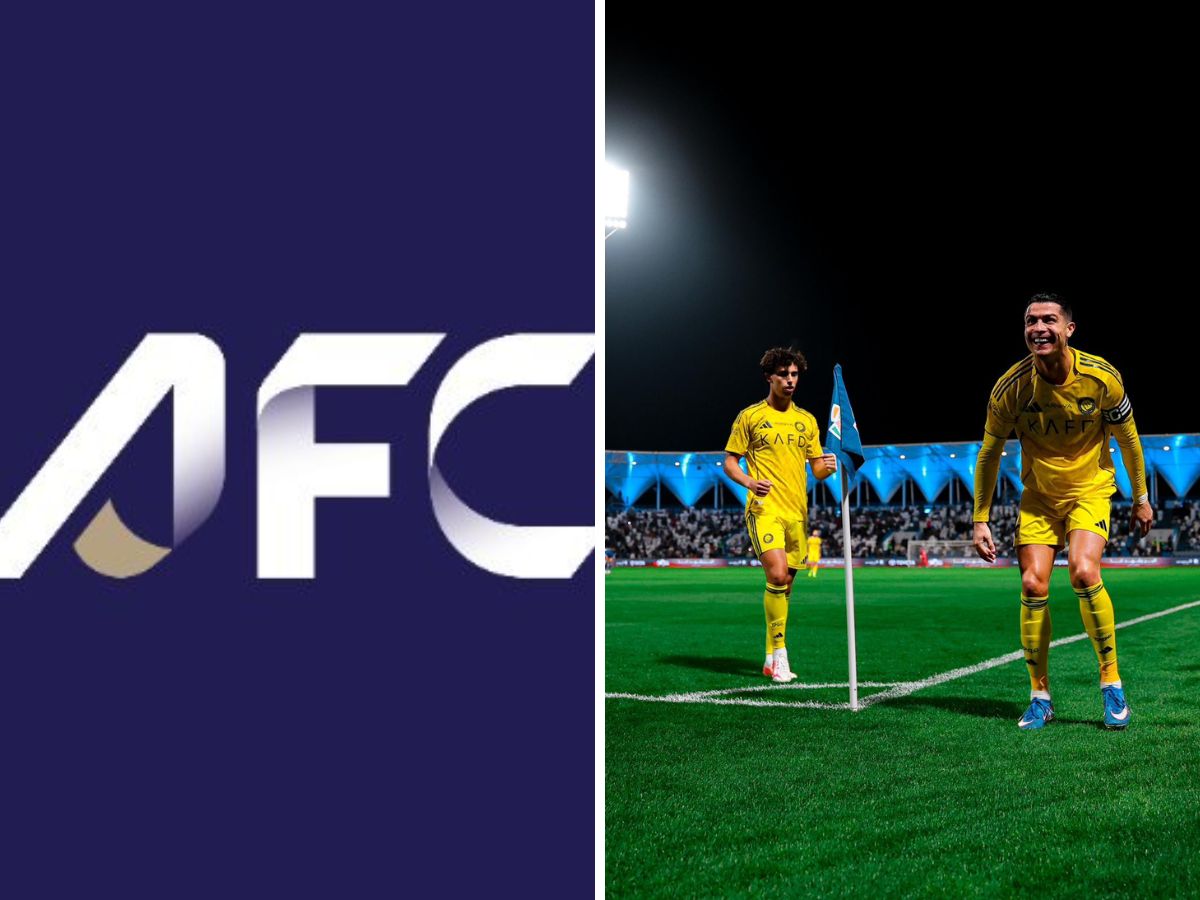

The Asian Football Confederation (AFC) has decided to postpone several important club matches in the Middle East following the recent attacks involving the United States, Israel and Iran. The decision was taken due to growing security concerns in the region.
In an official statement released on Sunday, the AFC confirmed that the AFC Champions League Elite Round of 16 matches in the West Region, which were scheduled to be played on Monday and Tuesday, will now be rescheduled. Along with that, the AFC Champions League 2 and AFC Challenge League quarterfinal matches in the West Zone, originally planned for Tuesday and Wednesday, have also been postponed. The governing body has not yet announced new dates for these fixtures.
The move affects several top clubs from the region. Cristiano Ronaldo’s Saudi Arabian club, Al-Nassr, is among the teams involved in the AFC Champions League Two competition. The postponement means these clubs will now have to wait for further updates regarding their matches.
🚨 IT’S OFFICIAL: The Asian Football Confederation has postponed the first-leg matches of the Round of 16 in AFC Champions League Elite and the first-leg quarterfinals in AFC Champions League 2 pic.twitter.com/SgA8pFKE04
— All About SPL 🔔 🇸🇦 (@Saudifutbol) March 1, 2026
However, the AFC made it clear that games in the East Region across all its continental competitions will continue as scheduled. This means teams playing in East Asia will not be affected by the postponement. In its statement, the AFC stressed that the safety and security of players, coaches, match officials, and supporters remain its top priority. The organisation said it is closely monitoring the rapidly changing situation and will continue to assess developments before making further decisions.
At the same time, the AFC is hosting the Women’s Asian Cup in Australia, which began on Sunday. The tournament features 12 national teams from across Asia, including Iran. Despite the tensions in the Middle East, the women’s tournament in Australia is expected to proceed without disruption. The postponement highlights how geopolitical tensions can directly impact major sporting events, especially when player and fan safety is at risk.




