

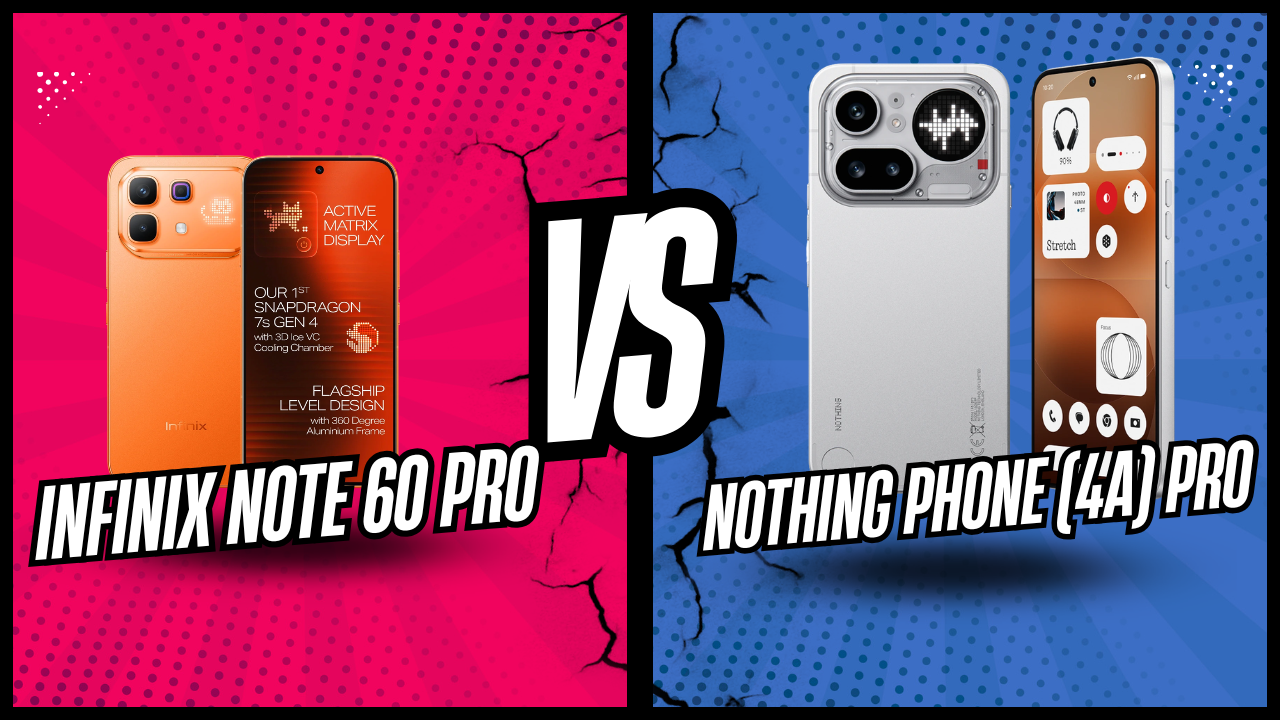
Infinix Note 60 Pro vs Nothing Phone 4a Pro: Chinese smartphone manufacturing company Infinix has recently launched the Infinix Note 60 Pro which features an Active-Matrix Display LED on the rear panel which is said to be inspired by the Nothing Glyph light. The device comes with 8GB RAM and 256GB of internal storage at a price tag of Rs 34,999 and is available through e-commerce platform Flipkart and select stores across the country. Back in days, a few months ago Nothing also rolled out its new Nothing Phone (4a) Pro featuring an updated Glyph Matrix and offers 12GB of RAM and 256GB of internal storage at a price tag of Rs 49,999. Here is a detailed comparison between the mid-range smartphones available in Indian market.
Infinix Note 60 Pro vs Nothing Phone (4a) Pro: features and specifications
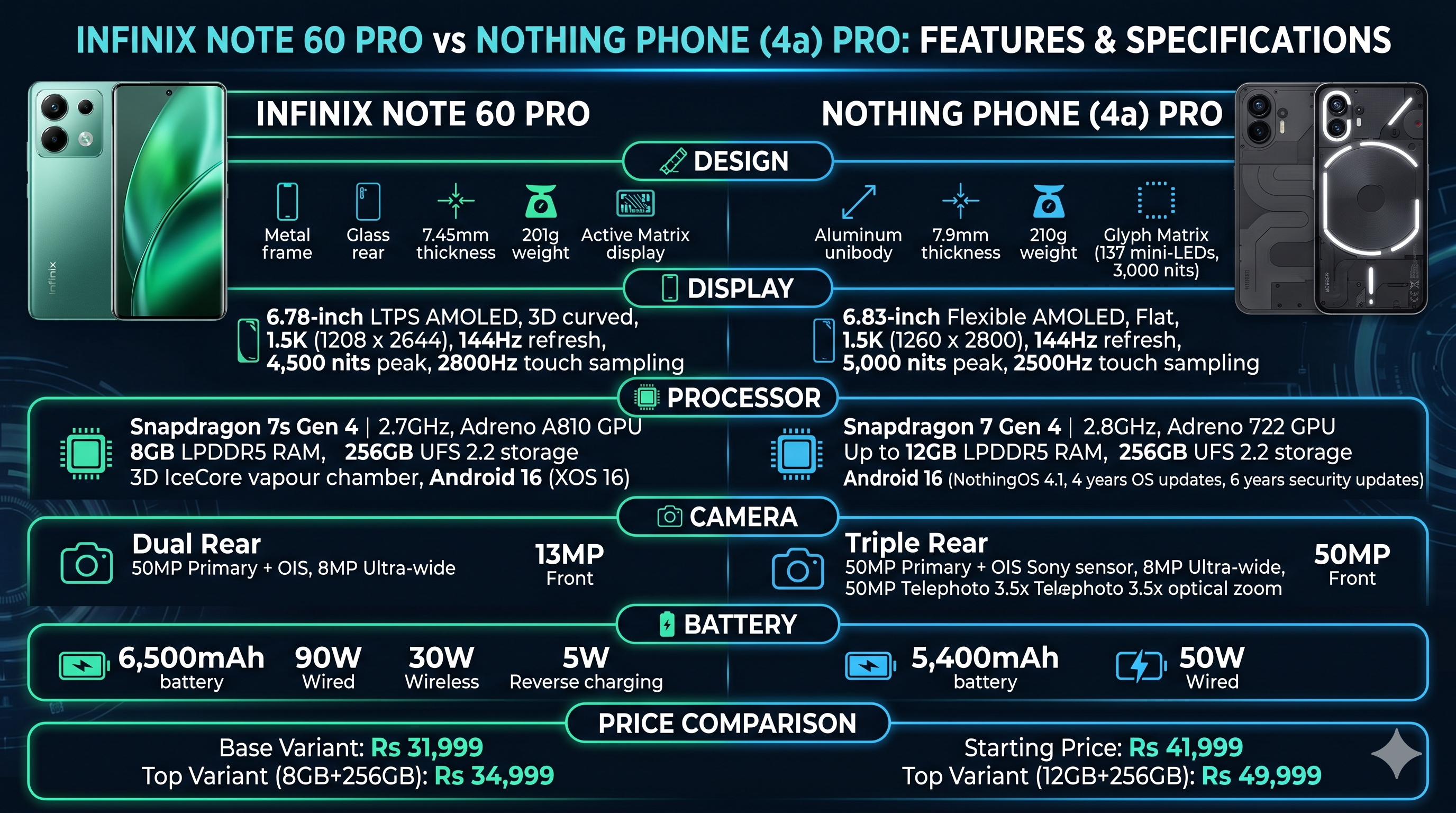
Design: The Infinix Note 60 Pro is built on Metal frame while the rear panel is built of glass. The handset has a slim design with a thickness of 7.45mm and weighs 201 gram. The rear panel features Active Matrix display.
Whereas the Nothing Phone (4a) Pro is built on Aluminum unibody and has a thickness of 7.9mm and weighs 210 gram which means it is slightly thicker and heavier than Infinix Note 60 Pro. The rear panel of the device features Glyph Matrix which consists of 137 mini-LEDs with a brightness of 3,000 nits.
Display: The infinix Note 60 Pro features a 6.78-inch LTPS AMOLED 3D curved display with 1.5K resolution with 1208 x 2644 pixels. It has a refreshing rate of 144Hz, peak brightness of 4,500 nits, and 2800Hz touch sampling rate.
While the Nothing Phone (4a) Pro spots a larger 6.83-inch flexible AMOLED flat display with 1.5K resolution with 1260 x 2800 pixels. The display has a refreshing rate of 144Hz, peak brightness of 5,000 nits, and a touch sampling of 2500Hz.
Processor: The infinix Note 60 Pro is powered by Snapdragon 7s Gen 4 with a peak clock speed of 2.7GHz coupled with Adreno A810 GPU and 8GB of LPDDR5 RAM and up to 256GB of UFS 2.2 internal storage. The phone also features 3D IceCore vapour chamber and runs on Android 16 based on XOS 16.
Nothing Phone (4a) Pro is powered by the Snapdragon 7 Gen 4 with a peak clock speed of 2.8GHz paired with Andreno 722 GPU and up to 12GB of LPDDR5 RAM and up to 256GB of UFS 2.2 internal storage. The handset runs on Android 16 based on NothingOS 4.1 with promised OS update of 4 years and 6 years of security update.
Camera: In terms of optics, Infinix Note 60 Pro features a dual camera setup on the rear panel offering a primary sensor of 50MP with OIS supported by an 8MP ultra-wide lens whereas the front panel houses a 13MP camera for selfie and video calling.
While the Nothing Phone (4a) Pro features a triple camera setup on the rear panel offering a primary screen of 50MP from Sony with OIS, an 8MP ultra-wide sensor and a telephoto sensor of 50MP with 3.5x optical zoom. The front panel of the device offers a 50MP camera for selfie and video calling.
Battery: the newly launched Infinix Note 60 Pro is packed with a 6,500mAh battery supported by 90W wired fast charging, 30W wireless charging support and 5W reverse charging support.
Whereas the Nothing Phone (4a) Pro is packed with a 5,400mAh battery supported by 50W wired fast charging.
Infinix Note 60 Pro vs Nothing Phone (4a) Pro: Price
The Infinix Note 60 Pro is priced at Rs 31,999 for the base variant whereas the top variant is priced at Rs 34,999 which offers 8GB RAM and 256GB of internal storage while the Nothing Phone (4a) Pro comes at a starting price of Rs 41,999 whereas the top varinat offering 12GB RAM and 256GB of internal storage is priced at Rs 49,999.
Syed Ziyauddin is a media and international relations enthusiast with a strong academic and professional foundation. He holds a Bachelor’s degree in Mass Media from Jamia Millia Islamia and a Master’s in International Relations (West Asia) from the same institution.
He has work with organizations like ANN Media, TV9 Bharatvarsh, NDTV and Centre for Discourse, Fusion, and Analysis (CDFA) his core interest includes Tech, Auto and global affairs.
Tweets @ZiyaIbnHameed





