
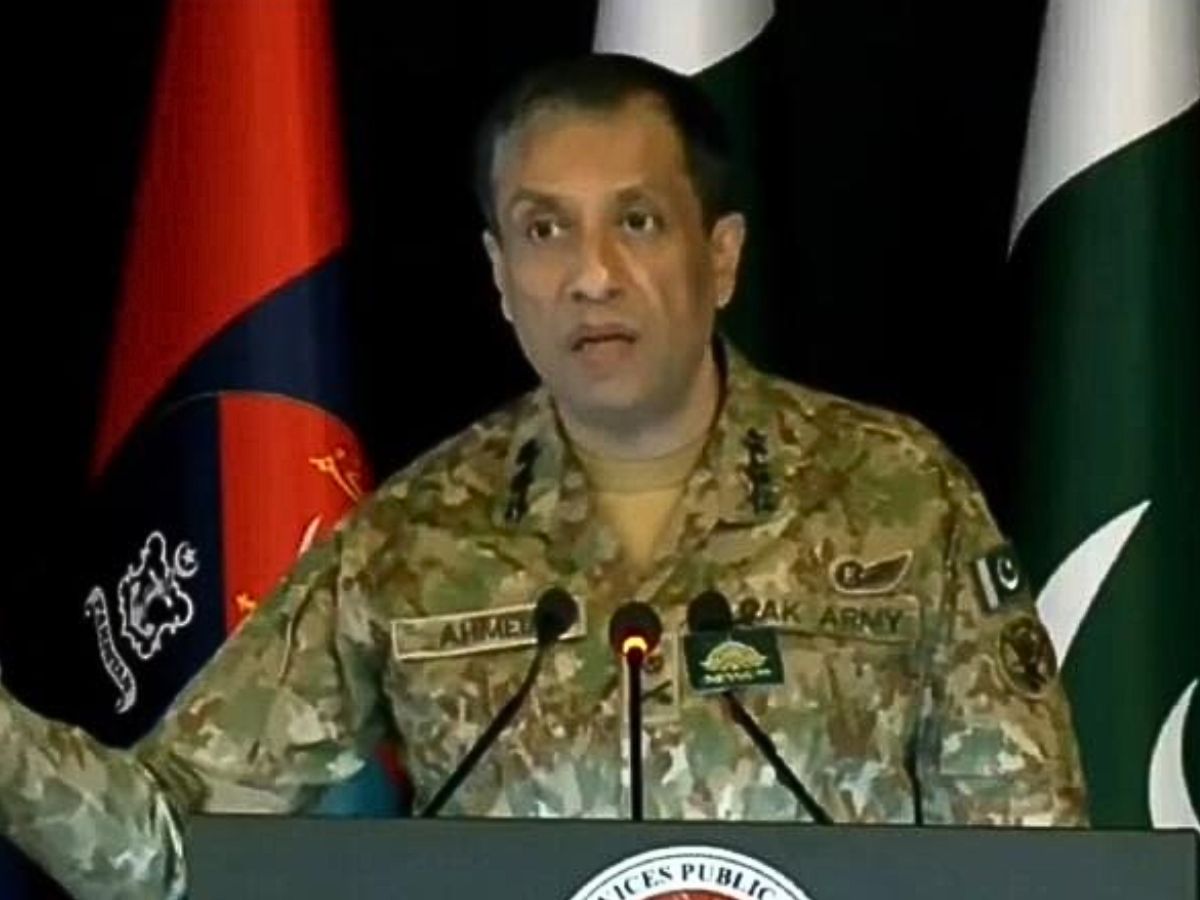

Pakistan Army DG ISPR: A recent press conference by Pakistan’s Director General of Inter-Services Public Relations (DG ISPR) has raised alarms in security and diplomatic circles, with senior intelligence sources calling it a marked departure from the military’s traditional communication norms and an indication of growing unease within the Pakistan Army.
Unusual Tone, Unprofessional Language
During the briefing, the DG ISPR employed colloquial and mocking expressions, including the phrase “Mazaa na kraayaa — toh paise vaapis” (If you don’t enjoy it, money back), while issuing sharp warnings aimed at India and Afghanistan. Intelligence sources said such street-level language from a serving military spokesperson signals a clear erosion of professionalism that has typically defined official Pakistani military briefings.
Pakistan Army DG ISPR mocks Taliban in Afghanistan, says there is no Government in Afghanistan. “It’s just a geographical expression, not a Government.” Taliban is likely to get furious over this outrageous remark. pic.twitter.com/8RFO0GlGh7
— Aditya Raj Kaul (@AdityaRajKaul) January 6, 2026
While DG ISPR press conferences have long featured strong rhetoric against India, sources noted a shift in tone this time from predictable ideological hostility to grievance-laden ridicule. The reliance on taunts rather than formal military or diplomatic language is being interpreted as a sign of insecurity rather than confidence.
Open Confrontation, Strategic Unease
In his remarks, the DG ISPR said Pakistan would need to become a “hard state” by 2026, claimed India would “never recognise Pakistan’s existence,” and asserted alignment between Pakistan’s political leadership, military establishment and public opinion. He added that adversaries, whether “from above or below, from the right or left, alone or together,” would be confronted, a statement intelligence officials described as deliberately theatrical and overtly confrontational.
According to top intelligence sources, the comments effectively remove the diplomatic ambiguity Islamabad often maintains on global platforms, laying bare the Pakistan Army’s hostility towards India. The language, they said, reflects an inability to engage diplomatically and points to a mindset shaped by perceived encirclement and internal strain.
Sources further warned that the briefing undermines Pakistan’s international credibility at a time when the country is already grappling with economic stress, internal instability and continued scrutiny over terrorism-related concerns. Rather than projecting strategic clarity, the remarks conveyed defensiveness, irritation and poor message discipline.
Intelligence officials believe such communication could weaken Pakistan’s standing with foreign militaries and partners who expect calibrated, professional signalling. They described the episode not as a display of strength, but as an inadvertent exposure of Pakistan’s strategic anxiety, expressed through derision instead of doctrine or deterrence.




