
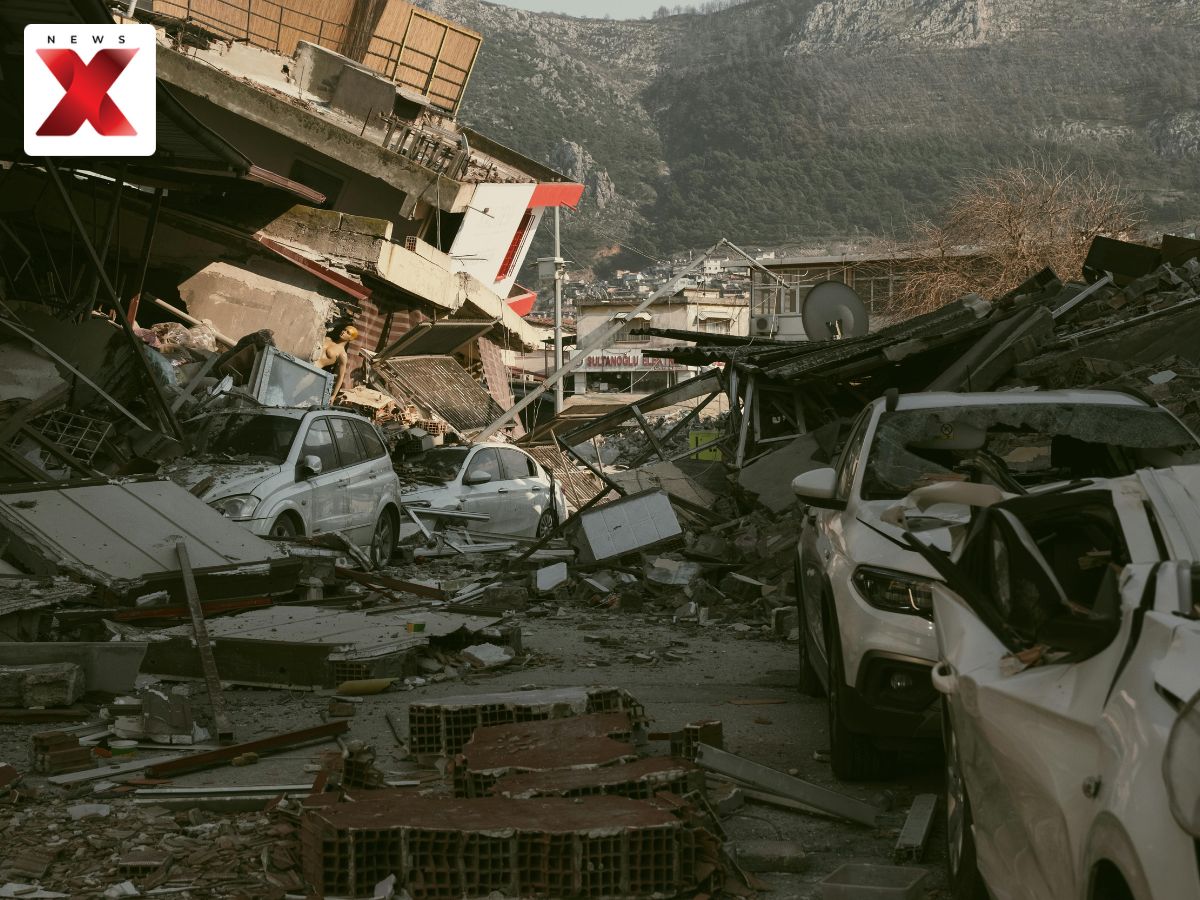

Data from seismic monitoring agencies revealed that an earthquake with a magnitude of 6.4 occurred in the southeastern waters of Mindanao Island, Philippines, on January 10, 2026, at about 10:58 PM (Philippine Standard Time, GMT+8) local time. Despite the shallow quake at 57 km depth, which raised worries about its proximity to the ground, no tsunami warnings were immediately issued. This event is a stark reminder of the Philippines’ position in the heart of the seismically active Ring of Fire, where such earthquakes are very common indeed.
Epicenter and Technical Details
The epicenter was located at approximately 314 km south-southeast of Balut Island in Davao Occidental, at a point near the coordinates 03.37°N, 127.39°E. PHIVOLCS, along with the global monitoring stations, traced the quake to tectonic forces that were caused by the shifting of the earth along the regional fault lines. Not only that, but there was also a 5.2 magnitude foreshock that happened at 11:15 PM right before the main tremor, which clearly indicated that the area was experiencing vibration in its seismic condition.
Impacts and Reported Damage
Reports from late evening mentioned no fatalities and serious damage to buildings, which were mainly due to the quake’s offshore location and depth. Minor shaking might have been felt in the coastal areas of Davao Occidental and Surigao Del Sur, but PHIVOLCS assured there would be no such thing as wide irritation or quite large aftershocks. Earlier in the day, a different earthquake of magnitude 4.4 near Agno, Pangasinan, caused Intensity III shaking in Baguio City, but no damages were reported.
Official Response and Safety Advisories
PHIVOLCS advised the population living in the neighboring regions to be cautious and follow the “drop, cover, and hold on” earthquake preparedness protocols because of the possibility of aftershocks. The local disaster response agencies set up monitoring stations, and no evacuations were declared. Authorities issued warnings to coastal communities advising them to keep off the beaches in case of stronger tremors, mentioning the 6.9 Cebu quake that happened last year as an example.
Regional Seismic Context
The Philippines experiences daily more than 100 earthquakes, most of them unnoticed, but seismic activity of the type above 6.0, like this one, causes investigations for tsunamis or landslides. This quake fits a trend of increased eruption activity off Mindanao that had also included several 4.0+ events in Surigao Del Sur, which took place even earlier today. Experts advocate for structural reinforcement of buildings and for public drills as risk-reducing measures for this island nation with volcanic activities.
Shubhi is a seasoned content writer with 6 years of experience in digital media. Specializing in news, lifestyle, health, sports, space, optical illusions, and trending topics, she crafts engaging, SEO-friendly content that informs and captivates readers. Passionate about storytelling, Shubhi blends accuracy with creativity to deliver impactful articles across diverse domains.




