
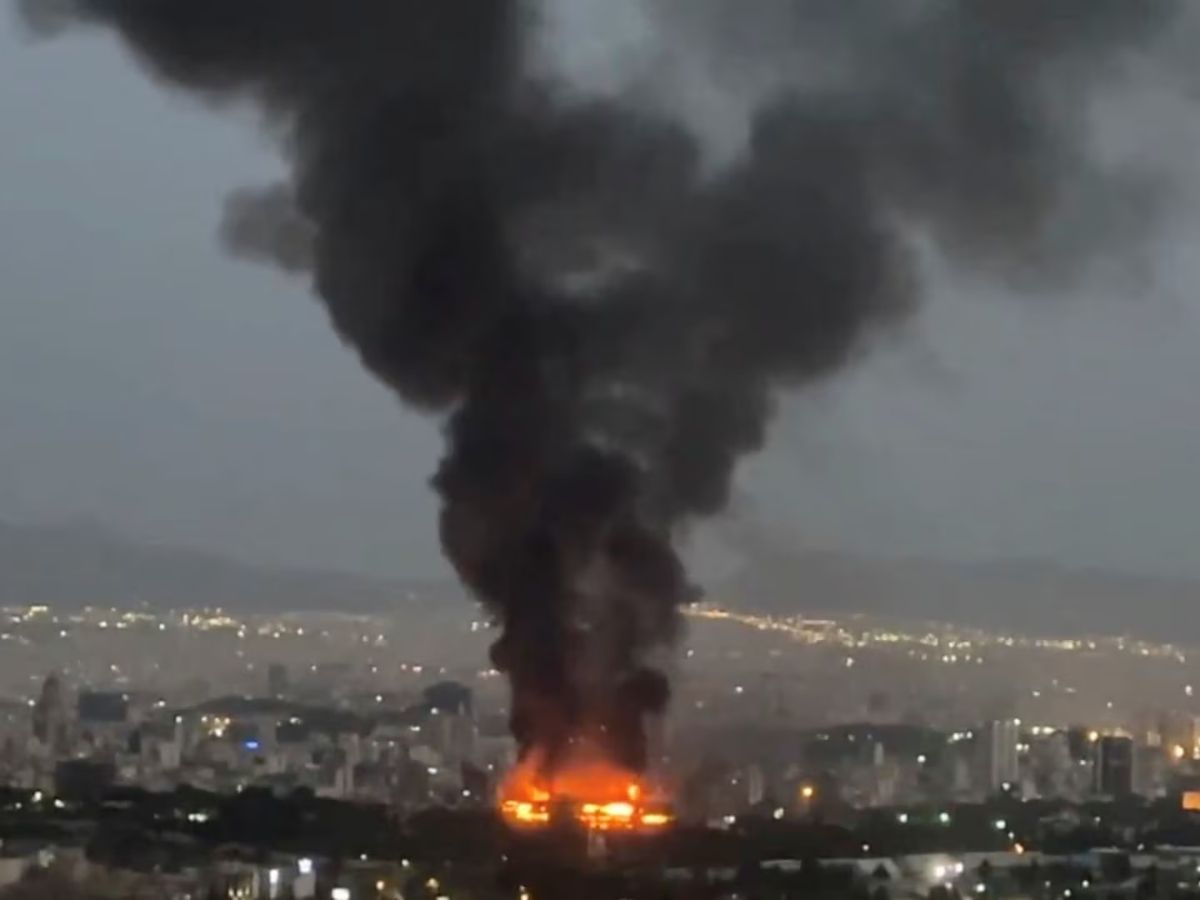

Israel was once again under missile fire from Iran late Monday, with air raid sirens blaring across several regions, including the north and south. The Israeli military confirmed that multiple projectiles had been launched by Iran and that the country’s air defence systems were actively intercepting them.
This new round of attacks comes at a time of apparent diplomatic confusion. Iranian Foreign Minister Abbas Araghchi publicly stated there was no formal agreement on a ceasefire, yet also claimed Iran had chosen to halt military operations. This dual message has raised questions about Tehran’s intentions and whether further strikes from either side will continue.
Air Raid Sirens Activate as Israel Faces Renewed Attacks
The Times of Israel reported widespread alarms across the country as residents were urged to take shelter. The Israeli Defense Forces (IDF) stated that the fresh round of missile attacks was already being countered by the country’s Iron Dome and other air defence systems.
Just moments before this renewed strike, the military had informed citizens that an earlier wave had ended and that it was safe to leave shelters only to reverse that message minutes later as new missiles were detected.
Iran’s Mixed Messaging Reflects Internal Pressures
David Des Roches, a former Pentagon official and current professor at the National Defense University in the U.S., said that Iran’s contradictory messaging is likely aimed at its domestic audience. “They want to appear in control,” he told Al Jazeera. “By arguing over the details of when a ceasefire takes effect, Iran can claim it wasn’t pressured but is choosing to act voluntarily.”
Des Roches added that Iran likely lacks the resources to sustain prolonged military operations. “This pace of operations is not sustainable,” he noted, pointing to the targeted and arguably restrained nature of Iran’s recent missile attacks including one aimed at the Al Udeid air base in Qatar. “It was calculated to avoid provoking a larger military retaliation.”
Trump’s Ceasefire Statement and Iran’s Denial
This missile barrage marks the first Iranian attack since former U.S. President Donald Trump announced that a ceasefire agreement had been reached between Israel and Iran. However, Iranian officials have strongly denied that any deal was signed or accepted.
According to reporting from Al Jazeera, which is currently banned from reporting inside Israel and the occupied West Bank, Iranian leaders have maintained a vague stance. Araghchi posted on X (formerly Twitter) that while Iran had decided to pause military operations, any further Israeli aggression would prompt more retaliation, casting doubt over any truce’s effectiveness.
Escalation Amid Signs of De-escalation
While signs of de-escalation were evident in the reduction of missile volume and statements hinting at military pause, both sides have kept their forces on alert. “We were hearing loud explosions and interceptions by the air defence system earlier tonight. Now, it’s much quieter,” reported correspondents on the ground.
Despite that relative calm, Israeli officials, speaking anonymously to local media, said more targets inside Iran remain on their radar. “We’re not done yet,” one official reportedly said, adding that Israel’s primary objective of depleting Iranian nuclear assets had been largely achieved, but further action was not ruled out.
Iran’s 25th Missile Strike Since Tensions Rose
This most recent assault is estimated to be Iran’s 25th missile strike against Israel in recent weeks. The ongoing tit-for-tat military confrontations continue to put immense pressure on regional stability, especially as both nations insist on defending their sovereignty.
Meanwhile, analysts suggest that Iran’s internal politics and the need to maintain regime legitimacy are influencing its military posture. Des Roches speculated that the recent strikes may have been purposefully restrained. “We’ll only know months later if these attacks were deliberately ineffective or simply the best Iran could manage given the depletion of their arsenal.”
As international observers monitor the situation closely, the lack of clarity on a ceasefire agreement continues to add to the region’s volatility. For now, Israeli defences remain on high alert, and civilians across the country are bracing for more alarms.
ALSO READ: Putin Says Russia Assisting Iranian People Amid Escalating Tensions




