
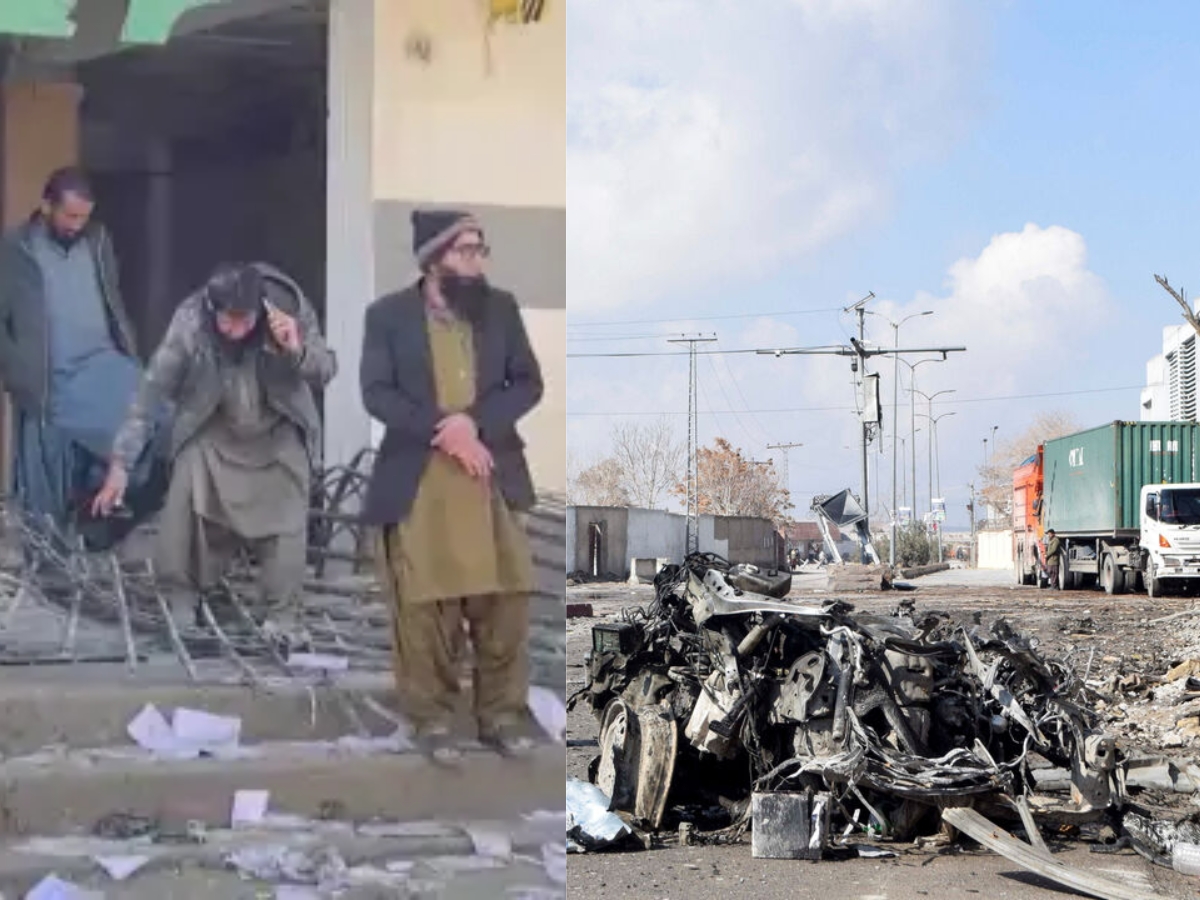

Pakistani security forces killed at least 145 militants during a 40-hour operation after a wave of coordinated gun and bomb attacks across Balochistan left nearly 50 people dead, provincial authorities said on Sunday. The violence is one of the deadliest flare-ups in recent years in the resource-rich southwestern province. The region borders Iran and Afghanistan, and the insurgent groups have escalated assaults on security forces, civilians and key infrastructure in recent times.
150 Balochistan Militants Killed, Says Pakistan
Balochistan Chief Minister Sarfraz Bugti said the attacks claimed the lives of 17 law enforcement personnel and 31 civilians.
Pakistan’s military said 92 militants were killed on Saturday, while 41 were eliminated on Friday, taking the total to 145 insurgents neutralised within a short span.
Bugti described the toll as the highest number of militants killed in such a compressed timeframe since the insurgency intensified, though he did not provide comparative figures.
Balochistan Militants Disguised as Civilians, Used Human Shields: Minister
Pakistan’s junior interior minister Talal Chaudhry said the attackers deliberately disguised themselves as ordinary civilians to infiltrate public spaces.
“In each case, the attackers came in dressed as civilians and indiscriminately targeted ordinary people working in shops,” Chaudhry said, adding that militants had used civilians as human shields.
According to officials, armed assailants entered hospitals, schools, banks and markets before opening fire.
Attacks Hit Quetta, Gwadar and Other Districts of Balochistan Simultaneously
Security officials said the assaults were launched almost simultaneously across multiple districts, including Quetta, Gwadar, Mastung and Noshki.
Armed men opened fire at security installations, including a Frontier Corps headquarters, attempted suicide bombings, and briefly blocked roads in urban areas, triggering large-scale counter-operations by the army, police and counterterrorism units.
Bugti said security agencies had prior intelligence inputs.
“We had intelligence reports that this kind of operation was being planned, and as a result of those, we started pre-operations a day before,” he said.
Pakistan Links India to Balochistan Attacks; New Delhi Rejects Claims
Pakistan’s military linked India to the Balochistan attacks, an allegation New Delhi firmly denied on Sunday.
“We categorically reject the baseless allegations made by Pakistan,” Indian Ministry of External Affairs spokesperson Randhir Jaiswal said in a statement.
He added that Islamabad should instead focus on addressing the “long-standing demands of its people in the region.”
The United States condemned the attacks, with US Charge d’Affaires Natalie Baker calling them acts of terrorist violence and stating that Washington stood in solidarity with Pakistan.
The Balochistan Liberation Army (BLA) is designated by the US as a foreign terrorist organisation.
What Is Operation Herof?
The Balochistan Liberation Army (BLA) said it had launched a coordinated offensive named Operation Herof, meaning “black storm,” against Pakistani security forces.
According to the group, Operation Herof 2.0 began early Saturday as a large-scale military offensive characterised by synchronised dawn attacks across the province.
The offensive spanned around 12 districts, with a particular focus on Quetta, the provincial capital. It is being described as the most extensive assault since 2024 and a significant escalation in the regional conflict.
The attacks involved suicide bombers and a significant number of women rebels, targeting locations in Kalat, Gwadar, Mastung, Noshki, Kharan, Turbat and Pasni.
According to the BLA, banks, government offices and Frontier Corps operational headquarters were among the primary targets.
The BLA said its elite units, including the Majeed Brigade and Fateh Squad, also known as Fidayeen soldiers, participated in the operation.
“The Baloch nation will defeat the enemy in every city, every street and every neighbourhood,” Jeeyand Baloch, spokesperson for the BLA, said.
Also Read: From Death Rumours To Bail: Iran Releases Erfan Soltani After International Uproar – What Changed?
Zubair Amin is a Senior Journalist at NewsX with over seven years of experience in reporting and editorial work. He has written for leading national and international publications, including Foreign Policy Magazine, Al Jazeera, The Economic Times, The Indian Express, The Wire, Article 14, Mongabay, News9, among others. His primary focus is on international affairs, with a strong interest in US politics and policy. He also writes on West Asia, Indian polity, and constitutional issues. Zubair tweets at zubaiyr.amin




