
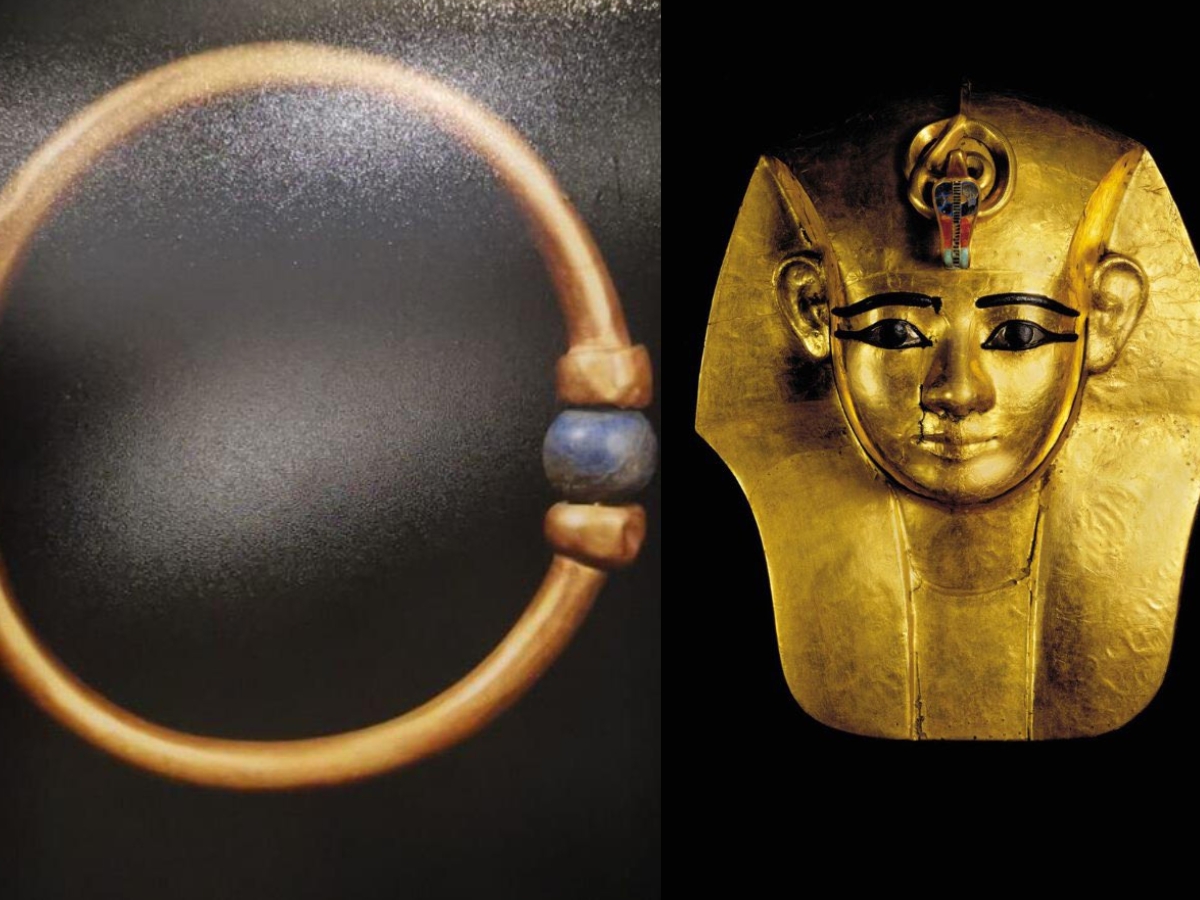

Egyptian authorities have begun an intensive search for a 3,000-year-old bracelet that mysteriously vanished from a national museum in Cairo, setting off alarms across the country’s antiquities network. The bracelet, believed to have once adorned the wrist of Pharaoh Amenemope, disappeared while undergoing restoration in the laboratory of the Egyptian Museum, according to the Ministry of Tourism and Antiquities.
“The Ministry has referred the incident to the relevant authorities and Public Prosecution and formed a special committee to inventory all items in the lab,” the agency announced on X.
Significance of Pharaoh Bracelet
In an effort to prevent the artifact from leaving the country, an image of the ancient jewelry has been circulated to antiquities units at airports and border checkpoints. Officials suspect the possibility of international smuggling.
🧵Crime in the Middle East
Priceless Pharaoh’s Bracelet Stolen from Cairo Museum1/ A rare gold bracelet from Pharaoh Psusennes I’s tomb (1047–1001 BC) has mysteriously disappeared from the Egyptian Museum in Tahrir Square. It was being prepared for a major exhibition in Rome.… pic.twitter.com/UOeaufRNUx
— ME24 – Middle East 24 (@MiddleEast_24) September 17, 2025
The bracelet was unearthed in Tanis, in Egypt’s eastern Nile Delta, during excavations of the tomb of King Psusennes I, where Amenemope was reburied. The Egyptian Museum describes the piece as a single band of metal set with a striking sphere of lapis lazuli – a rare, deep blue gemstone flecked with gold that was highly prized by Egypt’s ruling class.
Amenemope, a pharaoh of the 21st dynasty, ruled from 993 to 984 BC. His tomb was first discovered in April 1940 by French Egyptologists Pierre Montet and Georges Goyon.
The Value of Pharaoh Bracelet
“It’s not the most beautiful, but scientifically it’s one of the most interesting,” Egyptologist Jean Guillaume Olette-Pelletier told AFP. He highlighted the bracelet’s durable gold alloy and the symbolic significance of its lapis lazuli centerpiece.
Gold, he explained, represented “the flesh of the gods,” while lapis lazuli—imported from what is now Afghanistan—was thought to evoke divine hair.
Christos Tsirogiannis, a forensic archaeologist at Cambridge University, told CNN the disappearance was “not surprising,” citing the lucrative global market for antiquities.
“The first [possibility] is that it was stolen and smuggled out and so it will show up sooner or later either on an online platform or at a dealer’s gallery or auction house,” he said, adding that the item would likely be accompanied by “forged provenance or something vague.”
Zubair Amin is a Senior Journalist at NewsX with over seven years of experience in reporting and editorial work. He has written for leading national and international publications, including Foreign Policy Magazine, Al Jazeera, The Economic Times, The Indian Express, The Wire, Article 14, Mongabay, News9, among others. His primary focus is on international affairs, with a strong interest in US politics and policy. He also writes on West Asia, Indian polity, and constitutional issues. Zubair tweets at zubaiyr.amin




