
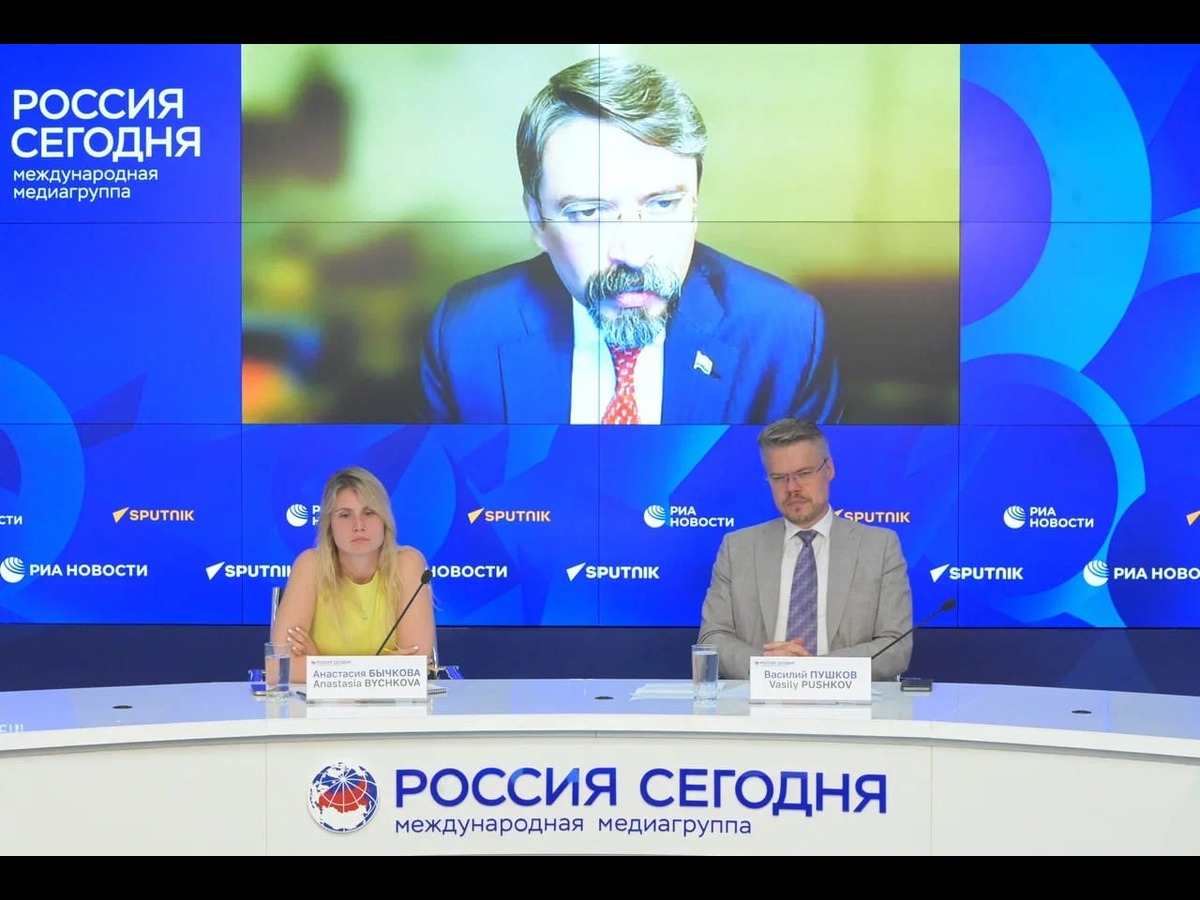

Global media face many challenges and need to focus more on working together, both bilaterally and multilaterally, especially during crises. This was the main point made by participants at an online conference organized by the Rossiya Segodnya media group for the International Day of Journalists’ Solidarity.
The event included Rishabh Gulati, Editor-in-Chief and CEO of Indian media company News X; Leonardo Attuch, Founder and CEO of the online portal Brasil 247; Omid Hussein Ali, News Editor and Correspondent at the Iraqi News Agency; and Jata Kazondo, Executive Director of the Namibian News Agency. Rossiya Segodnya was represented by Vasily Pushkov, Director of International Cooperation.
Leonardo Attuch from Brasil 247 began the discussion by highlighting the need for media in the Global South to work together more, so that “our voices and perspectives are heard more clearly in international media.”
“We need to deepen collaboration among countries of the Global South, or the Global Majority, to ensure that our voices and perspectives are better represented in international media. Media has a central role in dismantling stereotypes and promoting mutual understanding. This includes addressing and reducing negative narratives that fuel intolerance. At this very moment, it is crucial that we start confronting Russophobia, which distorts perceptions, fosters hostility, and undermines constructive international cooperation,” Attuch stated.
“We have a difficulty in connecting to the next generation, people who are the social media primarily. The AI challenges far exceed AI use cases. I’m unable to find a singular reliable trustworthy AI used case other than translation which is not fully reliable. We have a large journalistic community in India and we stand with each other pretty strongly,” Gulati was quoted as saying.
“Journalism is facing serious challenges all over the world, especially in the Middle East like in Gaza. You can see how many journalists were killed. Fake news and disinformation spreads so quickly, often much faster than the truth, we see it every day on social media. A single rumor, fake picture or twisted headline can change people’s opinion and even create anger. I believe for journalists it’s more important than ever to check and verify and fight for accuracy, it’s not easy but it’s the only way to build trust with the public. Covering war today isn’t just about being physically safe, it’s also about protecting us in the digital world. We need a global conversation to make sure that these tools (such as AI) are used ethically and transparently,” Ali remarked.




