
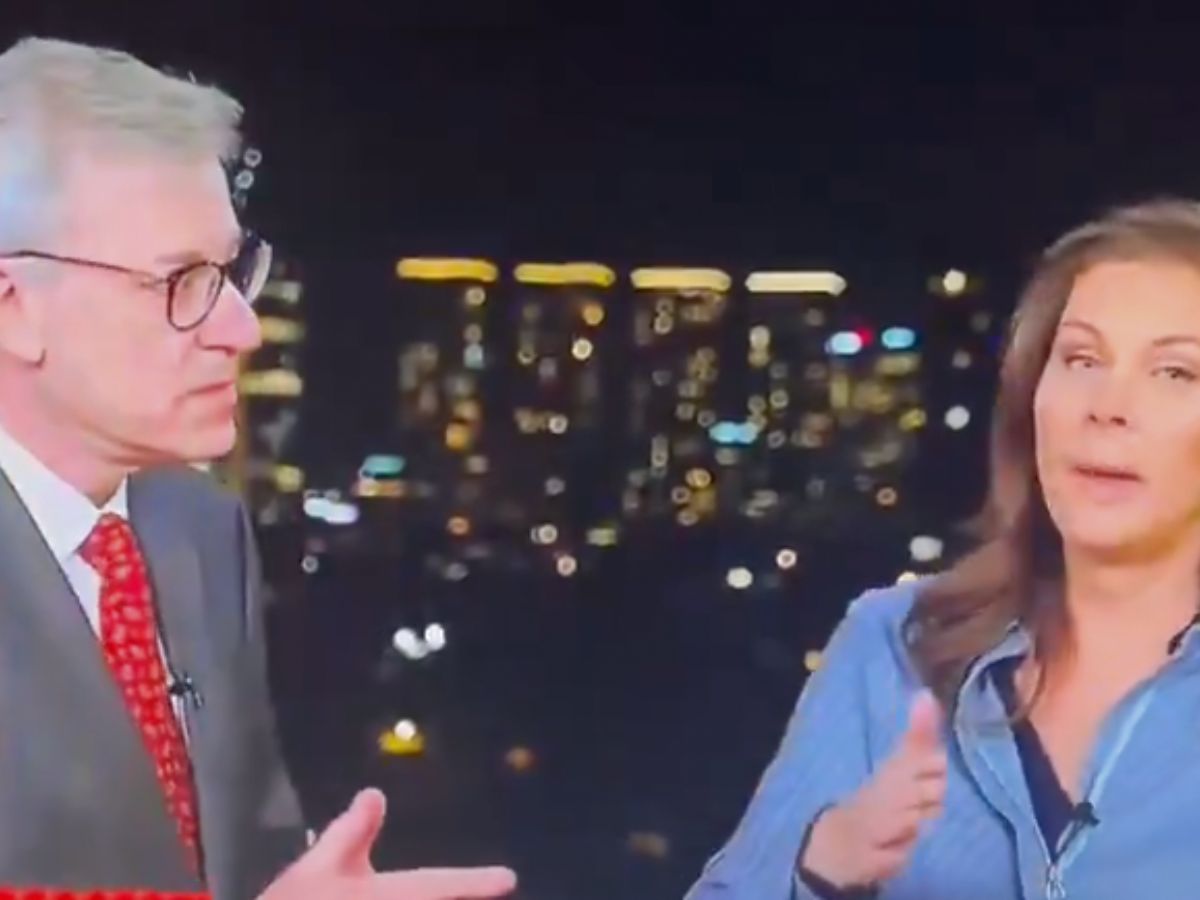

A CNN reporter’s live comment about media restrictions in Israel has gone viral, igniting a global debate over press freedom amid rising US‑Iran tensions. During coverage of Iranian missile attacks and Israeli interceptor launches, the correspondent revealed that certain locations could not be shown due to Israeli government restrictions.
CNN Reporter Mentions Israeli Media Restrictions Live
During a live broadcast from Tel Aviv, the CNN journalist stated:
“We’re not showing you that…, because the Israeli government doesn’t allow us or want us to show where that may have come from..”
The remark quickly caught the attention of viewers, as it openly highlighted the limitations placed on journalists covering wartime events in Israel. Social media users reacted strongly, with some accusing Israel of controlling what American news outlets can show, while others debated the operational reasons for the restrictions.
OMG CNN accidentaly confessed live on TV the massive censorship Israel doing for damage and optics control :
“We’re not showing you that, because the Israeli government doesn’t allow us or want us to show where that may have come from.” pic.twitter.com/IZKOQNfQsJ
— Furkan Gözükara (@FurkanGozukara) March 4, 2026
Social Media Reacts: Free Press Debate Sparks Online
The viral moment prompted widespread online discussion. One user tweeted:
“LOL they just accepted on live TV that Israel CONTROLS American media and news outlets.”
Another urged journalists to prioritize reporting truthfully:
“@CNN Report the truth. Do not hold back! It’s your responsibility as journalists.”
Some observers, however, offered a pragmatic explanation: restricting footage of missile strikes prevents adversaries from assessing the effectiveness of Israel’s defenses, maintaining operational security.
Rising Tensions: Iran and Israel Exchange Missiles
The media debate unfolded amid escalating missile exchanges between Iran and Israel. Iran launched multiple missiles targeting Israeli territory, prompting intercepts by Israel’s defense systems. Sirens blared across Tel Aviv, Beersheba, and Beit Shemesh, with reports of casualties emerging from some areas.
NATO and US Respond to Growing Conflict
NATO air defenses intercepted an Iranian missile approaching Turkish airspace, marking the alliance’s first involvement in the conflict. Turkey called for restraint, warning that it could invoke collective defense under Articles 4 and 5 if threats intensify.
Meanwhile, the U.S. Embassy in Baghdad advised American citizens to leave Iraq or take shelter due to potential threats from Tehran-aligned militias.
Iran’s Retaliation and Regional Expansion
Iran launched “Operation Honest Promise 4,” firing approximately 40 missiles at US and Israeli-linked targets. Drones were also spotted near American assets in the Gulf. Israel reported a death toll of at least 11 from the attacks, while Iranian state media claimed over 1,000 casualties since the conflict escalated, including high-ranking officials.
The war has expanded beyond Iran and Israel. A drone strike on a US command center in Kuwait killed six Americans, signaling a widening conflict across West Asia.
The CNN reporter’s viral comment has revived discussions about press freedom and wartime censorship. While some argue that operational security necessitates restrictions, others view the remark as an alarming admission of media control in Israel during sensitive coverage.
Sofia Babu Chacko is a journalist with over five years of experience covering Indian politics, crime, human rights, gender issues, and stories about marginalized communities. She believes that every voice matters, and journalism has a vital role to play in amplifying those voices. Sofia is committed to creating impact and shedding light on stories that truly matter. Beyond her work in the newsroom, she is also a music enthusiast who enjoys singing.




