

Iranian President Masoud Pezeshkian has apologised to neighbouring countries and announced that Tehran would halt missile attacks against them unless any assault on Iran originates from their territory. The move has been seen as the first signal of possible de-escalation in the ongoing war with Israel and US.
Iran Apologises to Neighbouring Countries
Speaking on Saturday, Pezeshkian said Iran’s temporary leadership council had approved a decision to suspend attacks targeting neighbouring states.
“I must apologise on my own behalf and on behalf of Iran to the neighbouring countries that were attacked by Iran,” he said, according to AFP.
The Iranian leader described the move as a step aimed at easing tensions with regional countries amid the ongoing conflict.
Iran Vows Not to Surrender to US or Israel
Despite the apology, Pezeshkian made it clear that Iran would not bow to pressure from its adversaries, including the United States and Israel.
“The enemies must take their wish for the surrender of the Iranian people to their graves,” he said in a speech broadcast on state television, as quoted by AFP.
Is Iran Running Out Of Missiles, Other Weapons?
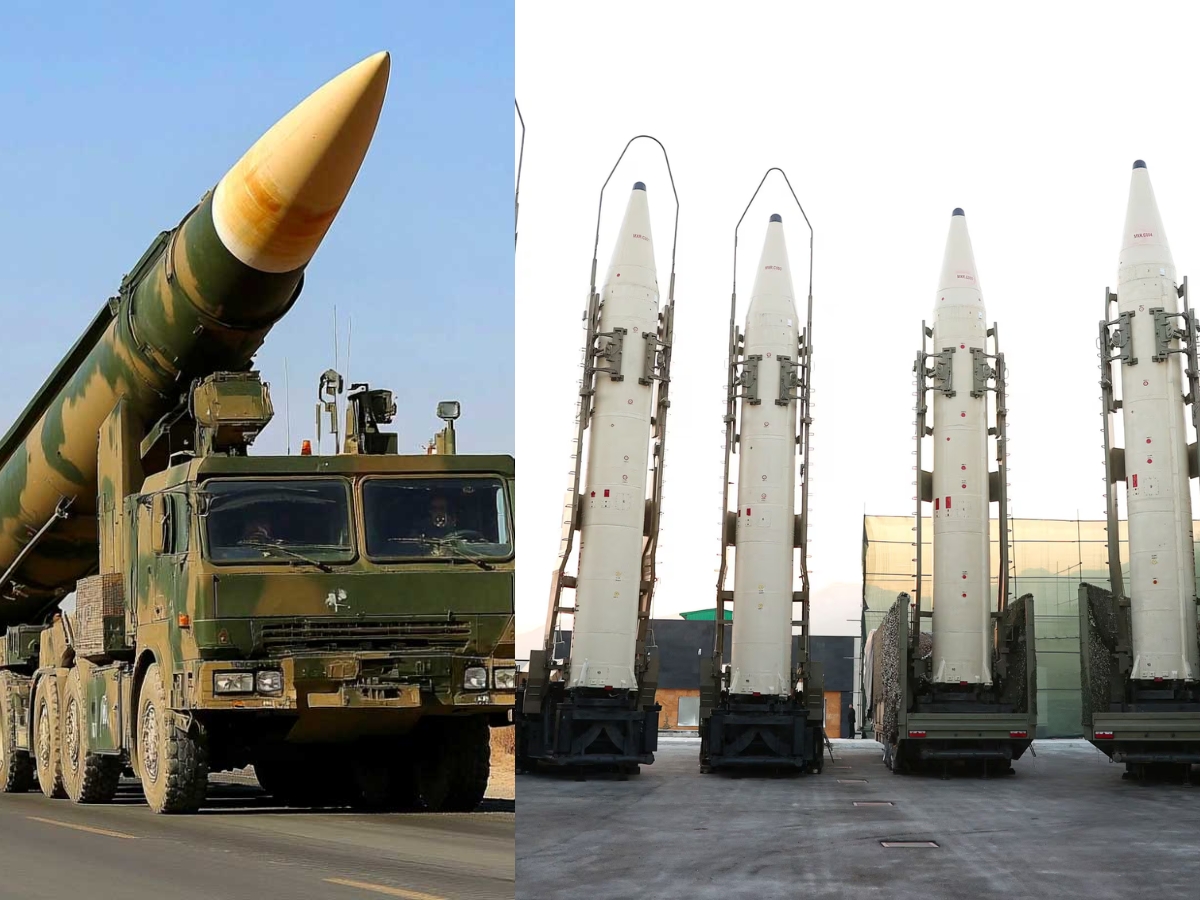
A new report by the US-based think tank Jewish Institute for National Security of America (JINSA) suggests that US and Israeli strikes have significantly weakened Iran’s missile capabilities during the current war.
According to the report, Iranian ballistic missile launches have dropped by about 90 percent since the conflict began. Missile attacks specifically targeting Israel have declined by roughly 88 percent.
🇺🇸🇮🇷 While most of Iran’s ballistic missile launchers have been taken out, explaining why Tehran is now almost apologizing to the “neighbors” it struck, we have to keep in mind that a $30K Iranian drone just destroyed a $300 million U.S. radar in Jordan.
That’s the cost… https://t.co/rhH2N5CBeJ pic.twitter.com/enU12rdX28
— Mario Nawfal (@MarioNawfal) March 7, 2026
JINSA also noted that Iran fired more missiles on the first day of Israel’s earlier Operation Rising Lion last year than it launched during the first five days of the current war combined.
The report added that the combined effects of Operation Epic Fury by the United States and Israel’s Operation Roaring Lion have reduced Iran’s daily missile fire nearly three times faster than during the 2025 conflict.
Israel Warns Iran Could Rebuild Missile Arsenal
Even as Iran’s current capabilities decline, Israeli officials have warned that Tehran could rebuild its missile programme in the coming years.
An Israeli military spokesperson said on Thursday that Iran could potentially build up an arsenal of up to 8,000 ballistic missiles by 2027 if it continues rebuilding its missile infrastructure after the June 2025 Iran-Israel conflict.
The spokesperson said Israel had observed Iran resuming work on missile production systems following the 2025 war while also continuing its nuclear programme.
According to the Israeli military, Iran had around 3,000 missiles before the June 2025 war, many of which were either used or destroyed during the conflict.
“By Saturday, when Operation Lion’s Roar began, it had managed to rebuild 2,500 missiles through renewed and mass production,” the spokesperson said.
“If this trend had continued, the regime could have reached 8,000 ballistic missiles by 2027.”
Zubair Amin is a Senior Journalist at NewsX with over seven years of experience in reporting and editorial work. He has written for leading national and international publications, including Foreign Policy Magazine, Al Jazeera, The Economic Times, The Indian Express, The Wire, Article 14, Mongabay, News9, among others. His primary focus is on international affairs, with a strong interest in US politics and policy. He also writes on West Asia, Indian polity, and constitutional issues. Zubair tweets at zubaiyr.amin




