
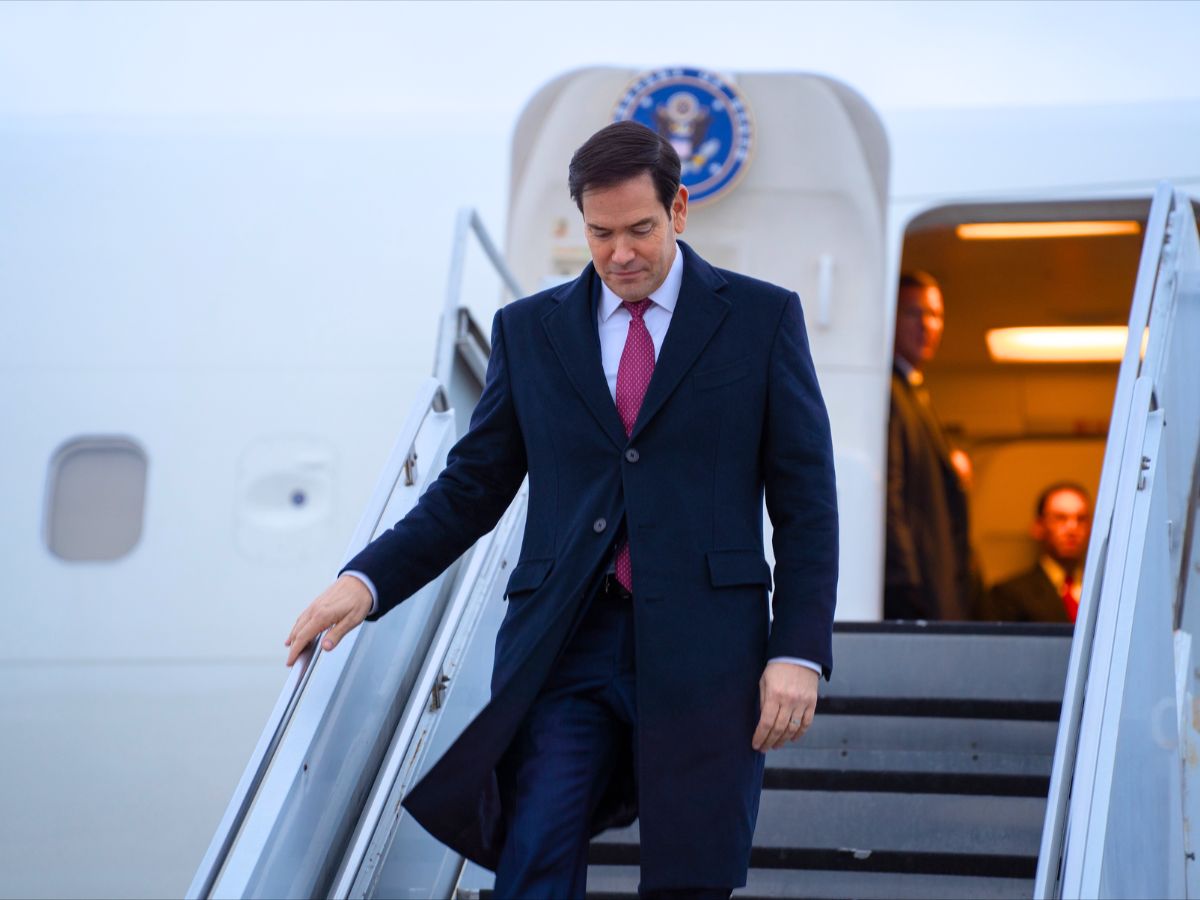

U.S. Secretary of State Marco Rubio on Sunday described as “troubling” a report by five European allies accusing Russia of killing late Kremlin critic Alexei Navalny using a toxin derived from poison dart frogs.
The joint assessment by Britain, France, Germany, Sweden and the Netherlands concluded that forensic analyses found epibatidine, a rare toxin not naturally found in Russia in samples taken from Navalny’s body.
Rubio said Washington was aware of the findings and had no reason to question the conclusions reached by the European governments.
Speaking to reporters at a news conference in Bratislava during a visit to Slovakia, Rubio said the United States was familiar with the case and the allied report. “We obviously are aware of the report. It’s a troubling report… we don’t have any reason to question it,” he said, stopping short of formally joining the European statement but making clear that the U.S. was not disputing its outcome.
In a joint statement, Britain, France, Germany, Sweden and the Netherlands on Saturday said analyses of samples from Navalny‘s body “conclusively” confirmed the presence of epibatidine, a toxin found in poison dart frogs in South America and not found naturally in Russia.
The Russian government, which has repeatedly denied any responsibility for Navalny‘s death while he was held in an Arctic penal colony two years ago, dismissed the latest allegations as “a Western propaganda hoax,” according to Russia’s state news agency TASS.
When asked why the United States did not join the statement, Rubio said this was an endeavour by them.
“Those countries came to that conclusion. They coordinated that. We chose – Doesn’t mean we disagree with the outcome. We just, it wasn’t, our endeavour. Sometimes countries go out and do their thing with based on the intelligence they’ve gathered.” Rubio said.
“We’re not disputing or getting into a fight with these countries over it. But it was their report, and they put that out there,” he added.
Russian opposition leader Navalny died in an Arctic prison colony in February 2024, after being convicted of extremism and other charges, all of which he denied.
(With Reuters Inputs)
Sofia Babu Chacko is a journalist with over five years of experience covering Indian politics, crime, human rights, gender issues, and stories about marginalized communities. She believes that every voice matters, and journalism has a vital role to play in amplifying those voices. Sofia is committed to creating impact and shedding light on stories that truly matter. Beyond her work in the newsroom, she is also a music enthusiast who enjoys singing.




