
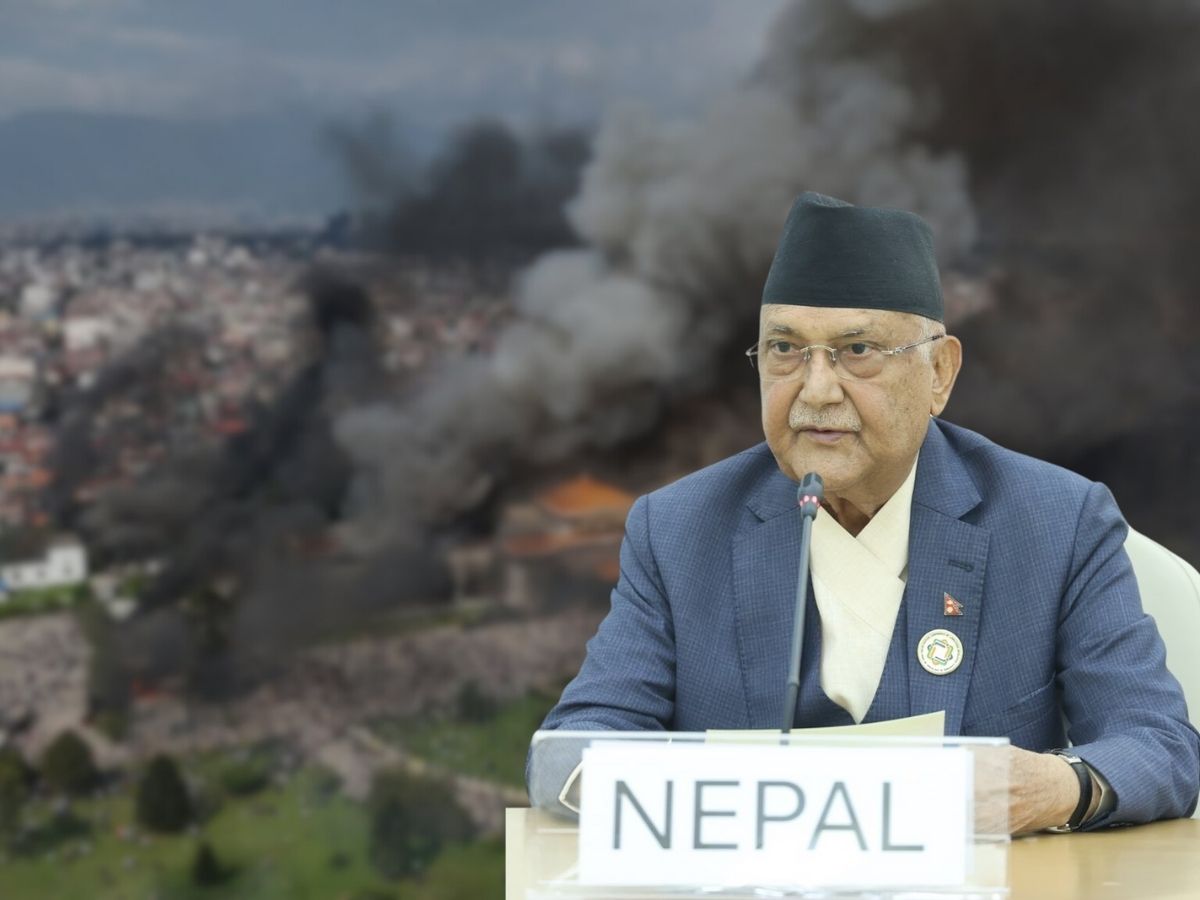

Nepal witnessed one of its worst political crises on September 9, 2025, when violent youth-led protests toppled the government in Kathmandu. Prime Minister K.P. Sharma Oli and President Ram Chandra Poudel both resigned amid nationwide demonstrations against corruption and the recent social media ban.
The resignations created a sudden leadership vacuum, with the army preparing to step in to maintain order.
Resignations Amid Corruption Charges!
Protesters, led largely by students and young citizens, stormed Nepal’s Parliament and set it on fire. The unrest escalated into direct attacks on political leaders, forcing Oli to step down hours after he had called for an all-party meeting. His resignation was followed by President Poudel, who also quit as crowds surrounded government buildings. The dual exit has left Nepal without its top two leaders for the first time in decades.
Will Army Take Control Or An Interim PM?
With the Prime Minister and President gone, the Nepalese Army emerged as the only force capable of holding the country together. Chief of Army Staff Ashok Raj Sigdel is expected to address the nation, signaling a possible takeover. Sources in Kathmandu said the army could impose martial law temporarily until fresh political arrangements are made.
The resignations did not immediately calm the violence. Protesters set fire to the residences of several leaders, including ex-PM Jhalanath Khanal’s house, where his wife died. Foreign Minister Arzu Rana Deuba and Finance Minister Bishnu Prasad Paudel were also attacked in public. Demonstrators tore down Communist Party flags, stormed offices, and shouted slogans demanding action against corruption.
What Happens Next?
-
Interim Leadership – The Speaker of the House or senior-most minister may temporarily assume executive powers until new elections are announced.
-
Army’s Role – The military is expected to secure key government buildings, enforce curfews, and restore order before handing power back to civilians.
-
Emergency Measures – Nepal may witness an extended state of emergency if protests continue, with restrictions on gatherings and tighter security.
-
International Reactions – India, the U.S., and the U.N. have called for restraint, with India issuing a travel advisory for its citizens in Nepal.
-
Uncertain Future – The sudden collapse of leadership could trigger either fresh elections or prolonged instability if political parties fail to agree.
India’s Travel Advisory
In view of the escalating crisis, the Indian Ministry of External Affairs issued an advisory asking citizens to avoid traveling to Nepal. Those already in the country have been urged to stay indoors and use helpline numbers released by the Indian Embassy in Kathmandu.
Swastika Sruti is a Senior Sub Editor at NewsX Digital with 5 years of experience shaping stories that matter. She loves tracking politics- national and global trends, and never misses a chance to dig deeper into policies and developments. Passionate about what’s happening around us, she brings sharp insight and clarity to every piece she works on. When not curating news, she’s busy exploring what’s next in the world of public interest. You can reach her at [swastika.newsx@gmail.com]




