
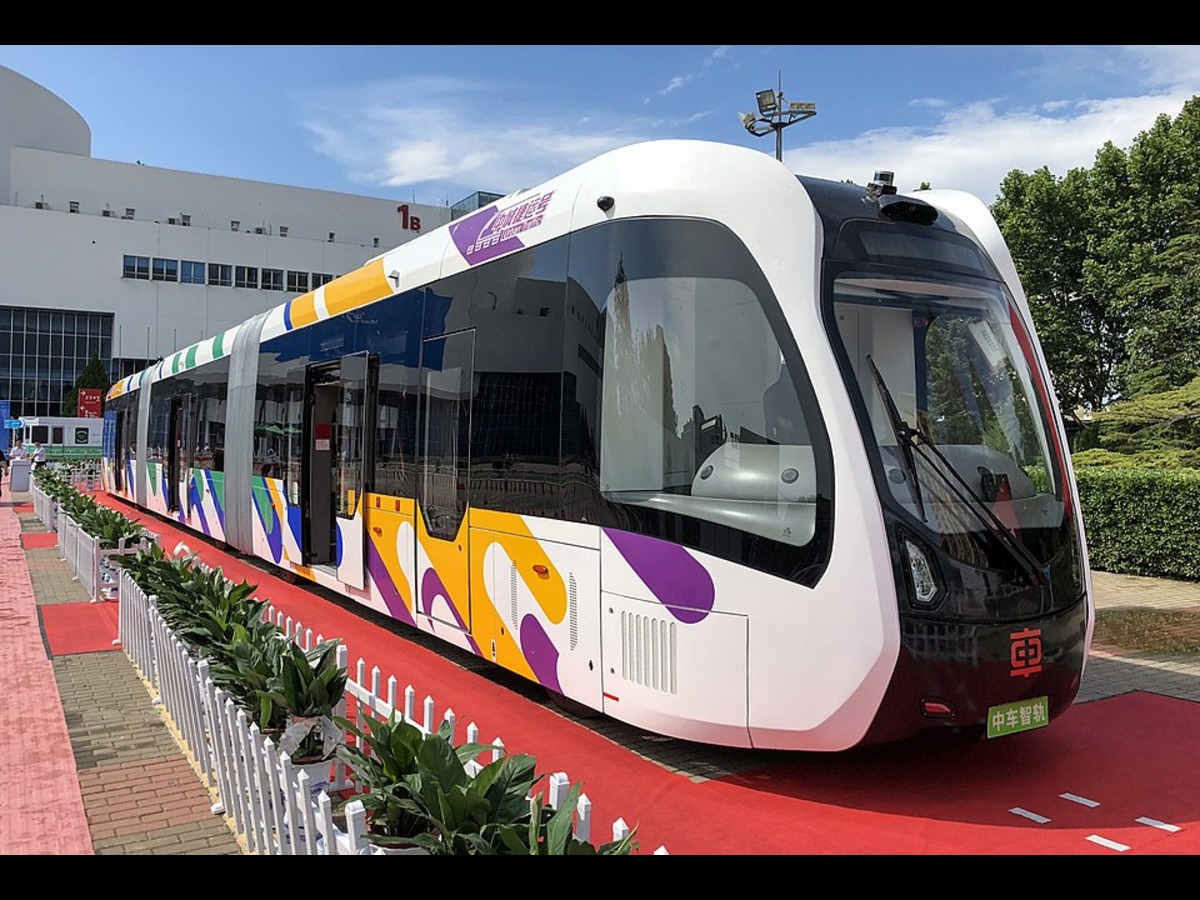

In what could be a groundbreaking step toward sustainable urban transportation, Pakistan has launched South Asia’s first trackless and solar-powered metro system in Lahore. Called the “Subway on Wheels,” the Super Autonomous Rail Rapid Transit (SRT) system is built with the help of China and does not require traditional tracks to function.
In contrast, the system works on advanced virtual track technology and uses sensors, digital mapping, and GPS to cross the roads in the city and also gives an eco-friendly yet cost-effective method to travel.
The project was inaugurated by Punjab Chief Minister Maryam Nawaz Sharif close to Lahore Airport. It’s the same place where the trial for the battery-powered electric vehicle began along a corridor. She hailed the system as a “vision for the future of public transport in Punjab.”
The Solar-Powered Metro is Likely to Slash Air Pollution
Reports say the system can carry 250-300 passengers and runs with the precision of a train in combination with the flexibility of a bus, thus making it suitable for a packed city like Lahore. Also, the solar-powered system gives zero emissions and helps in less usage of fossil fuels and reduces air pollution.
Part of Punjab’s unique five-year transport plan to use the Automated Rapid Transit (ART) system across 30 cities, the first phase will focus on three major cities: Lahore, Gujranwala, and Faisalabad. The plan will then be implemented in ten cities per phase in the next four years, with the full-scale process to begin in 2026 and extensions to Karachi, Rawalpindi, and Islamabad.
The Metro System Was Built in Collaboration with China
Officials from Pakistan and China attended the launch, highlighting the strong bilateral collaboration. The SRT, already operational in countries like China, Malaysia, and the UAE, features amenities such as WiFi and CCTV surveillance, powered by solar-charged smart stations.
“This modern metro is a step toward equitable, green mobility,” Sharif added. Despite its promise, some experts question its cost-effectiveness for smaller routes, suggesting investments in electric buses might serve larger populations.
Also Read: Paank Urges EU To Reassess Pakistan’s Trade Perks Amid Rising Human Rights Violations




