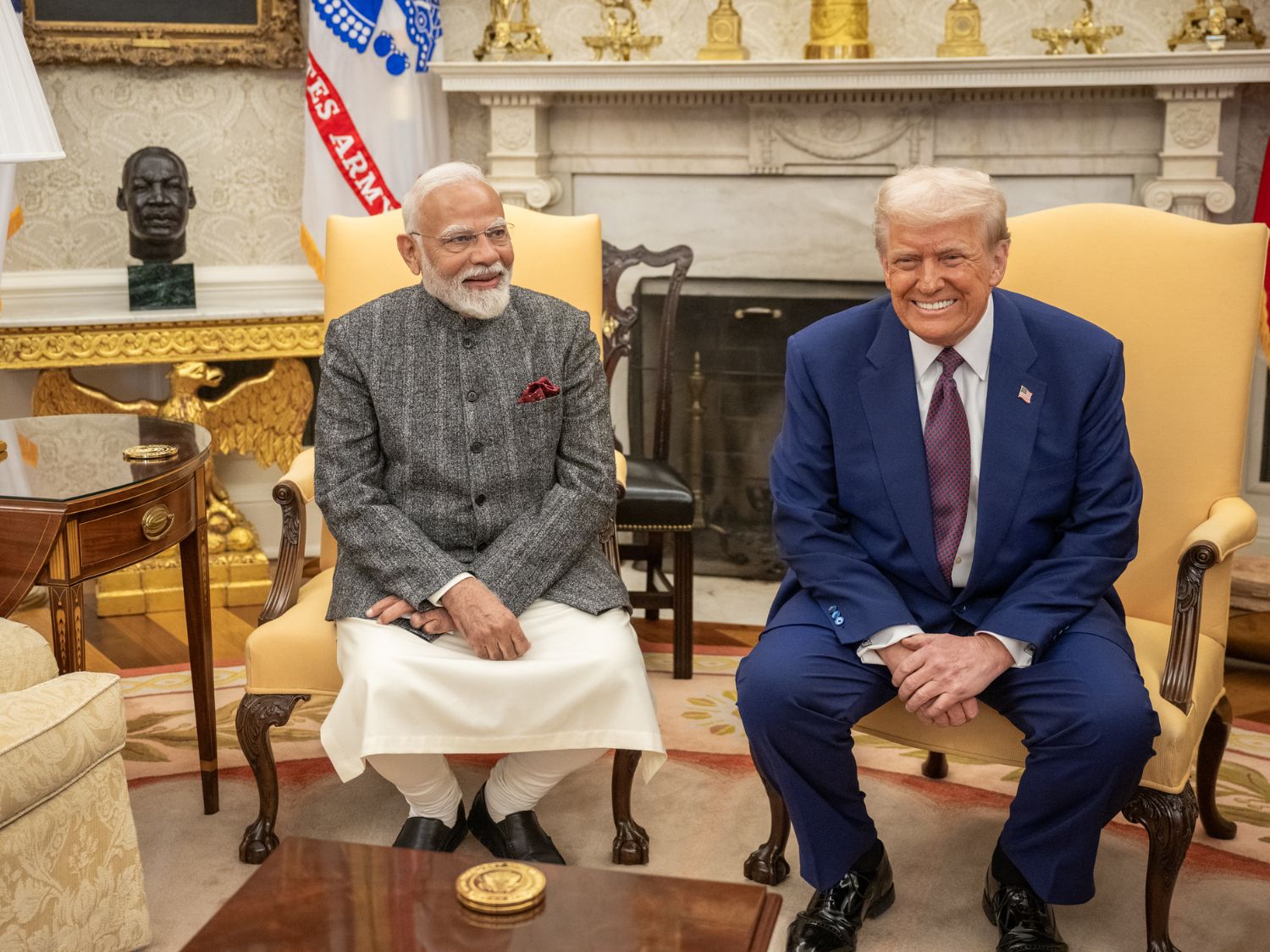

President Trump of the United States has, during the year 2026 World Economic Forum in Davos, hinted at the coming announcement of the “good deal” with India and so revitalized the bilateral relationship. In an unusual on-camera meeting, Trump called Prime Minister Modi a “fantastic man” and a close friend, thus highlighting the ground of mutual esteem and respect.
This public display of affection represents a crucial turning point in a partnership that has recently come under quite substantial stress, especially in relation to India’s energy independence and global trading partners.
The President’s upbeat attitude indicates that the trade conflict, which has been marked by intense negotiations and very high tariffs, might finally lead to the formulation of a strategic framework for the initial phase of a Bilateral Trade Agreement (BTA).
Strategic Alliances
The personal rapport that exists between the two leaders is the main reason why the deadlock in the ongoing trade discussions is finally being broken. In spite of the fact that Indian exports are facing heavy tariffs from the U.S., the “Mission 500” target of achieving $500 billion in trade between the two countries by 2030 is still of great importance to both.
Their partnership is not just talk but is concretely evidenced by the recently held sixth round of negotiations in New Delhi, which was centered on the reduction of reciprocal duties for the sectors most affected, like agriculture and manufacturing.
The personal relationship between Trump and Modi gives the two nations a unique diplomatic buffer and enables them to allow the complex issues of intellectual property rights and market access to be seen through the lens of a long-term partnership and not in terms of immediate friction.
Tariff Negotiations
At the moment, the primary issue revolves around the U.S.’s 50% tariffs that have been placed on the majority of Indian goods. This action is mainly aimed at influencing India’s energy procurement from Russia. On the other hand, recent U.S. Treasury reports indicate that the U.S.’s hardline position might be turning down as India starts adopting its energy policy in line with international standards.
The negotiating teams are almost zooming through to seal the deal for the first segment of the BTA; the latter is designed to reduce the import tariffs to about 15% for Indian exports worth $48.2 billion.
No definitive date for completion has been set, yet the steps taken are a clear indication of the transition from a strict punishment policy to a well-organized incentive program, where adherence to the international energy policy is rewarded with greater access to the profitable U.S. consumer market.
A recent media graduate, Bhumi Vashisht is currently making a significant contribution as a committed content writer. She brings new ideas to the media sector and is an expert at creating strategic content and captivating tales, having working in the field from past four months.