
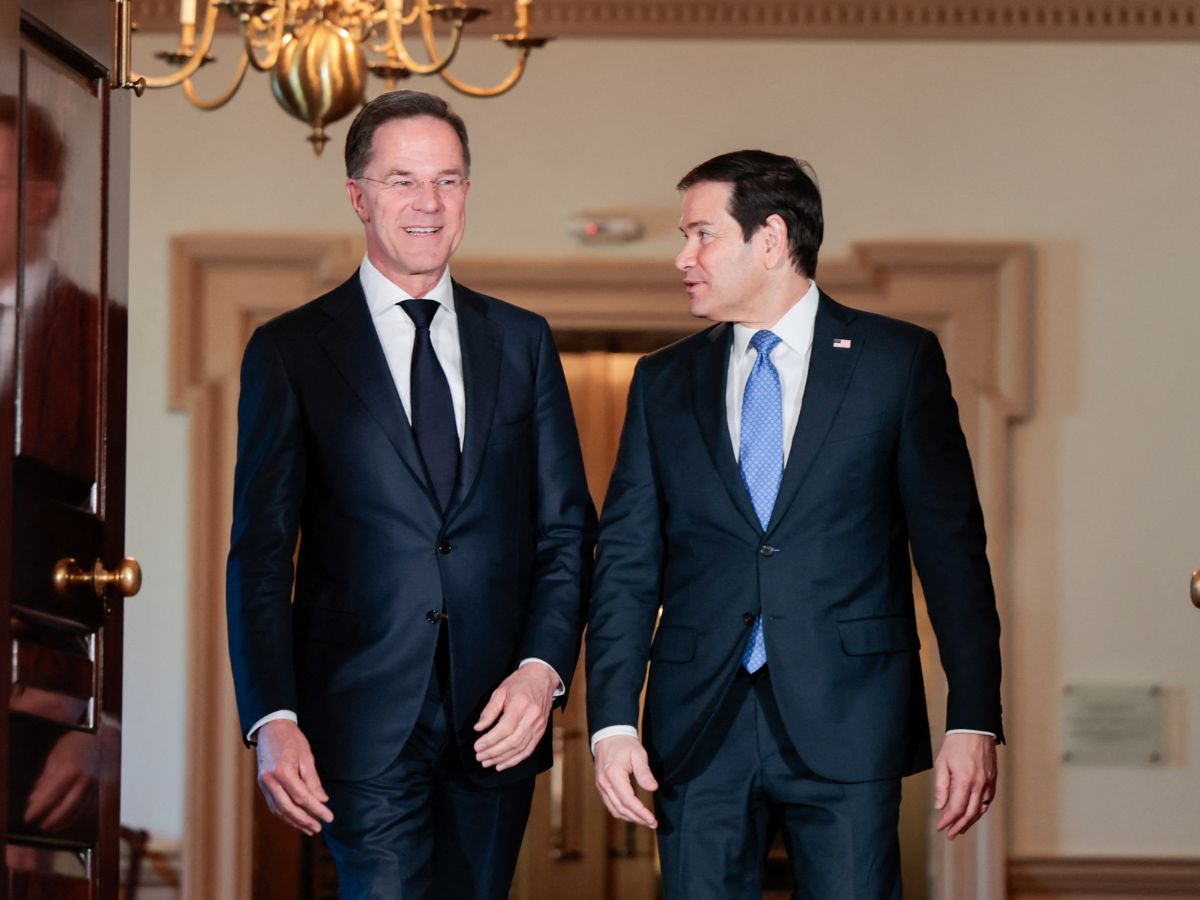

NATO Secretary General Mark Rutte has informed several European capitals that Donald Trump is seeking quick, concrete commitments to help secure the Strait of Hormuz, according to diplomats who spoke to Reuters. The development comes after Rutte met Trump in Washington on Wednesday, at a time when tensions within NATO remain high over the ongoing Iran conflict.
A NATO spokesperson, Allison Hart, confirmed that discussions are ongoing. “The Secretary General is in contact with Allies about his discussions in Washington,” she said. “It’s clear that the United States expects concrete commitments and action to ensure freedom of navigation in the Strait of Hormuz,” she added.
Trump’s Criticism of NATO and Allies Push Back
Trump has been openly critical of NATO in recent weeks, repeatedly calling the alliance a “paper tiger” and even threatening to withdraw. He has argued that European allies depend too much on U.S. security while offering limited support for the U.S.-Israeli bombing campaign in Iran.
European diplomats, however, pushed back on the criticism. “We note the frustration in Washington, but they did not consult allies either before or after starting this war,” said one diplomat. Another added, “NATO as such would not play a role in the war against Iran, but allies want to be helpful in seeking longer-term solutions for Hormuz. With negotiations ongoing with Iran, this could be helpful.”
Ceasefire Fails to Ease Tensions Between U.S. and NATO
Although Trump announced a pause in attacks on Iran under a two-week ceasefire earlier this week, tensions have not eased. After his meeting with Rutte, Trump wrote on Truth Social in capital letters that “NATO wasn’t there when we needed them, and they won’t be there if we need them again.”
Rutte, often described in Europe as a “Trump whisperer,” acknowledged the U.S. president’s concerns in an interview. He said Trump “is clearly disappointed with many NATO allies, and I can see his point”.
Growing Unease in Europe Over NATO’s Direction
Behind the scenes, concern is growing within Europe. A senior European official admitted that “the NATO community is more worried right now than confident” and that “the meeting did not take the worry away”.
Meanwhile, early planning is underway among allies. Britain is leading a group of around 40 countries to develop a military and diplomatic plan to secure the Strait of Hormuz, though progress appears slow. French President Emmanuel Macron said about 15 countries are working to support the safe resumption of shipping in the region.
Diplomatic Efforts Continue Amid Complex Challenges
France’s foreign minister Jean-Noel Barrot warned that full reopening of the strait depends on a lasting agreement between the U.S. and Iran. At the same time, Italy and Britain rejected Iran’s suggestion of imposing a toll on ships crossing the route.
Diplomats stressed that efforts are ongoing but complex. “We have an ongoing track on Hormuz, which is largely unrelated to what happened in the White House yesterday,” said another diplomat. They added, “We know the urgency on the U.S. side, and we know that Rutte is trying to position himself in a way that he is helpful in that conversation. We are willing to make the right noises and even the right actions down the line. But ultimately the problem is not to please the U.S. but to have the right conditions in place.”
(With inputs from Reuters)
Khalid Qasid is a media enthusiast with a strong interest in documentary filmmaking. He holds a Master’s degree in Convergent Journalism from AJK MCRC. He has also written extensively on esports at Sportsdunia. Currently, he covers world and general news at NewsX Digital.




