
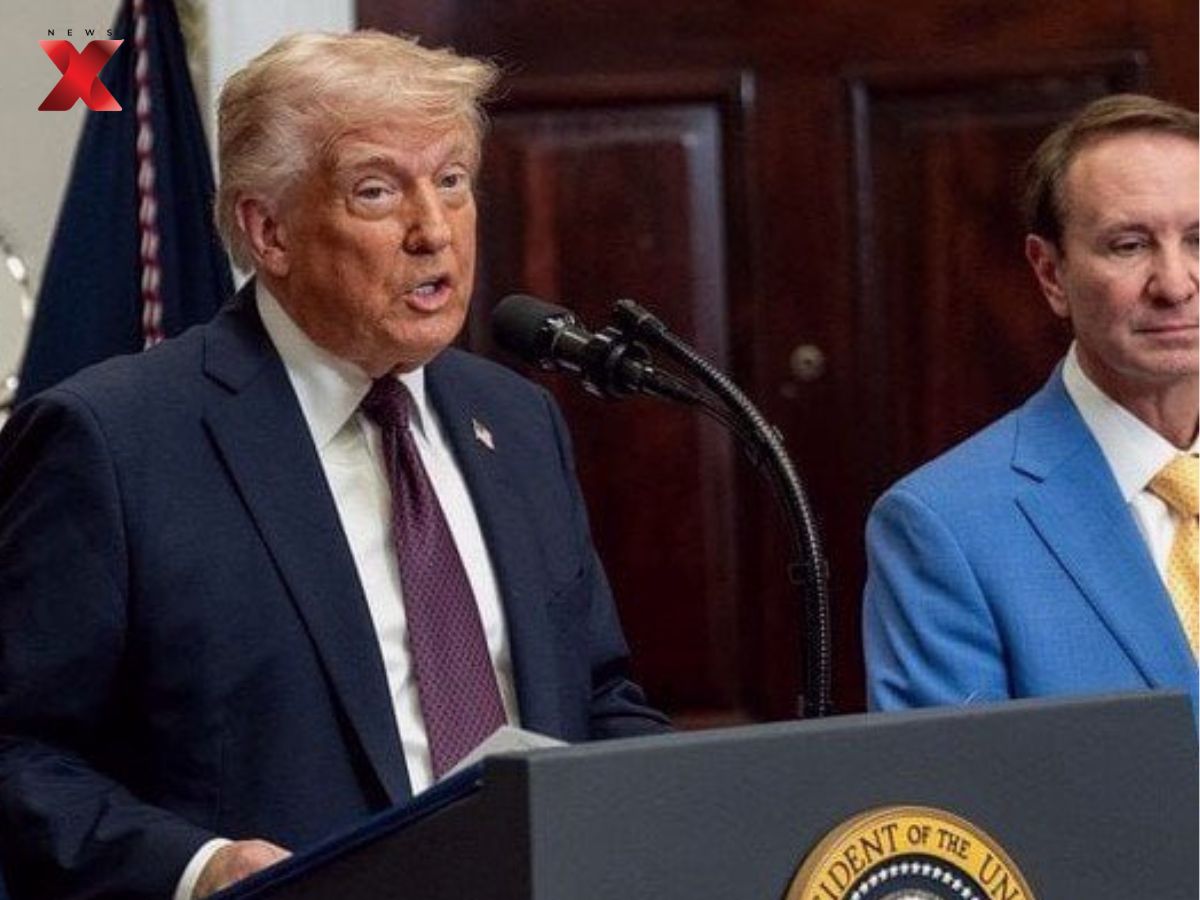

President of the United States Donald Trump, during the Tuesday press conference, acknowledged the tremendous uncertainties that the US Supreme Court might create for his administration’s massive tariffs imposed on imports.
In a rare moment at the White House’s press briefing, his first publicly held event since his January 20, 2025, inauguration and the marking of his first year back after the election, Trump flatly told the audience that a negative ruling might have very high financial impacts.
He gave reasons for his trade policies to bless the country with a revival of the manufacturing industry, where, for instance, a Ford plant in Michigan, as he recently took a tour, would be one of the beneficiaries of his policies; however, he still said to the press, “I don’t know what the Supreme Court is going to do.”
The admission reflects the very situation, as the Court once more on Tuesday decided not to deliver a decision, thus keeping the question of the legality of tariffs on almost every US trading partner unresolved.
Economic Emergency and Statutory Authority
The main issue in court is whether or not the President acted beyond his limits as prescribed by the International Emergency Economic Powers Act (IEEPA) of 1977.
The Law, which has been used mostly for the purpose of sanctions, was invoked by the Trump administration to declare a national emergency on the basis of trade deficits and supply chain vulnerabilities, and therefore, during the embargo, very high 10% to 50% tariffs were applied.
The president maintains these steps have guaranteed “tremendous national security” and helped the production of such plants as Ford Rouge in Dearborn, but the lower courts have already come to the conclusion that the executive branch acted beyond its limits.
The ruling of the Supreme Court, in the end, will set the stage for the new era of the presidential powers in the area of international commerce that doesn’t require explicit approval from Congress.
Financial Liability and Refund Complexity
“Immense chaos” is a word that the administration is afraid of, should the court order the payment of duties that have already been collected. Trump has asserted that the amount of money to be refunded could be in the hundreds of billions of dollars, which he referred to on Truth Social as “almost impossible for our country to pay” without “hurting a lot of people.”
Some legal practitioners are of the opinion that in case the tariffs are invalidated, US importers could file for refunds going back in time through the already existing Customs and Border Protection routes, but then again some judges have suggested that only “prospective relief” might be available.
The court has a four-week break, and the next possible date for a decision is February 20, 2026. This means that global markets and domestic industries have to carry on with their business under the shadow of uncertain finances for a little longer.
A recent media graduate, Bhumi Vashisht is currently making a significant contribution as a committed content writer. She brings new ideas to the media sector and is an expert at creating strategic content and captivating tales, having working in the field from past four months.




