
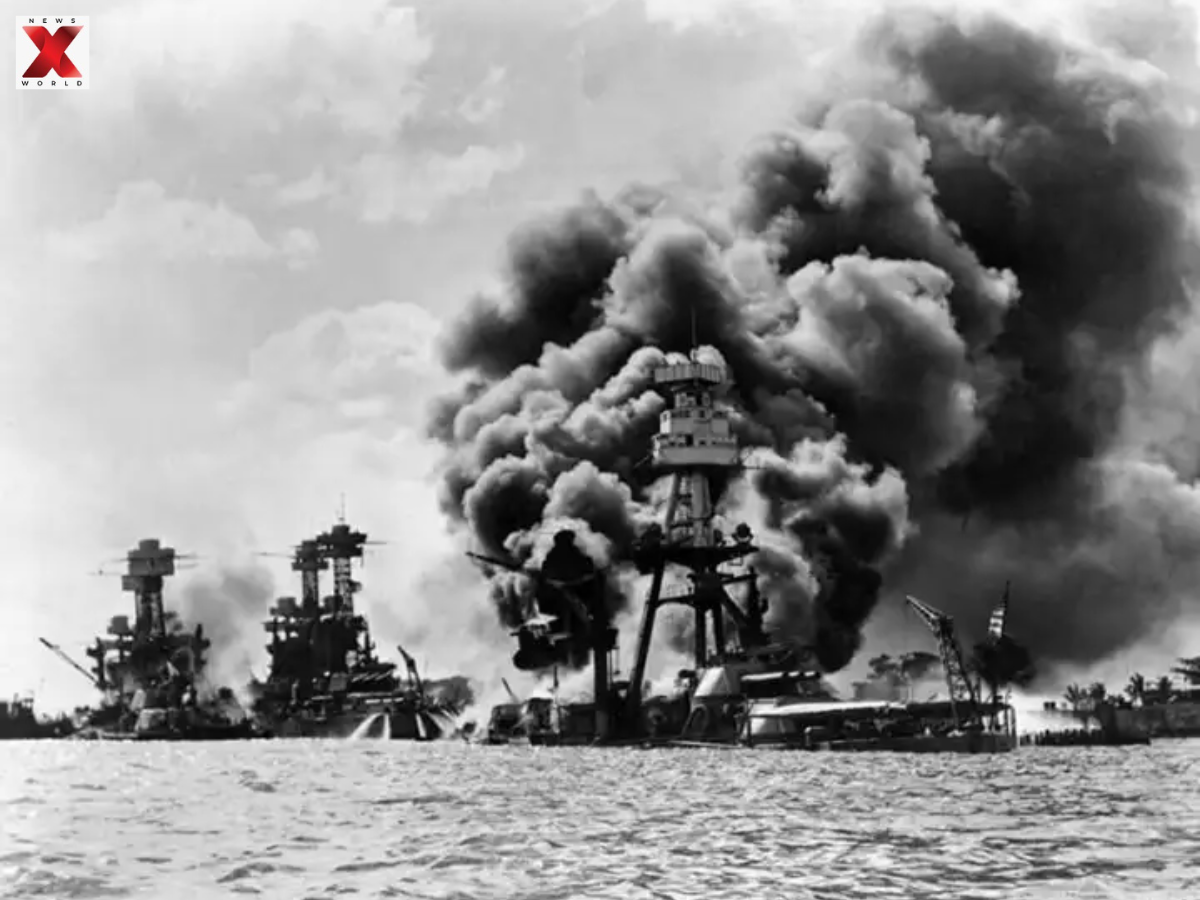

It started out as a calm Sunday on Oahu, just another quiet morning until the sky suddenly exploded with fire. Thunder from bombs and the deafening roar of gunfire jolted everyone awake.
In minutes, hundreds of Japanese warplanes came hurtling down, heading straight for the heart of America’s Pacific forces: Pearl Harbor.
This is the story of how the attack on Pearl Harbour changed everything.
Back then, in the early 1900s, Japan was desperate to modernize. The country wanted to build up its economy and military, to stand alongside giants like Britain and the United States. But there was a problem: Japan simply didn’t have enough natural resources, especially oil the lifeblood of any modern empire.
Pearl Harbour 7 December 1941. pic.twitter.com/h7UW0cy1Jj
— Ron Eisele (@ron_eisele) December 6, 2025
Pearl Harbour: What really happened?
Japan’s first big move was to invade Manchuria in 1937. Then, in 1941, they took over French Indochina. The United States didn’t like what it saw. Washington pushed back, slapping Japan with economic sanctions and a trade ban.
But honestly, those sanctions barely slowed Japan down; they just made the Japanese dig in even harder.
Negotiations between Tokyo and Washington dragged on for months, but nothing worked. War felt unavoidable.
Japan decided on a bold plan: wipe out the US Pacific fleet in one go. After months of secret planning and rehearsals, they set their sights on Pearl Harbour.
On the morning of December 7, 1941, just before 8 a.m., the first Japanese dive-bomber appeared over Pearl Harbour. It led a wave of almost 200 aircraft: torpedo planes, bombers, fighters. Within minutes, the attack was in full swing.
Torpedoes slammed into battleships. Bombs tore apart airfields. Machine guns rattled as American sailors scrambled for cover. The US fleet was knocked out for months.
In just two hours, it was all over. More than 2,400 Americans were killed. Another 1,000 were wounded.
The Japanese delivered a devastating blow. The battleships Arizona and Oklahoma were lost. Six others were badly damaged. Three cruisers, three destroyers, and a bunch of other vessels took hits. Army and navy planes were wrecked on the ground.
What happened with the Japanese?
Japan lost fewer than 100 men, between 29 and 60 planes, five midget submarines, and maybe one or two larger subs. Their fleet pulled out without ever facing a counterattack.
Switching gears: On this day in 2004, Hamid Karzai officially became Afghanistan’s first elected president pretty much Washington’s top choice for the job. US Vice President Dick Cheney and Defense Secretary Donald Rumsfeld were there. Hillary Clinton showed up too.
On December 7, 1941, Japan launched a surprise attack on Pearl Harbor.
• 2,400 Americans killed
• 188 U.S. planes destroyed
• Battleships exploded in flamesThey thought it would break America.
Instead, it triggered the most brutal war the Pacific had ever seen: pic.twitter.com/iQ0lyjSwmZ
— History Nerd (@_HistoryNerd) June 4, 2025
As Karzai gave his inaugural speech, British Foreign Secretary David Miliband called it “a very strong, substantial statement.” But Karzai had a tough road ahead.
He had to keep powerful traditional leaders in check and stop the Taliban from clawing back power. He survived several assassination attempts, too.




