
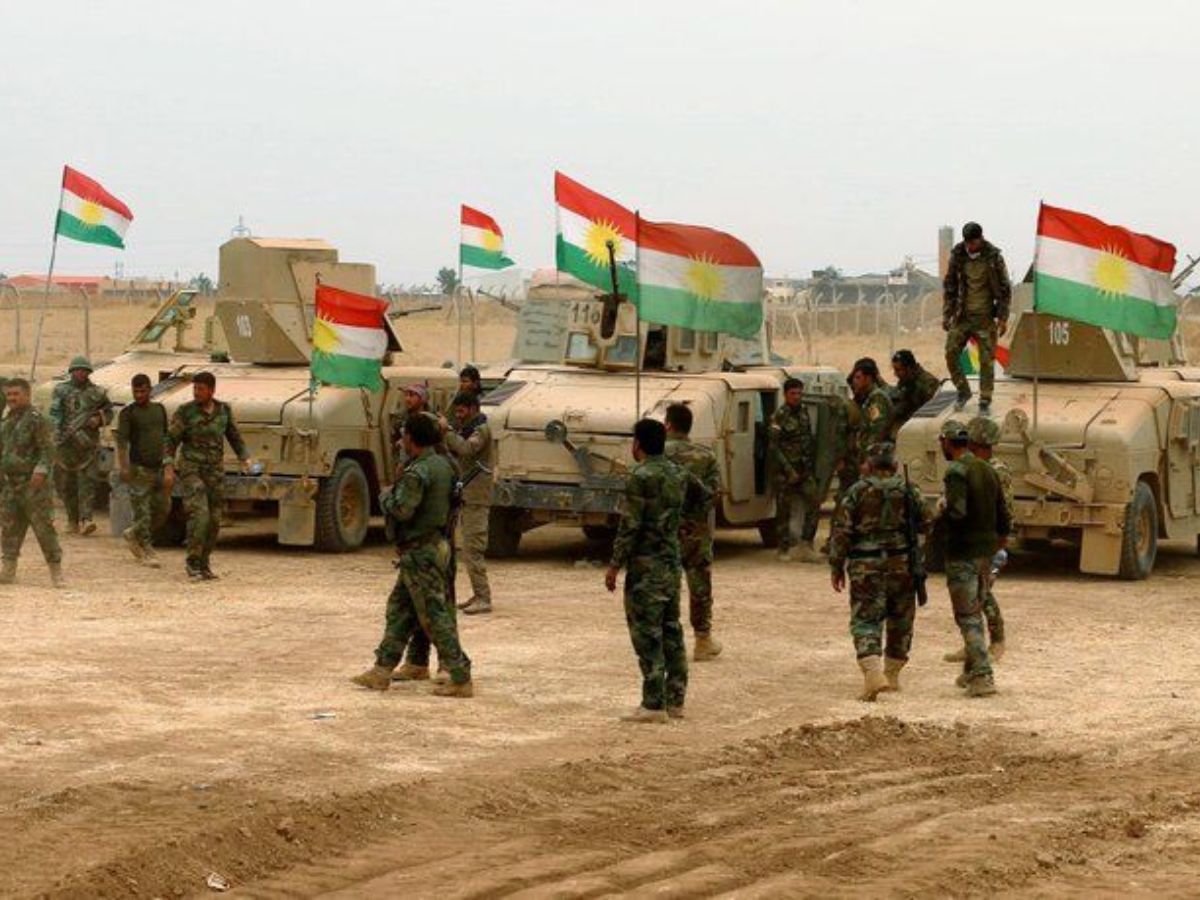

The US intelligence services are reported to be considering how to supply the Iranian Kurdish groups to enable them to be armed in the bigger plan to mount pressure on Tehran and provoke internal unrest, according to sources close to the discussions. Authorities have been communicating with the opposing groups in Iran and the Kurdish leaders in Iraq with the view of evaluating whether military assistance can serve to destabilize the security apparatus of Iran.
But, Who Are The Iranian Kurdish Armed Groups?
Kurdish militias, who act on the border of Iraq and Iran and have thousands of soldiers, the majority of them in the Kurdistan province of Iraq, are considered by certain US authorities as a potential ground force that could stretch the Iranian security schemes and provide a room for civilian protests to increase. Traditionally, the Kurds, an ethnic minority whose members inhabit Turkey, Iraq, Iran, Syria and Armenia, have fought to gain their autonomy, and have succeeded to do so in only part of the Kurdistan region of Iraq.
The negotiations coincide with the escalation of military activities in the region and the recent days of drone attacks by the Islamic Revolutionary Guard Corps (IRGC) of Iran against the positions of the Kurds. Leaders of the Kurdish opposition have made insinuations of impending action and they have urged Iranian soldiers to defect. In Iran, a senior Kurdish official in the senior government informed CNN that the Kurdish opposition forces would have participated in a ground operation in the western part of Iran in the coming days. The source said that the militias are hoping that the US and Israel will back them up now that it feels they have a big opportunity. It is reported that Kurdish fighters might seek to target Iranian security troops in western Iran, which will limit the regime in quelling protests in big cities. Other schemes are the Kurdish groups taking over and controlling land in the north west of Iran which would most likely lead to a buffer zone and undermine the influence of Tehran. Israeli air attacks on Iran militarily and police installations in the Iraqi frontier are also thought to be some of the groundwork towards any further Kurdish movement into Iranian soil.
Is US Really Arming Them Against Iran’s Regime?
Nevertheless, analysts and former US officials have cautioned that this kind of approach is very risky. Even though some analysts feel that by arming the Kurdish forces it might broaden the resistance among other parts of Iran, others warn that the outcome may also be unpredictable. Critics believe that funding armed groups would destroy the sovereignty of Iraq and strengthen militias with minimal responsibility. The intelligence tests have always determined that Iranian Kurdish groups do not have the capacity and resources to organize a successful rebellion against them without the large scale foreign support. Kurdish leaders also want Washington to guarantee them politically before they even decide to engage in any form of sustained resistance.
US and Kurds
The Kurdish opposition, in its turn, is divided into many small parts due to an ideological mismatch and old time feuds. America has been collaborating with Kurdish right over decades especially in anti ISIS campaigns, yet sometimes the relationship has been affected by the changing US policies. It is noted that in case a Kurdish supported insurgency is unsuccessful and the US suffers withdrawals it may serve to cement the fears of abandonment that Kurdish groups hold. As the debate over the possibility of Kurdish forces playing the role that some believe they can play in Washington, the main question is whether Kurdish forces have a realistic chance to do so, and whether further US intervention will contribute to the escalation of an already volatile conflict.




