

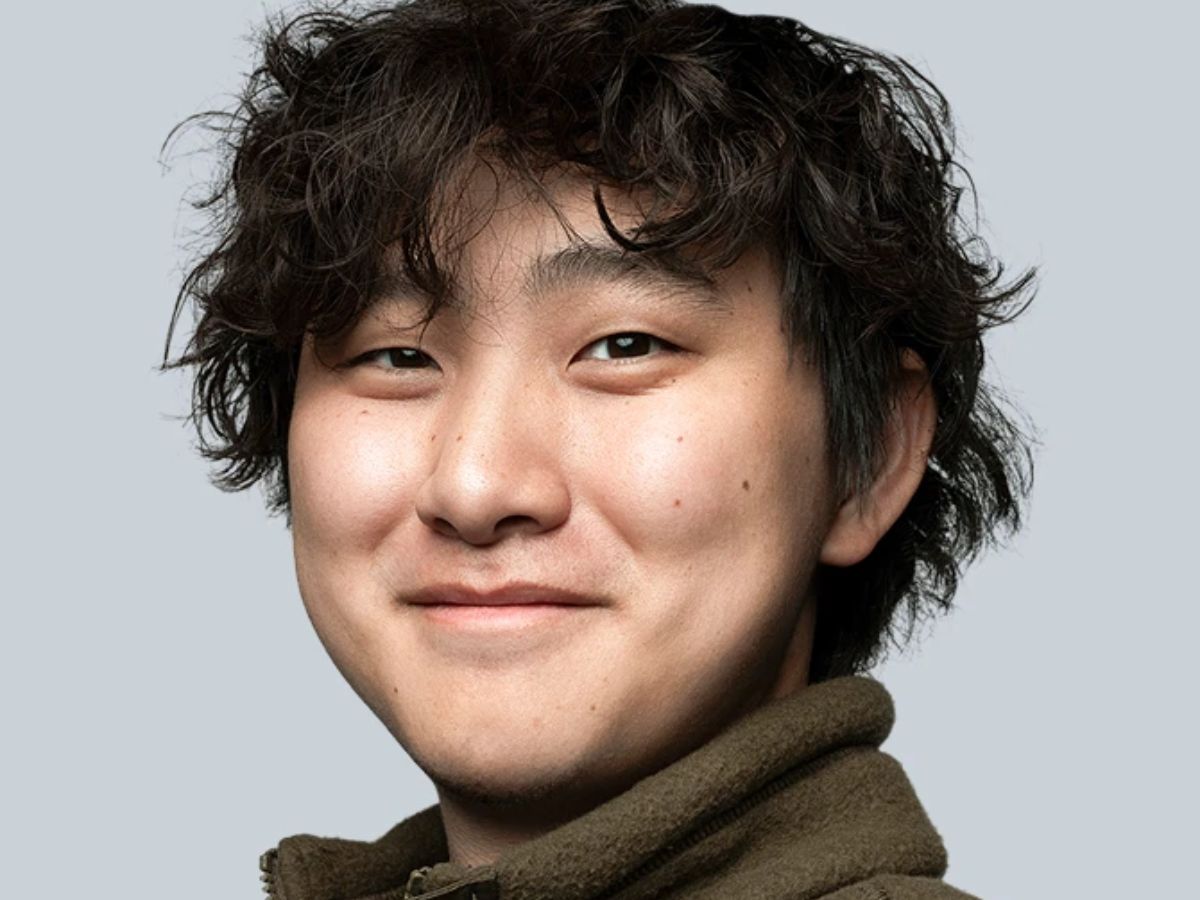
Alexandr Wang, the 28-year-old AI billionaire who recently became Meta’s first-ever Chief AI Officer, is emerging as one of the key figures shaping the company’s plan to take on OpenAI and Google. While much of the artificial intelligence industry is focused on building smarter general-purpose AI systems, Alexandr Wang has hinted that Meta could pursue a different path, one centred on healthcare and wellbeing. His comments suggest that health-related AI tools may become Meta’s biggest opportunity to stand out in a market currently dominated by ChatGPT, Gemini and Claude.
Speaking at the Bloomberg Tech conference in San Francisco, Alexandr Wang gave one of the strongest signals yet about where Meta’s AI ambitions are headed. Rather than competing only on benchmark scores and reasoning abilities, he indicated that the company wants to focus on practical uses of AI that can improve everyday life. Healthcare, according to Wang, is becoming one of the most promising areas as AI systems grow more powerful and reach more people.
Who is Alexandr Wang, the billionaire now leading Meta’s AI ambitions?
Before joining Meta, Alexandr Wang built one of the most influential companies in the AI ecosystem. In 2016, at just 19 years old, he co-founded Scale AI after dropping out of the Massachusetts Institute of Technology (MIT) during his first year. His vision was to provide the data and infrastructure needed to train advanced artificial intelligence systems.
That idea turned Scale AI into a major force in the industry. Under Alexandr Wang’s leadership, the company became involved in the development of most of the leading AI models across the sector. Over nearly a decade, Scale AI grew into a business valued at almost $29 billion. According to Forbes, Alexandr Wang now has an estimated net worth of $3.2 billion, making him one of the youngest self-made billionaires in technology, as per reports.
Why health could be Meta’s answer to OpenAI and Google
A major shift came in June 2025 when Alexandr Wang stepped down as Scale AI’s chief executive to join Meta. Around the same time, Meta invested $14.3 billion in Scale AI in exchange for a 49% stake. The deal more than doubled Scale AI’s valuation from $14 billion to $29 billion and highlighted how serious Meta is about strengthening its AI capabilities.
As Chief AI Officer, Alexandr Wang now leads Meta Superintelligence Labs (MSL) and plays a central role in shaping the company’s AI strategy. One of the first major models launched under Meta’s revamped AI programme was Muse Spark. Wang acknowledged that the model still trails some leading frontier AI systems in several areas, but said its internal performance exceeded expectations. He also made it clear that Meta sees the current version as a stepping stone, with future versions expected to become much more capable.
A strategy built around billions of users and real-world impact
The healthcare focus could give Meta an advantage that rivals may struggle to match. Unlike many AI companies, Meta already owns platforms used by billions of people every day, including Facebook, Instagram and WhatsApp. If health and well-being tools are integrated into those products, the company could bring AI into people’s daily routines on a massive scale.
That is why Alexandr Wang’s healthcare-first vision is attracting attention. While OpenAI’s ChatGPT, Google’s Gemini and Anthropic’s Claude continue battling for AI leadership through increasingly powerful models, Meta appears to be betting that real-world usefulness, especially in healthcare and wellbeing, could be the key to winning the next phase of the AI race.
Also Read: How Hackers Tricked Meta AI To Gain Access To Multiple High-Profile Instagram Accounts?
Khalid Qasid is a media enthusiast with a strong interest in documentary filmmaking. He holds a Master’s degree in Convergent Journalism from AJK MCRC. He has also written extensively on esports at Sportsdunia. Currently, he covers world and general news at NewsX Digital.





