

Blending privacy-first social media, hyperlocal commerce, creators, AI safety and district-level integration, Softa’s ZKTOR is emerging as a potential model for inclusive digital expansion, employment generation and grassroots economic formalisation.
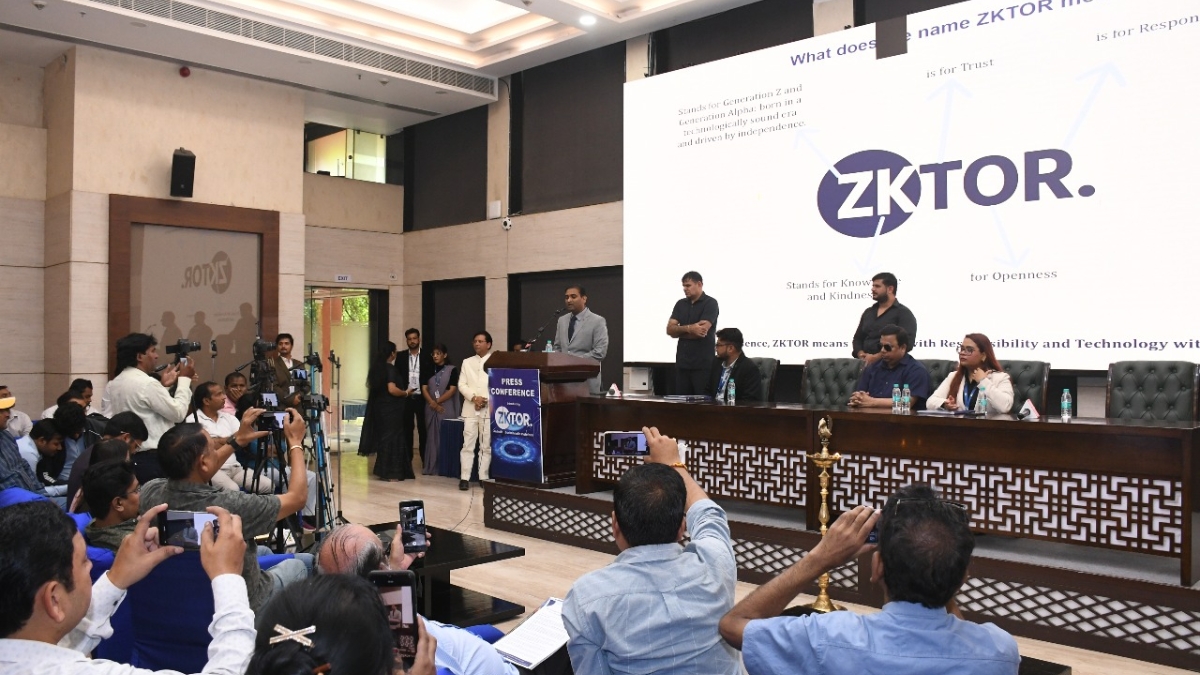
New Delhi [India], April 29: As India moves deeper into its digital decade, the next challenge is no longer access, but alignment, how technology can simultaneously serve citizens, local economies, governance systems and national development goals. ZKTOR, developed by Softa Technologies, is being positioned as a potential response to that challenge: not merely as a social media platform, but as a trust-led digital infrastructure model designed around India’s social, economic and administrative realities.
Built for an era defined by artificial intelligence, deepfakes, cyber insecurity and rising public concern over data misuse, ZKTOR places privacy and data safety by design at its foundation, supported by Zero Knowledge Server Architecture, No URL Media Architecture, no behaviour tracking and default multi-layer encryption. In a country where millions of users particularly in rural and semi-urban regions engage with digital platforms without fully understanding complex terms, privacy policies or data rights, such a design approach shifts protection from policy to default condition.
This approach is gaining early traction among Gen Z and young women across India and South Asia, indicating that safer, cleaner and more predictable digital environments are becoming central to adoption. In a society where family comfort, social reputation and everyday usability shape digital participation, such trust-led design can expand engagement across demographics that have remained cautious or underserved.
At the centre of this initiative is Sunil Kumar Singh, founder of Softa Technologies, whose perspective combines rural Bihar roots with more than two decades in Finland’s disciplined and rights-conscious design ecosystem. Singh’s argument is aligned with a larger governance concern: while the technologies required to protect users have long existed, the decision to make them default has often been missing. ZKTOR is framed as an ethical and structural response to the “I accept” model, where digitally vulnerable users are drawn into complex agreements without meaningful awareness or control.
The broader Softa ecosystem extends this philosophy into economic and administrative domains. Subkuz is being developed as a hyperlocal news and diaspora platform, Ezowm for hyperlocal commerce, Hola AI as an intelligence and safety layer, and ZHAN as a transparent hyperlocal advertising network. ZHAN, in particular, aligns with India’s ground realities: a large share of local advertising still operates through newspapers, radio, agencies and district-level networks, especially in smaller cities and rural areas where language, trust and local familiarity are critical. By organising rather than replacing this system, Softa’s model aims to digitise an already existing economic flow.
The scale potential of such integration becomes clearer when viewed through employment and participation. By enabling local partners, campaign managers and digital operators, the ecosystem could generate lakhs of direct jobs while supporting small, women-led and home-based businesses. A safer and more structured digital environment can lower participation risk, improve visibility and enable more purposeful engagement, particularly in districts where digital adoption has been uneven.
Within six months of its introduction at New Delhi’s Constitution Club of India, ZKTOR has expanded beyond India into Nepal, Sri Lanka and Bangladesh, crossing half a million beta users, largely Gen Z. Plans to extend beta rollout to Bhutan, Pakistan and Maldives position the platform within a wider South Asian digital framework shaped by shared demographic and economic conditions.
Notably, multiple South Asian media reports have highlighted Singh’s decision to decline foreign venture capital funding as well as Finland and EU grants, a move presented as an effort to keep the platform free from external, political or institutional influence. Softa also claims an ISRO-like cost discipline, operating ZKTOR at 7–8 times lower cost than big-tech platforms, indicating a model that emphasises efficiency, scalability and long-term sustainability.
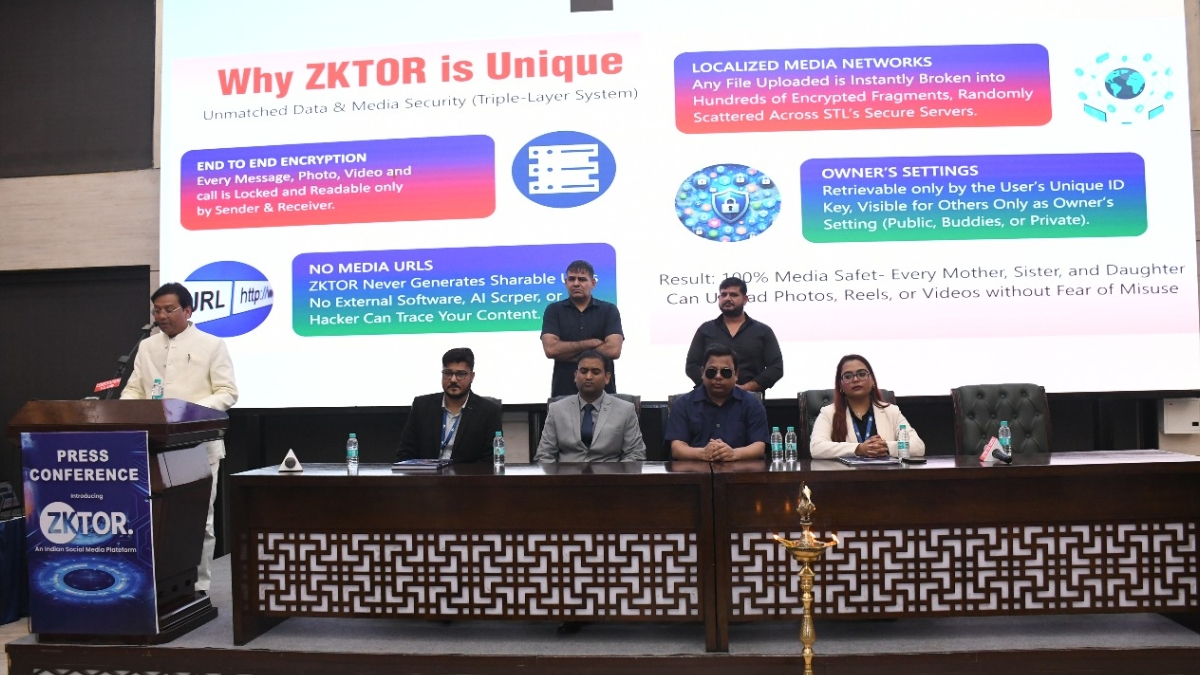
At its most ambitious level, Singh envisions ZKTOR as district-level digital infrastructure under one national brand with local digital identities, integrating social media, commerce, creators, entertainment, news, governance, civil society, education, police, judiciary and citizens into a single, coherent system. Such a framework aligns with broader national priorities: reducing migration pressures, strengthening rural economies, formalising unstructured markets, expanding employment, increasing GDP contribution and advancing the objectives of Prime Minister Narendra Modi’s Vision 2047.
In that sense, ZKTOR represents more than a platform initiative. It reflects an attempt to align technology with governance, society and economy positioning trust, inclusion and local relevance as the foundation of India’s next digital transformation.