
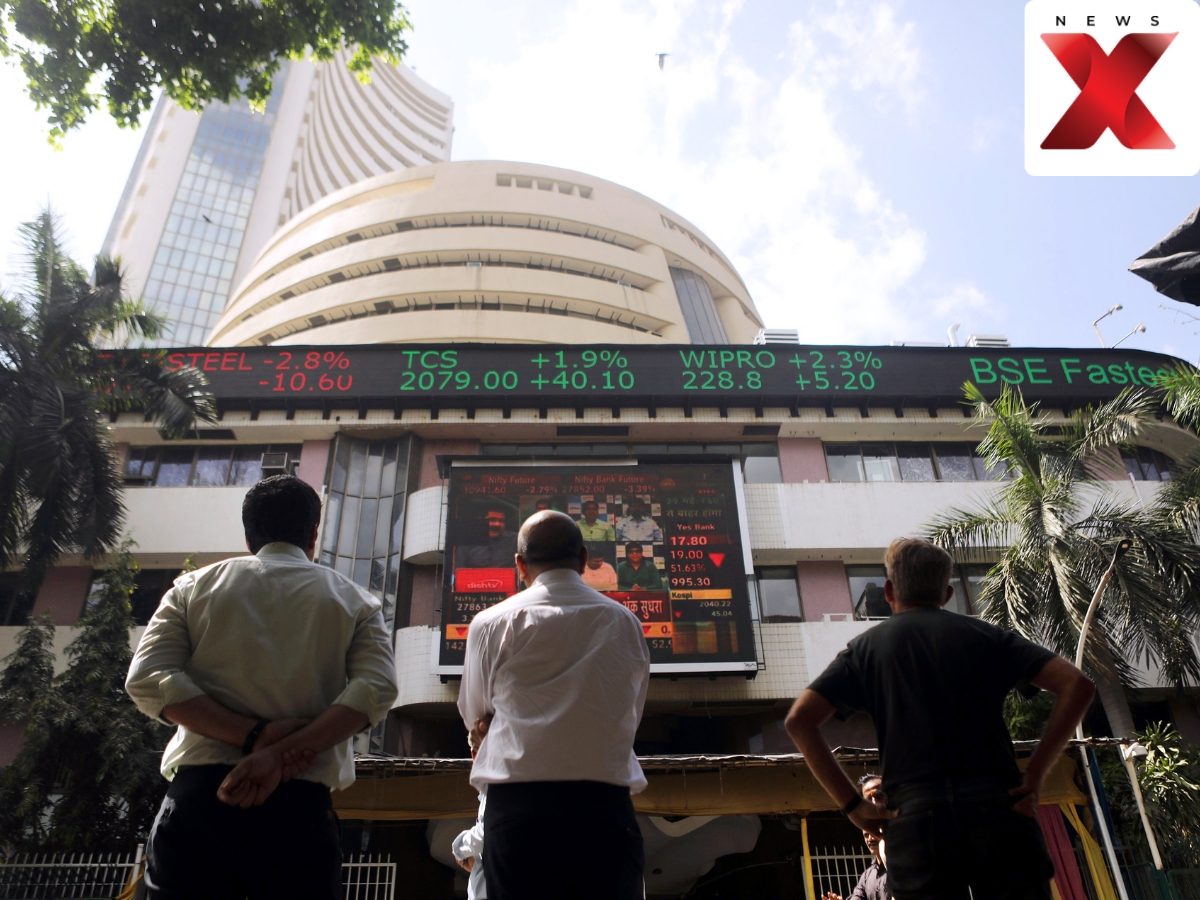

Benchmark indices Sensex and Nifty came under heavy selling pressure for the second straight session on March 30, as crude oil prices surged past $114 a barrel amid an escalating Middle East conflict, dampening investor sentiment. By 11:12 am, the Sensex had dropped 1,219.60 points or 1.66% to 72,363.62, while the Nifty fell 362.75 points or 1.59% to 22,456.85. Market breadth remained weak, with 809 stocks advancing, 3,047 declining, and 141 remaining unchanged.
Investors lost about ₹5 lakh crore as the overall market capitalisation of BSE-listed firms fell to ₹417 lakh crore, down from ₹422 lakh crore in the previous session.
Markets Head For Worst Month Since 2020
Both the Nifty 50 and Sensex have declined around 10.5% in March so far, putting them on track for their steepest monthly fall since the COVID-led crash in March 2020. Elevated crude prices and record foreign outflows of $12.3 billion have weighed heavily on market sentiment.
For the financial year 2026, ending Monday, the indices are down 4% to 6%, marking their weakest performance since FY2020. Ongoing geopolitical tensions, including India-Pakistan strains, US trade uncertainties, and the Iran conflict, along with sustained foreign selling, have kept markets under pressure.
Brent crude rose 3% to $115.98 a barrel, taking its monthly gains to nearly 60%, even surpassing the spike seen after Iraq’s invasion of Kuwait in 1990. US crude also climbed 3% to $102.52, recording a 53% rise for the month.
War Escalation And Economic Concerns
The US-Israeli conflict with Iran has now entered its fifth week and widened across the region. Over the weekend, Iran-backed Houthi forces launched attacks on Israel, raising concerns over potential disruptions in key shipping routes near the Arabian Peninsula and the Red Sea.
At the same time, Pakistan indicated it may host talks aimed at resolving the conflict, while Iran warned of retaliation if US troops are deployed on the ground.
VK Vijayakumar, Chief Investment Strategist at Geojit Investments, said the earlier favourable macro environment for India has been disrupted. “Instead of strong growth, low inflation, and stable deficits, the outlook now points to slower growth, rising inflation, and weaker earnings expectations for FY27,” he noted, adding that valuations are fair but not yet cheap, though financial stocks offer some value.
Mahesh Nandurkar of Jefferies warned that continued disruptions, especially around the Strait of Hormuz, could hit corporate earnings. He estimates over a 10% earnings impact on sectors like oil marketing companies, airlines, cement, paints, and adhesives. GDP growth for FY2027 could also ease by 50 basis points, with corporate earnings potentially trimmed by 2% to 2.5%.
Banking Stocks Drag Markets Lower
Banking and financial stocks declined between 2% and 2.5% after the Reserve Bank of India tightened norms on onshore exposure. The RBI has directed banks to cap their net open rupee positions in the forex market at $100 million by the end of each trading day, with compliance required by April 10.
This move is expected to trigger unwinding of existing arbitrage positions, leading to dollar selling in the domestic forex market. These trades, built by buying dollars onshore and selling in the non-deliverable forward (NDF) market, had expanded significantly due to increased volatility and a weakening rupee. Estimates suggest such positions range between $25 billion and $50 billion.
Foreign Investors Continue Selling
Foreign institutional investors remained net sellers, offloading Rs 4,367 crore worth of equities on Friday, as per provisional data.
VK Vijayakumar pointed out that FPIs have been sellers throughout March, with total outflows touching a record Rs 1,18,093 crore up to March 27, according to NSDL data. Weak global markets, rupee depreciation, concerns over remittances from the Gulf, and the impact of high oil prices on growth have all contributed to the sustained selling trend.
Volatility Likely To Stay High
With March 30 marking the monthly Nifty F&O expiry, volatility is expected to remain elevated. The India VIX jumped over 8% to 28.78, indicating heightened market nervousness. Markets will remain closed on March 31 due to a holiday.




