

LIVE TV
LIVE TV
LIVE TV
Home > Business > Economic Survey 2026 Projects FY27 GDP Growth at 6.8%–7.2%, Signals Steady Expansion Amid Global Challenges

Economic Survey 2026 Projects FY27 GDP Growth at 6.8%–7.2%, Signals Steady Expansion Amid Global Challenges

Economic Survey 2026: forecasts India’s FY27 GDP growth at 6.8%–7.2%, driven by strong domestic demand, structural reforms, and resilient macroeconomic fundamentals, amid global uncertainties and trade challenges.

Published By: Aishwarya Samant
Published: January 29, 2026 12:43:44 IST

Add NewsX As A Trusted Source

Economic Survey 2025–26 Projects FY27 Growth at 6.8%–7.2%

The Economic Survey 2025–26 forecasts that India will maintain its economic growth, with GDP expected to expand between 6.8% and 7.2% in fiscal year 2027. The government predicts this growth on the back of strong macroeconomic conditions and ongoing structural and regulatory changes that are expected to support the economy despite rising global challenges. India is projected to sustain its economic momentum by leveraging domestic strengths to counter external pressures, including stricter US tariff regulations and ongoing international conflicts.

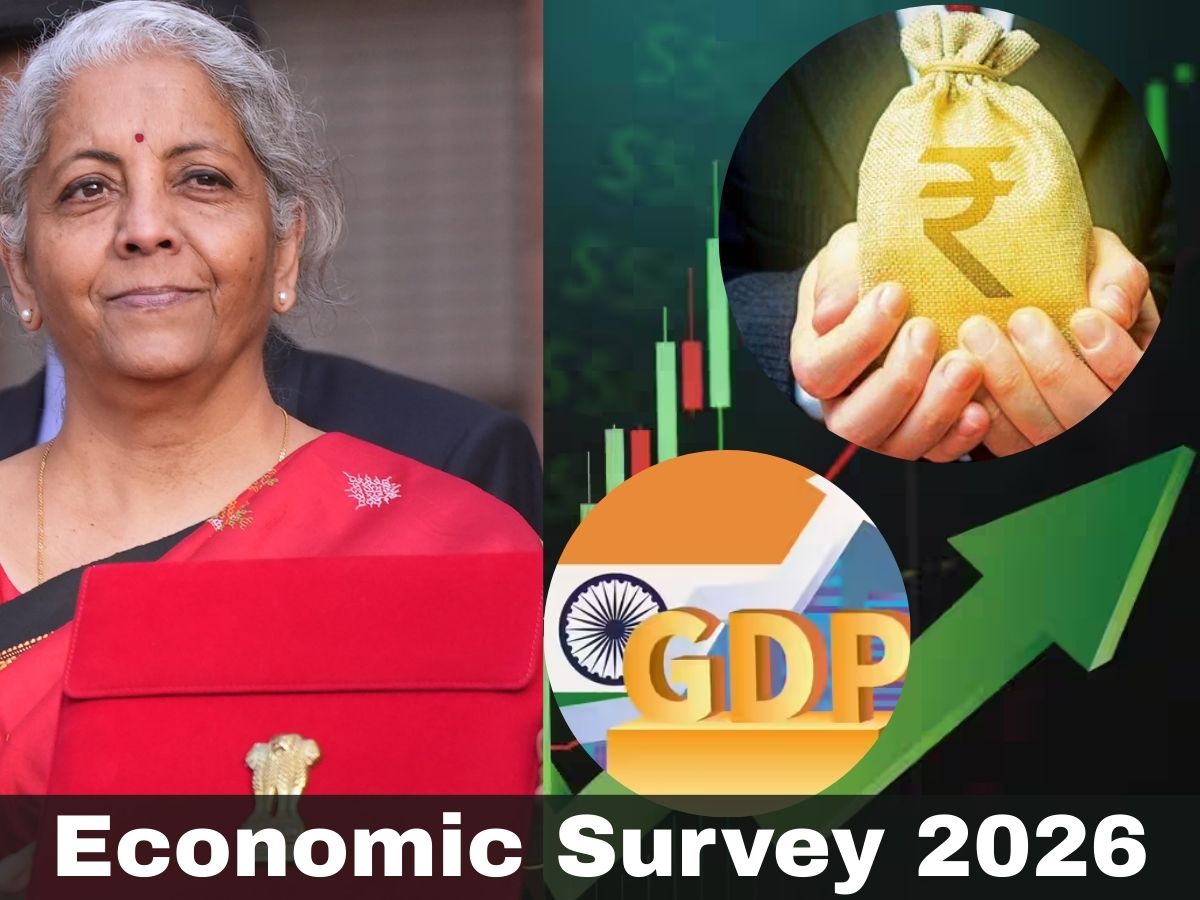
The Survey was tabled in Parliament by Union Finance Minister Nirmala Sitharaman, marking the start of the countdown to the Union Budget 2026, which will be presented on February 1. The moment is historic, as Sitharaman is set to present her ninth consecutive Union Budget, a feat achieved by very few finance ministers. This year’s Budget will be especially notable as it will be presented on a weekend, keeping markets, policymakers, and investors busy analysing the numbers on Sunday.

Economic Survey 2026: The Trailer Before the Union Budget 2026 Blockbuster

The Economic Survey establishes the mood, context, and funding needs for the upcoming Union Budget, which will present its financial figures and policy commitments. The document serves as the government’s annual economic assessment, offering insights through extensive data analysis. It provides an unvarnished evaluation of economic performance over the previous year, along with an assessment of the challenges that lie ahead.

While the Union Budget outlines planned expenditures, tax policies, and reform measures, the Economic Survey explains the rationale and implications behind those decisions. The analysis examines historical trends, evaluates potential risks, and highlights structural issues that require attention. It acts as a bridge for investors, policymakers, and taxpayers, connecting economic growth aspirations with on-ground realities.

Before the government unveils its fiscal roadmap, the Economic Survey helps establish a shared economic framework for all stakeholders.

Two-Part Structure Offers Macro View and Sectoral Detail

Prepared by the Economic Division of the Department of Economic Affairs under the guidance of the Chief Economic Adviser (CEA), the Economic Survey is presented in two volumes, each serving a distinct purpose.

Part 1 (Volume 1) provides a macroeconomic overview and forward-looking assessment. It offers a thematic and analytical examination of the economy, covering key indicators such as GDP growth, inflation (CPI and WPI), fiscal deficit, and trade balance. This section also delves into structural and conceptual challenges, proposes policy reforms, and outlines projections for the next financial year, helping frame the government’s policy direction.

Part 2 is more granular and data-intensive, focusing on sector-wise performance during the previous year. It analyses developments across agriculture, industry, services, and infrastructure, while also addressing socio-economic themes such as health, education, poverty alleviation, and climate change. The section includes extensive datasets, charts, tables, and appendices.

A Key Milestone Ahead of Union Budget Day 2026

The Economic Survey presents India as a full economic model through its combination of statistical data and graphical representations. The report shows the current economic status and future possibilities through its analysis of the country’s economic growth, potential hazards, and financial condition. Every table, chart, and projection will serve as a market, tax, and spending analysis tool for traders and policymakers, who will search for market and economic indicators. The upcoming Union Budget test will show which concepts from the research paper become actual government policies through their implementation process.

RELATED News

LATEST NEWS




