

Rajkumar Bafna, President of Finance at Delhi-based pharmaceutical major Akums Drugs and Pharmaceuticals, has resigned from his position, attributing his decision to the worsening air pollution in the national capital, according to reports.
Akums CFO’s Resignation Triggered by Pollution Concerns
Bafna’s resignation email, addressed to the company’s Chief Financial Officer Sumeet Sood, explicitly mentioned Delhi’s deteriorating air quality as the reason for his departure. He also expressed his willingness to assist with a smooth transition during the handover of his responsibilities.
“I would like to inform you that due Delhi Pollution level I m resigning from my position as President Finance. Kindly relieve me asap,” Bafna wrote, as per the BSE filing.
The reports reveal that Bafna submitted his resignation on 3 December 2025, and the company formally accepted it on 12 December 2025.
Akums Drugs and Pharmaceuticals’ Response
In response to Bafna’s resignation, CFO Sumeet Sood acknowledged the health concerns raised and confirmed that the company would relieve him effective 31 December 2025.
“Though we regret your decision, however, given your health issue, we will not be able to persuade you. As desired, we will formally relieve you on 31 December 2025,” Sood said.
The company also informed stock exchanges that Bafna’s resignation was accepted over personal reasons, reports mentioned.
Delhi’s Persistent Pollution Crisis
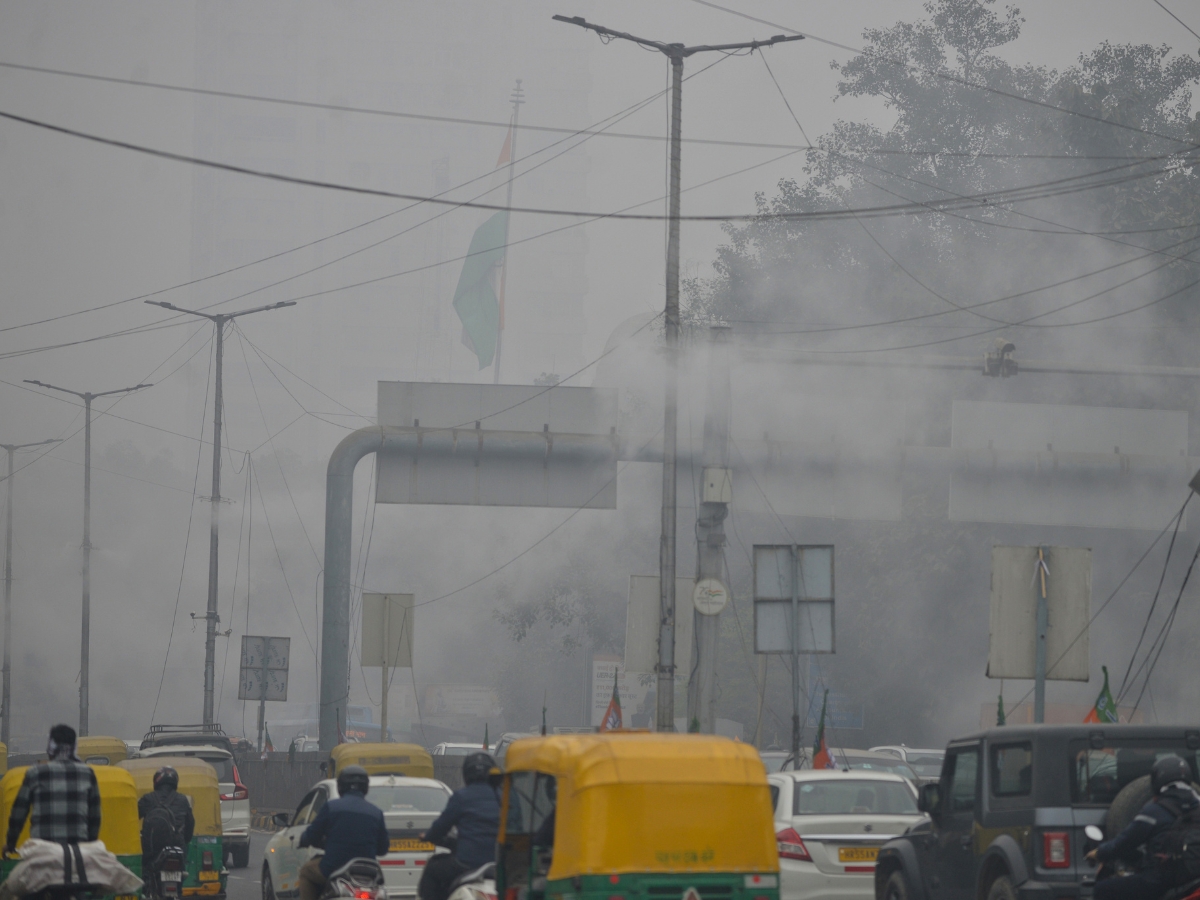
Delhi has been grappling with severe air pollution since the October-November period. On Sunday, 28 December 2025, the city’s overall Air Quality Index (AQI) reached 391, placing it in the ‘very poor’ category. Several localities reported AQI levels exceeding 400, categorized as ‘severe’, according to the Central Pollution Control Board (CPCB).
Authorities continue to monitor pollution levels closely and have implemented measures such as the ‘No PUC (Pollution Under Control certificate), no fuel’ rule to curb emissions and improve air quality.
Recent CPCB readings show that AQI levels have frequently remained in the ‘very poor’ to ‘severe’ range, with values often above 300, and in some areas nearing or exceeding 400 — levels considered hazardous even for healthy individuals.
Zubair Amin is a Senior Journalist at NewsX with over seven years of experience in reporting and editorial work. He has written for leading national and international publications, including Foreign Policy Magazine, Al Jazeera, The Economic Times, The Indian Express, The Wire, Article 14, Mongabay, News9, among others. His primary focus is on international affairs, with a strong interest in US politics and policy. He also writes on West Asia, Indian polity, and constitutional issues. Zubair tweets at zubaiyr.amin




