
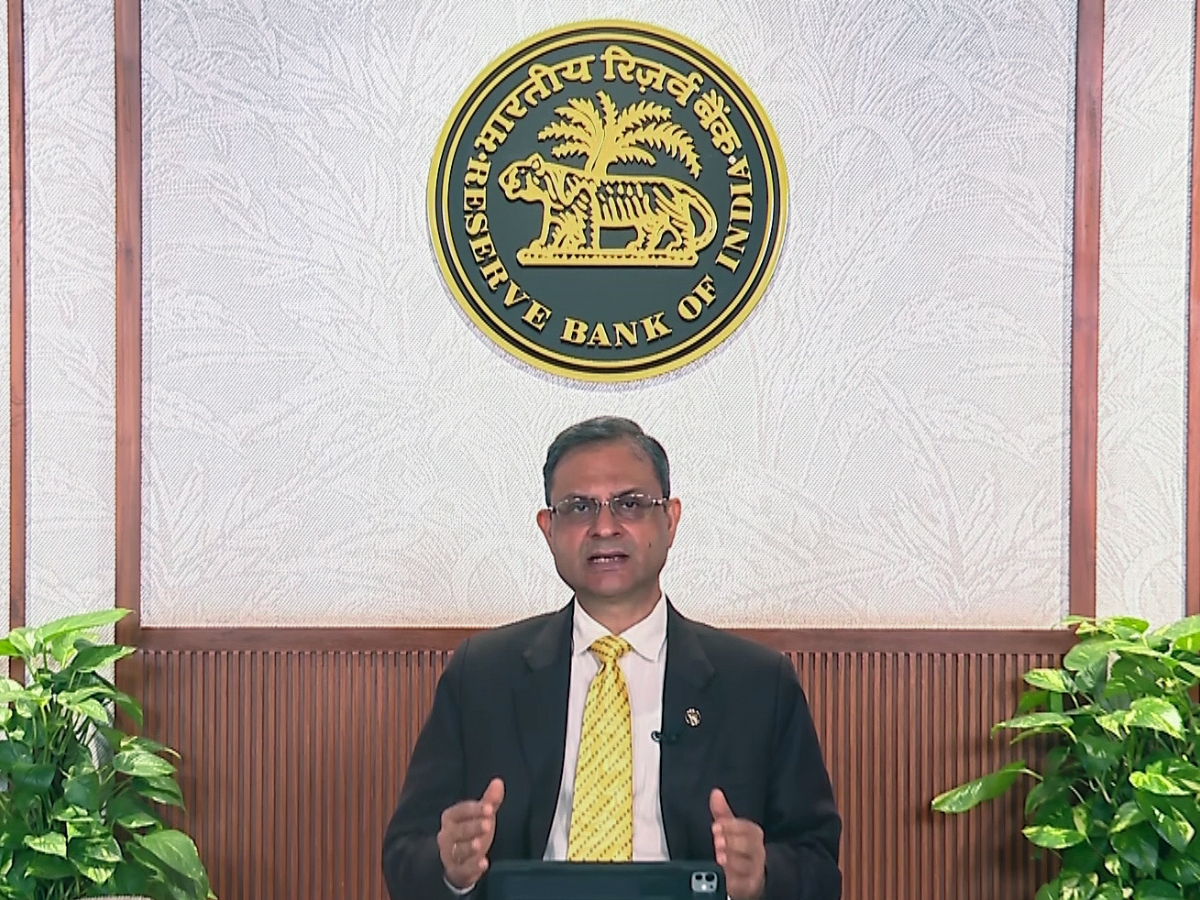

RBI Repo Rate: The Reserve Bank of India’s Monetary Policy Committee (MPC) delivered an unexpected policy move on Friday, December 5, unanimously voting to cut the repo rate by 25 basis points to 5.25% while maintaining a ‘neutral’ stance. Governor Sanjay Malhotra announced the decision, attributing the rate cut to record-low inflation, even as most economists had anticipated a status quo.
What Is the Repo Rate and How Does It Work?
The repo rate (Repurchase Agreement Rate) is the interest rate at which commercial banks borrow funds from the RBI to meet short-term liquidity needs.
Banks offer securities as collateral and agree to repurchase them later at a slightly higher price, which includes interest.
A lower repo rate means cheaper borrowing for banks, which can then pass on the benefit to customers through lower lending rates.
Why RBI’s Repo Rate Cut Matters
With the repo rate now at 5.25%, loans linked to external benchmarks, including the External Benchmark Lending Rate (EBLR), will automatically fall by 25 bps.
Home, auto and business loan EMIs are expected to reduce as lenders transmit the benefit.
Banks may also revise rates on loans connected to the marginal cost of fund-based lending rate (MCLR).
The move also injects additional liquidity into the financial system, enabling banks to lend more freely to consumers and businesses.
गवर्नर का वक्तव्य: 5 दिसंबर 2025
Governor’s Statement: December 5, 2025https://t.co/eaZRe2SiA1— ReserveBankOfIndia (@RBI) December 5, 2025
RBI Repo Rate Cut: What It Means For Home Loans, EMI’s
Lower borrowing costs translate into:
Reduced EMIs for home and vehicle loans
Higher affordability for new borrowers
Increased access to credit, potentially boosting consumption and investment
As the RBI lends to banks at a lower rate, lenders gain flexibility to reduce interest rates for customers.
Sector-Wise Impact of the RBI’s Repo Rate Cut
Real Estate
A decline in home loan rates enhances buyer affordability.
Automobiles
Lower borrowing costs will ease EMIs for entry-level cars and two-wheelers.
Rural demand for tractors and two-wheelers is expected to recover on the back of improved liquidity.
FMCG and Consumer Durables
Easier loan repayments free up household budgets, supporting discretionary spending.
Rural spending may see a multiplier effect.
Infrastructure
The lower cost of capital is beneficial for capital-intensive sectors.
Steel, cement and infrastructure companies are positioned to gain.
Impact on Savings
Banks may cut rates on savings accounts and fixed deposits, making traditional saving instruments less attractive.
This may push consumers toward equities, mutual funds or real estate.
Inflation Risk
Increased spending due to lower rates can eventually push up prices, posing inflationary risks if demand rises faster than supply.
Also Read: RBI Cuts Repo Rate by 25bps: MPC Goes Unanimous, Markets Rejoice!
Zubair Amin is a Senior Journalist at NewsX with over seven years of experience in reporting and editorial work. He has written for leading national and international publications, including Foreign Policy Magazine, Al Jazeera, The Economic Times, The Indian Express, The Wire, Article 14, Mongabay, News9, among others. His primary focus is on international affairs, with a strong interest in US politics and policy. He also writes on West Asia, Indian polity, and constitutional issues. Zubair tweets at zubaiyr.amin




