

Putin’s India Visit to Focus on Risk, Supply Chains and Economic Security: GTRI Report
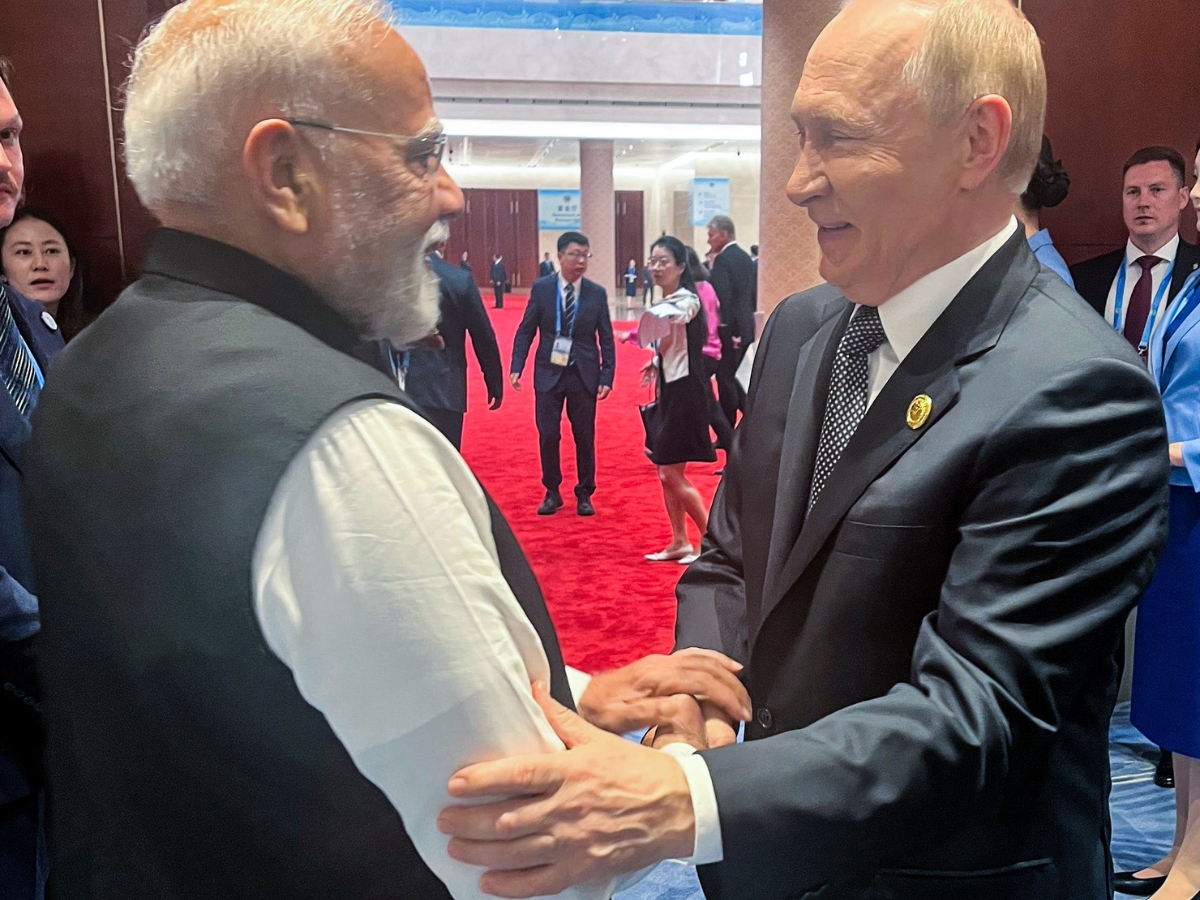
Russian President Vladimir Putin’s upcoming visit to India is expected to centre on strategic risk management, resilient supply chains and long-term economic security, rather than any revival of Cold War-era diplomacy, according to a report by the Global Trade Research Initiative (GTRI). The report emphasises that the visit is fundamentally about navigating dependence in an increasingly fragmented global landscape.
Strategic Intent: Managing Dependence, Not Revisiting the Cold War
GTRI notes that the visit reflects pragmatic decision-making rather than ideological alignment. “Putin’s visit is not a nostalgic return to Cold War diplomacy. It is a negotiation over risk, supply chains and economic insulation,” the report states. A conservative outcome would focus on stabilising defence cooperation and energy supplies, while an expansive outcome could reshape regional economic linkages.
Scenario Analysis: Modest Engagement vs. Ambitious Reshaping
Scenario 1: Cautious Strengthening of Existing Ties
The more likely scenario involves modest consolidation of current engagements. India is expected to seek clearer timelines for defence deliveries, maintenance contracts and technological upgrades for major platforms such as aircraft, tanks and submarines.
In return, Russia may pursue long-term energy commitments, including Indian equity participation in LNG assets, multi-year crude supply agreements and faster nuclear plant construction.
Both nations may also formalise an alternative payments mechanism, possibly through the UAE dirham or by connecting Russia’s SPFS system to India’s RuPay network. This would stabilise bilateral trade without triggering significant geopolitical consequences.
Scenario 2: Ambitious Strategic Expansion
A more transformative scenario could involve joint defence production, deeper Indian investment in large Russian oil and gas projects like Arctic LNG 2 or Vostok, and expanded nuclear cooperation beyond current reactor sites.
Connectivity corridors, such as the Chennai–Vladivostok maritime link or key segments of the International North-South Transport Corridor, could also gain momentum.
Additionally, the establishment of a structured settlement system may help address the issue of large, unused rupee balances. While such steps would advance India’s Eurasian integration, the report warns they may draw sharper reactions from Western nations.
Trade Landscape: High Energy Dependence and Limited Export Diversity
India’s annual exports to Russia are just around USD 5 billion, compared with imports of nearly USD 64 billion, driven overwhelmingly by energy products. Pharmaceuticals and machinery perform reasonably well, but India remains marginal in sectors like electronics, garments and consumer goods.
Exports have grown from USD 4.3 billion in FY24 to USD 4.9 billion in FY25, with USD 2.25 billion recorded between April–September 2025. However, the trade imbalance persists due to soaring energy imports.
Russia has become India’s largest crude supplier, accounting for roughly one-third of total oil imports in 2024. India’s oil bill for Russian crude jumped from USD 2.3 billion in 2021 to USD 52.7 billion in 2024, one of the most significant shifts in global energy sourcing.
Bilateral payments increasingly rely on non-dollar settlement using dirhams, rupees and yuan, reflecting adaptations necessitated by Western sanctions on Russia.
(With Inputs From ANI)
Aishwarya is a journalism graduate with over three years of experience thriving in the buzzing corporate media world. She’s got a knack for decoding business news, tracking the twists and turns of the stock market, covering the masala of the entertainment world, and sometimes her stories come with just the right sprinkle of political commentary. She has worked with several organizations, interned at ZEE and gained professional skills at TV9 and News24, And now is learning and writing at NewsX, she’s no stranger to the newsroom hustle. Her storytelling style is fast-paced, creative, and perfectly tailored to connect with both the platform and its audience. Moto: Approaching every story from the reader’s point of view, backing up her insights with solid facts.
Always bold with her opinions, she also never misses the chance to weave in expert voices, keeping things balanced and insightful. In short, Aishwarya brings a fresh, sharp, and fact-driven voice to every story she touches.




