
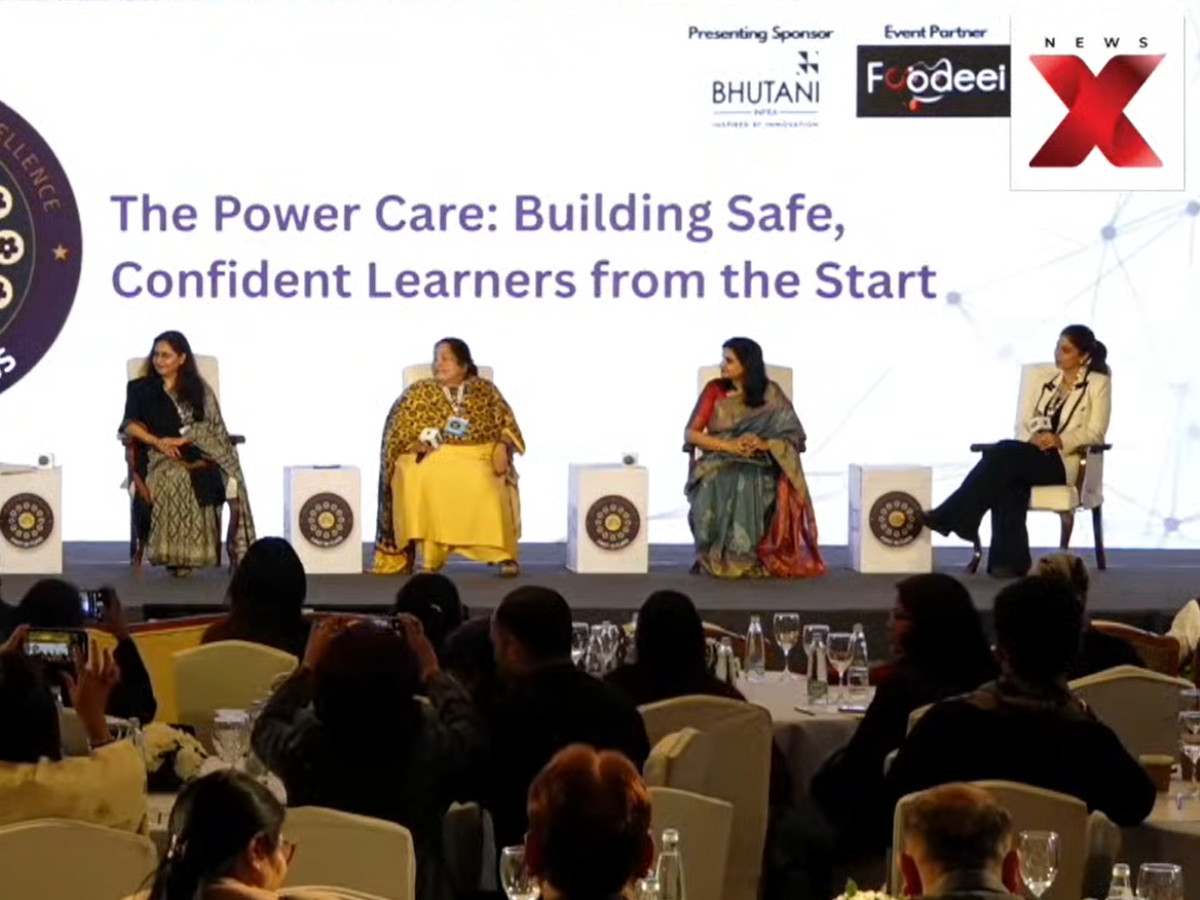

Early childhood is a powerful and sensitive phase that shapes who a child becomes later in life. The NewsX First In Class Education Conclave & Awards 2026 hosted a special panel titled “The Power of Care: Building Safe, Confident Learners from the Start,” which brought together leading educationists from across the Delhi NCR region.
The session focused on emotional safety, parental pressure, digital exposure, assessment systems, and holistic learning in the early years. Moderated by Priya Sehgal, Editorial Director, NewsX, the discussion featured Khushboo Abbot (Principal Pre-Primary The Ardee School), Nisha Bedi (Principal Daisy Dales School), Vinita Maheshwari (Headmistress Primary School, IP Scgool Noida), Sumita Malik (Head, Early Years Shiv Nadar School Noida), and Shivani Wazir (Director The Study School), each sharing practical insights from their schools on nurturing confident, emotionally secure learners from the very beginning.
Why are the early years of education so important?
Early years are foundational. Emotional security, confidence, and temperament are shaped from birth to age six. Children entering school are not alone their parents bring anxieties, expectations, and pressures too. Schools must hand-hold both child and parent to create a smooth transition into formal learning.
Where does the real pressure on young children come from: peers or parents?
Speaking at the NewsX conclave, Miss Khushboo Abbot said that the real pressure comes from parents, not peers. Parents often think far ahead, Class 10, Class 12, careers, while ignoring the child’s present emotional needs. Many children also come from single or broken homes, carrying emotional stress into classrooms. Schools must partner with parents, not just educate children.
How can classrooms become emotionally safe spaces?
Miss Nisha Bedi spoke at it in detail and highlighted that Classrooms should be ecosystems of trust, not fear. Children need validation, patience, and safety. Teachers must give every child time to speak, even 10 seconds matters. Small gestures like hugs, high-fives, and kind words before dismissal build confidence. Mistakes should not invite punishment. Classrooms should encourage group work, buddy systems, and one-on-one conversations.
How do teachers balance nurturing children while dealing with parents?
Miss Vinita Maheshwari stressed that care is central to education. Children must feel loved, heard, and free to express without fear. Communication is the key skill. Schools need systems where children can speak openly. Trust grows when children know they won’t be judged for their feelings or mistakes.
What is a “Buddy Bench” and how does it help children?
Miss Vinita Maheshwari further added on a special concept called a Buddy Bench and said that it is a safe space where children sit when they feel upset or need to talk. Teachers immediately approach them without judgment. Children may share small issues like losing an eraser or deeper concerns about family life. Counselors and parents are involved when needed. It has helped children feel emotionally secure.
Should parents be kept out of early classrooms?
Miss Khushboo Abbot had an insightful answer to this deep question and said that parents must not be kept out of early classrooms as they are an integral part of early education. Holistic development is impossible without them. Today’s children grow up in a digital, fast-paced, overstimulated world. Schools must align home and school environments and educate parents about emotional intelligence, adaptability, creativity, and collaboration.
How should schools manage unrealistic parental expectations?
Miss Shivani Wazir explained that parents often want everything: labs, sports, activities, without understanding the child’s readiness. But expectations come from fear and social pressure. Parents want reassurance that they made the right choice. Listening matters more than arguing. Education is about what’s best for the child, not ticking boxes.
What role does digital learning play in early education?
Miss Sumita Malik gave her insights that almost every adult has on their mind. She said that screens are unavoidable but must be used wisely. Technology should be interactive, not passive. Research shows that screen exposure under the age of eight should be guided. Digital tools can enhance learning, like virtual museum tours, but parents must be educated on screen limits. Schools now also handle children with diverse learning needs due to overstimulation.
Do schools push career choices at an early age?
Answering this question, Miss Nisha Bedi said that many children come with family pressure to become doctors, soldiers, or professionals, regardless of interest. This creates emotional baggage. Schools conduct parent counselling to explain that career choices must be child-led. Children should explore interests freely without fear or trauma.
When do marks and exams begin for children?
Miss Vinita Maheshwari explained the process and said that till Grade 2, only descriptive grades are used. From Grades 3 to 5, small tests exist but are balanced with activities, discussions, and projects. Exams formally begin only from Grade 6. The focus remains on skills like listening, speaking, and teamwork rather than scores.
How do schools encourage reading in the digital age?
Miss Khushboo Abbot said that reading habits must be modelled by adults. Schools run book clubs, book exchanges, storytelling sessions, and parent-led reading activities. Bedtime reading is strongly encouraged. Libraries play a vital role, and children are given age-appropriate books to build love for reading.
What does holistic education really mean?
Miss Shivani Wazir explained that holistic education includes emotional health, nutrition, fitness, and life skills, not just academics. By age six, a child’s temperament is set. Children must learn how to eat well, move daily, stay fit, and understand their bodies. Fitness should be a lifestyle, not an event. Education is about opening windows so children can choose who they want to become.




