
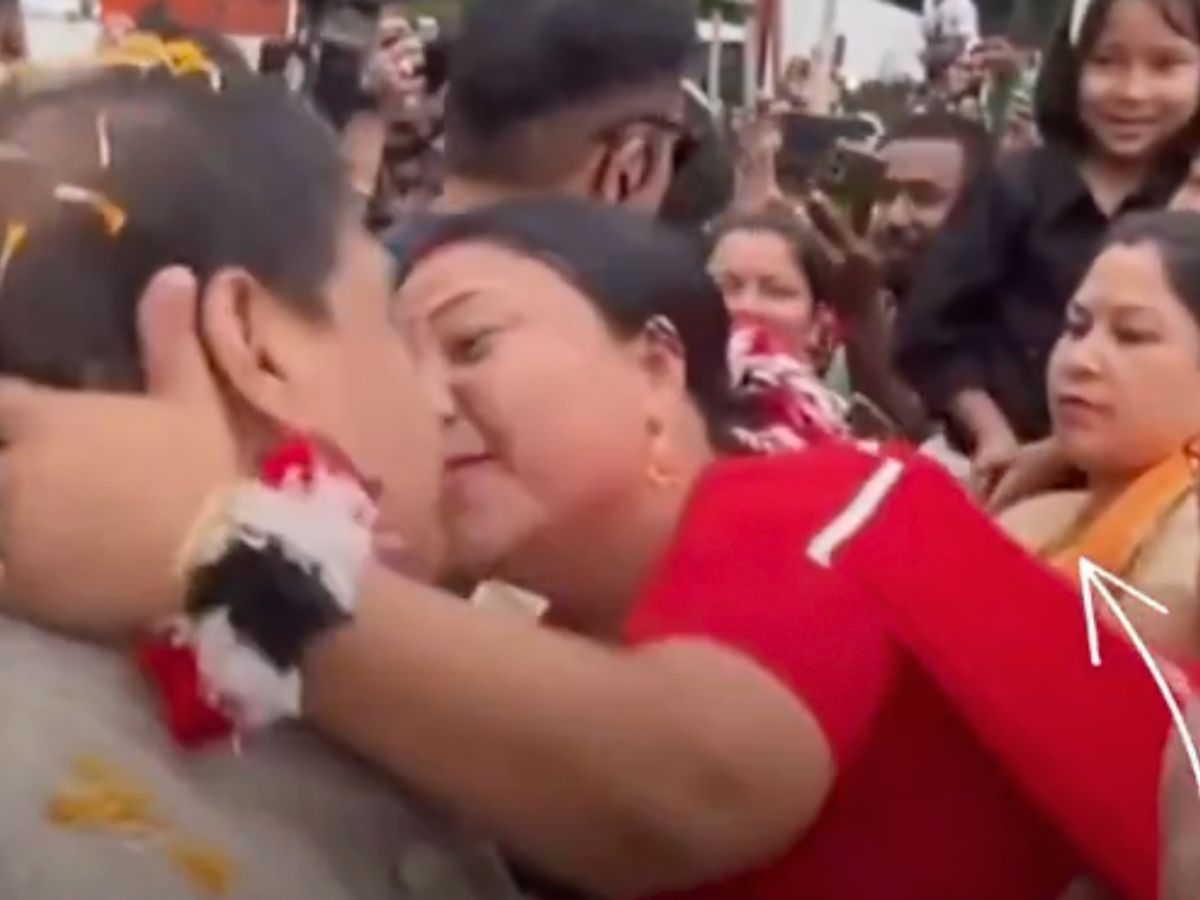

A video from March 27 has taken social media by storm, showing a woman supporter kissing Assam Chief Minister Himanta Biswa Sarma during an election campaign in Dhemaji. The clip captures a charged atmosphere where enthusiastic supporters, particularly women, surrounded the leader in a tightly packed crowd.
As he moved through the gathering, a woman reached out, pulled him closer, and kissed him on the cheek an act that quickly went viral and sparked intense public discussion.
Scenes of Emotional Supporters in Lakhimpur and Bihpuria
The incident is not isolated. Visuals from Lakhimpur district, especially Bihpuria, show similar scenes of emotional outpouring. Groups of women can be seen breaking through security cordons, hugging the Chief Minister, kissing him on the cheek or forehead, and showering him with flower petals.
😝: A lady pulls the Chief Minister of Assam, kisses him on his cheeks;
👇🏼: Read more
On March 27, during an election campaign in Dhemaji, Assam Chief Minister Dr Himanta Biswa Sarma was lady pulled and kissed him on his cheeks.
The video showing him being enthusiastically… pic.twitter.com/v83oLs7Mqn
— The Truth India (@thetruthin) March 28, 2026
Many supporters appeared visibly emotional, some laughing, others teary-eyed as they greeted him. Children accompanied several women, adding to the deeply personal and spontaneous nature of the interactions. Mobile phones held high captured every moment, amplifying the reach of these visuals online.
‘Marks of Love’: CM Responds to Overwhelming Crowds
Amid the surge of supporters, the Chief Minister also sustained minor scratches during his campaign trail. Rather than expressing concern, Himanta Biswa Sarma described them as “marks of love and affection” raijor morom aru ashirbad suggesting they symbolise public trust and connection.
His response has resonated with many supporters, reinforcing the perception of a leader who embraces grassroots engagement despite the chaos of large crowds.
Opposition Questions ‘Appropriateness’ of Viral Incident
However, the viral video has also triggered criticism from Opposition leaders, who have questioned the appropriateness of such public displays of affection. Some termed the act “inappropriate,” raising concerns about decorum in political spaces and the message it sends.
The debate has since extended beyond political circles, with social media users divided between viewing the moment as genuine public affection and criticising it as crossing boundaries.
Women Voters at the Centre of Assam’s 2026 Election Narrative
The visuals come at a crucial time as Assam heads toward the 2026 Assembly elections. Women, who make up nearly half of the state’s electorate, are emerging as a decisive voting bloc.
Political observers note that such displays whether spontaneous or symbolic highlight the emotional connection a section of women voters feel with the current leadership. Their influence often extends to family voting patterns, making them a key focus in campaign strategies.
Welfare Schemes and Political Messaging
The ruling government has consistently highlighted women-centric welfare schemes as a cornerstone of its governance. Initiatives like Orunodoi, which provides direct financial assistance to economically vulnerable households through women beneficiaries, and the Lakhpati Baideo scheme aimed at promoting rural women entrepreneurs, have been central to its outreach.
These programmes are often cited as reasons behind the visible support among women during campaign events.
High-Stakes Battle Ahead in Assam
With polling for all 126 Assembly constituencies scheduled for April 9 and counting on May 4, the political stakes remain high. The BJP-led alliance, under Himanta Biswa Sarma, is aiming for another term, while the Congress is seeking a comeback.
As campaigning intensifies, viral moments like these blending emotion, politics, and controversy are likely to shape public perception in the run-up to the elections.
Sofia Babu Chacko is a journalist with over five years of experience reporting on Indian politics, crime, human rights, gender issues, and stories about marginalized communities. She believes journalism plays a crucial role in amplifying unheard voices and bringing attention to issues that truly matter. Sofia has contributed articles to The New Indian Express, Youth Ki Awaaz, and Maktoob Media. She is also a recipient of the 2025 Laadli Media Awards for gender sensitivity. Beyond the newsroom, she is a music enthusiast who enjoys singing. Connect with Sofia on X: https://x.com/SBCism




