
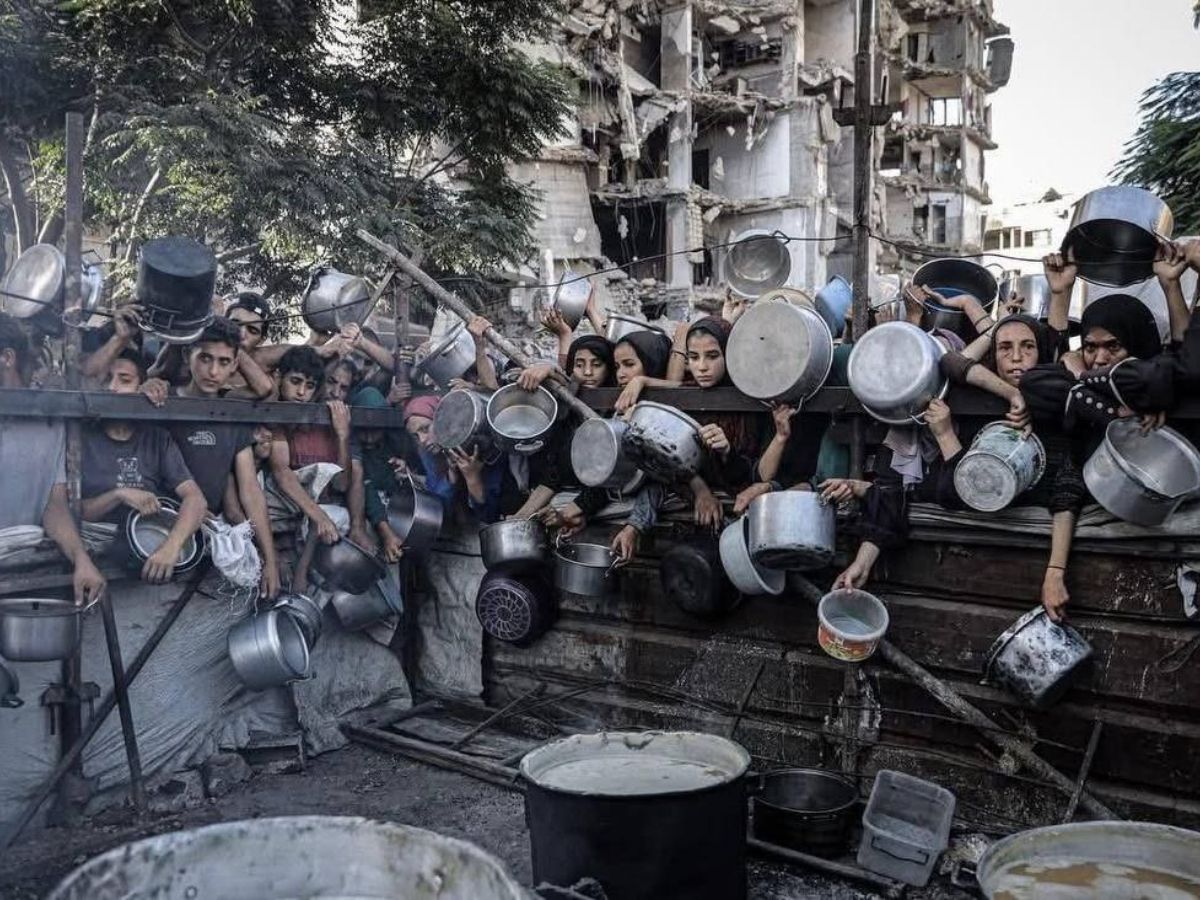

Famine is now officially happening in Gaza City, according to the Integrated Food Security Phase Classification (IPC), the world’s top authority on food crises. On Friday, the IPC announced that over half a million people in Gaza are trapped in famine conditions, facing widespread starvation and preventable deaths. This is the first famine the IPC has confirmed in the Middle East amid the ongoing war between Israel and Hamas, which began with the Palestinian militant group’s October 7, 2023 attack.
Reports suggest that most people in Gaza depend almost entirely on outside aid to survive, as Israel’s military operations are believed to have destroyed much of Gaza’s local food production capacity.
Expressing disbelief at the crisis, Dr. Mark Manary, a childhood malnutrition expert at Washington University in St. Louis, recently told the Associated Press, “I am speechless that in 2025, we are facing starvation on the planet. It has got to be a wake-up call.” Manary further suggested that if food aid were widespread and consistent, the war-ravaged enclave could recover in two to three months time.
What Exactly Is Famine?
In layman terms, famine means “not having enough to eat,” Manary explained. However, the IPC uses three strict criteria to declare famine in a region:
At least 20% of households suffer from extreme food shortages, which basically translates to starvation.
Thirty percent or more of children face acute malnutrition or wasting, meaning they are dangerously thin for their height.
At least two adults or four children per 10,000 people die daily from hunger-related causes.
Recent instances of famine declarations include North Darfur (2024), Somalia (2011), and South Sudan (2017).
Who Declares a Famine?
While there’s no single authority that formally declares famine, the IPC – for its part – provides data and analysis, which in turn serve as the “primary mechanism” for the international community to identify a famine. However, official announcements usually come from governments or UN officials, who rely on the IPC findings, according to AP report.
In Gaza, the World Health Organisation (WHO) highlighted the rapidly worsening malnutrition among children, reporting over 12,000 children acutely malnourished in July alone — the highest monthly number recorded.
What Happens When People Face Famine?
When food runs out, the body first uses stored carbohydrates and fat, nutrition experts say. Dr. Manary explained: “So we have about three days’ worth of carbohydrates … and sometimes even months’ worth of fat that we can keep in our body in storage.” As these reserves start to deplete, the body begins breaking down muscle and other tissues to survive, leading to severe weight loss and weakness. “The body is eating all of itself up in order to try to survive,” he further told the news agency.
Eventually, any given individual’s body reaches a stage wherein it can no longer cope, and it is then that even a minor infection or illness can turn out to be fatal.
How Do People Recover From Famine?
Once food becomes available again, recovery begins quickly. Manary reportedly said that within a week of eating, the risk of death drops significantly, even as a complete recovery may take months.
Analysts believe declaring a famine often helps unlock aid and funding from governments and the international community to provide food at scale.
The IPC report stressed that this famine is caused by human actions and “can be halted and reversed.””The time for debate and hesitation has passed, starvation is present and is rapidly spreading,” it warned.
ALSO READ: UN, Global Leaders Slam Israel for ‘Man Made Disaster’ as Famine Unfolds in Gaza




