
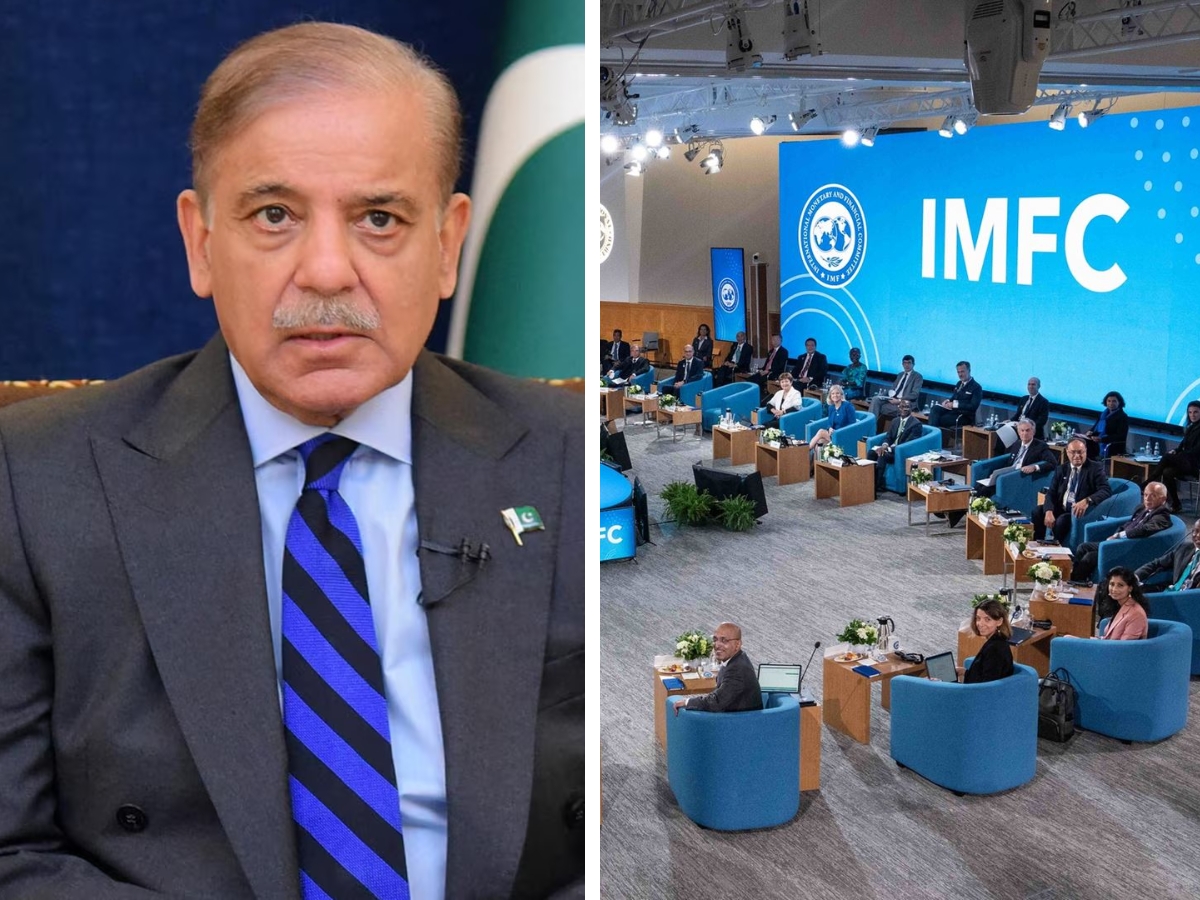

The International Monetary Fund (IMF) on Tuesday approved the release of $1.2 billion to Pakistan. The bailout offers a financial boost as the country continues to recover from one of its worst economic crises in recent years. The development was confirmed by the IMF in a statement, saying that its Executive Board had completed two reviews of Pakistan’s economic programmes, authorising about $1 billion under its primary loan facility and an additional $200 million through a separate climate-related programme.
How Much Has Pakistan Received From the IMF?
With this latest approval, Pakistan’s total receipts from the IMF since last year now stand at approximately $3.3 billion. The bailout facility, approved for 37 months, commits the IMF to disburse loan tranches as long as Islamabad meets agreed reform benchmarks.
Prime Minister Shehbaz Sharif welcomed the decision, calling it a reflection of the government’s reform efforts and the “effective implementation” of IMF-endorsed measures. According to him, the approval underscores that Pakistan is “taking the steps needed” to stabilize and rebuild the economy after narrowly avoiding default last year.
Pakistan PM Shehbaz Sharif Praises Asim Munir For Economic Growth
Sharif also credited Field Marshal Gen. Asim Munir, Pakistan’s powerful army chief and chief of defence forces, for backing the economic reform agenda. In addition, he applauded Finance Minister Muhammad Aurangzeb and his team for their “tireless work” in executing difficult but necessary policy changes.
Sharif said Pakistan’s reform and digitalisation initiatives have now become a global “case study,” but warned that moving from stability toward sustained growth will require continued discipline and effort.
Why IMF Approved Another Bailout To Pakistan
The IMF, in its assessment, said Pakistan has made “significant progress” in stabilising the economy despite a challenging global environment and the impact of this year’s devastating floods. The institution pointed to improvements in fiscal health, stronger foreign exchange reserves, now at $14.5 billion, and emerging signs of economic growth.
Although inflation has risen in recent months due to flood-triggered spikes in food prices following above-normal monsoon rains, the IMF expects inflationary pressures to ease.
IMF Urges Pakistan to Maintain Discipline
IMF Deputy Managing Director Nigel Clarke cautioned that Pakistan faces an uncertain outlook and must remain committed to its reform path. He praised the government’s determination to meet next year’s budget targets while addressing flood damages.
Clarke urged Islamabad to maintain a tight monetary policy, allow exchange rates to operate freely and pursue long-delayed energy reforms.
Which Countries Owe the Most to the IMF?
IMF lending is measured in Special Drawing Rights (SDRs), a reserve asset based on a basket of five major currencies, including the US dollar, euro, pound sterling, Chinese renminbi and Japanese yen.
While not a currency themselves, SDRs can be exchanged for these currencies. As of October 15, one SDR was valued at $1.36.
The IMF currently holds its highest-ever total credit outstanding.
86 Countries Owe SDR 118.9 Billion To IMF
In total, 86 countries owe the IMF SDR 118.9 billion, roughly equivalent to $162 billion. Nearly half of this amount is owed by the top three borrowers, while the top 10 debtor nations account for 73 percent of total outstanding credit.
Argentina Tops the IMF’s Debtor List, Pakistan Not Far Away
Argentina is the IMF’s largest borrower, with SDR 41.8 billion (about $57 billion) in outstanding loans. It is followed by:
Ukraine: SDR 10.4 billion (about $14 billion)
Egypt: SDR 6.9 billion (about $9 billion)
Argentina’s debt alone exceeds the combined borrowing of the next seven countries, Ukraine, Egypt, Pakistan, Ecuador, Ivory Coast, Kenya and Bangladesh.
Also Read: ‘Unlawful Usage’ Pakistan PPP Hits Out At Dhurandhar Over Benazir Bhutto Images Used In The Movie
Zubair Amin is a Senior Journalist at NewsX with over seven years of experience in reporting and editorial work. He has written for leading national and international publications, including Foreign Policy Magazine, Al Jazeera, The Economic Times, The Indian Express, The Wire, Article 14, Mongabay, News9, among others. His primary focus is on international affairs, with a strong interest in US politics and policy. He also writes on West Asia, Indian polity, and constitutional issues. Zubair tweets at zubaiyr.amin




