
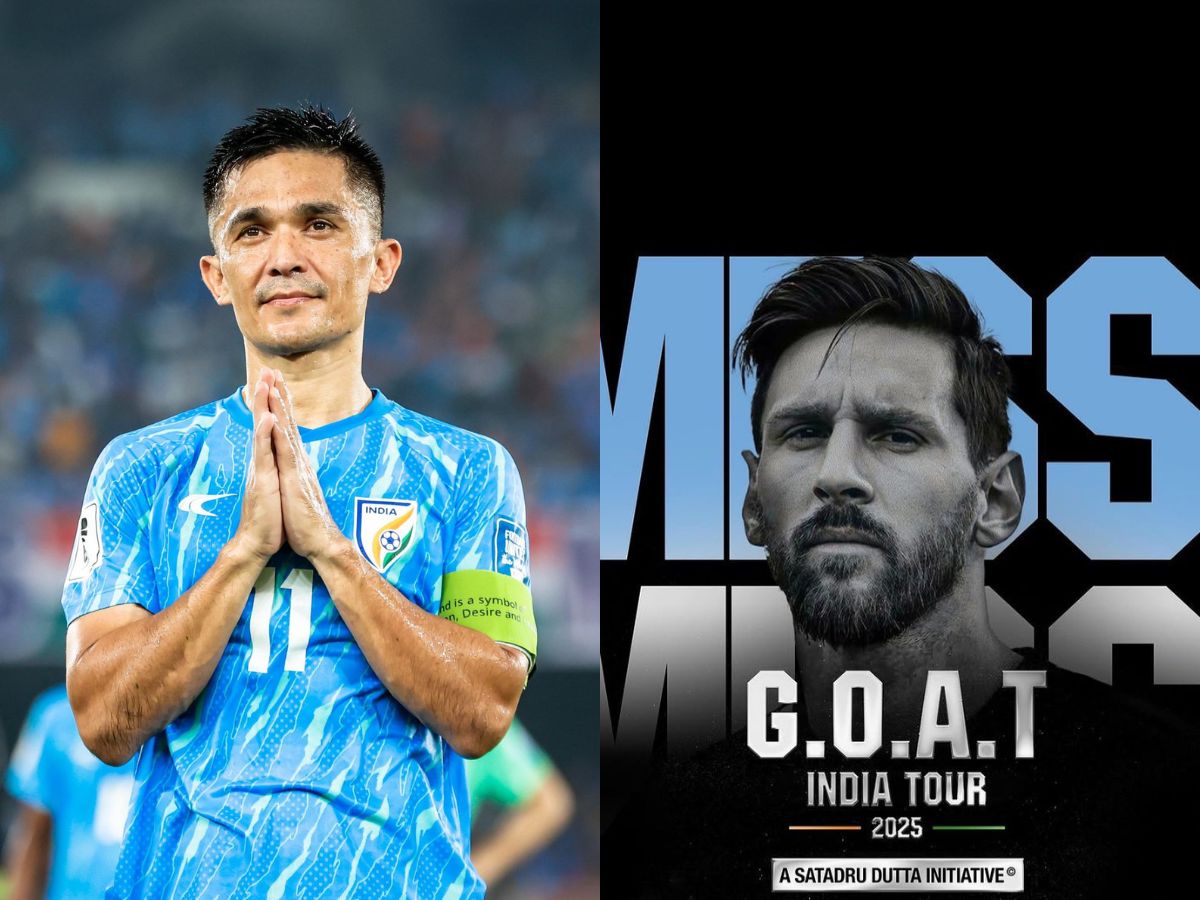

Indian Football Crisis Explained: For a long time, India’s football scene has not been able to reach the same level of success as cricket, even though there is a growing number of fans and occasional periods of enthusiasm. The recent hype around Lionel Messi’s tour to India has sparked a discussion about the situation of the sport, as a big crowd of fans came to see a world celebrity that is usually overshadowed by the local league and homegrown talents.
At First Sponsorship Crisis Of Indian Football In Contrast Of Lionel Messi’s GOAT Tour
The tour of Lionel Messi, supported by the likes of JSW, Adani, RPSG, HSBC, Puch AI, Sony Liv and Dalmia cement, not only gave football in India a new and surprising focus but also raised a major question, it is the international stars who are more attractive to the fans than the local players, thus leaving the Indian footballers’ development somewhat unattended. This disconnect between fan attention and domestic football growth is a significant challenge for the sport in the country and it makes it hard for the sport to survive in such an environment.
Systematic grassroots development is one of the reasons India has been unable to overcome the football struggle. Unlike nations where soccer is the most popular game, India has always considered cricket as the main sport. This has led to less resources being allocated for soccer and thus less formal coaching, fewer academies etc. for the soccer players from the young age. The AIFF (All India Football Federation) has been trying through the I-League and youth programs, but such measures are usually aimed at entertainment and quick viewer numbers rather than long term player development. Hence all the most talented players have limited chances to attend high level competitions, which is a major cause of their slow growth and also of India being less competitive in international football.
‘Worsening’ The Situation Mohun Bagan’s Fine
The aforementioned administrative matters, which are a recent phenomenon, have worsened the situation. The astonishing announcement that Mohun Bagan, a club with one of the most magnificent football legacies in India, will be suspended for two seasons and fined ₹91 laкh by the AFC comes as a clear illustration of the difficult governance issues. These kinds of penalties not only demoralize the players but also degrade the image of Indian football in the international arena. Besides financial difficulties, which result in limited player development and reduced trust from fans, clubs also face drawbacks from the lack of a supportive framework or accountability. Indian football, if not provided with good governance and accountability, might lose its international attention and crave for the Messi tour to regain its status.
Grassroot Level Structural Reforms
In the same way, besides media hype and sponsorships, which are regarded as short term excitement generators, no structural reforms can be implemented. Many sponsorship deals with multinational companies and extensive media coverage were the results of Messi’s tour which aimed at helping the sport and creating commercial opportunities. Still, the real trouble is transforming this excitement into sustainable growth. Among others, the planting of youth academies, infrastructures, coaching, and the domestic league is required to create talents that can win internationally. Moreover, inspiring fans to cheer for Indian players and teams, rather than just global icons, will also be necessary to the establishment of a sustainable football culture.
Can Indian Football Ever Become Like That Of Lionel Messi’s Argetina?
It’s been 3 years today of Argetina winning the FIFA World Cup In Qatar by defeating France and still Indian football fans cheer for Messi’s team than their Own. India’s downfall in football results from the smorgasbord of poor grassroots initiatives, bad management, and the spotlight of fans being cast mainly on the foreign stars. Celebrity events such as Messi’s tour bring to light the simultaneous existence of the potential and the gap in domestic football development. The tackling of these matters will demand the collective participation of the AIFF, clubs, sponsors, and fans. India can again look forward to the day of having world class players if the country nurtures them with patience over the top quick fixes, and at the same time it will be able to create a strong, local fan base that vibes with the players and keeps the spirit of the game alive.




