
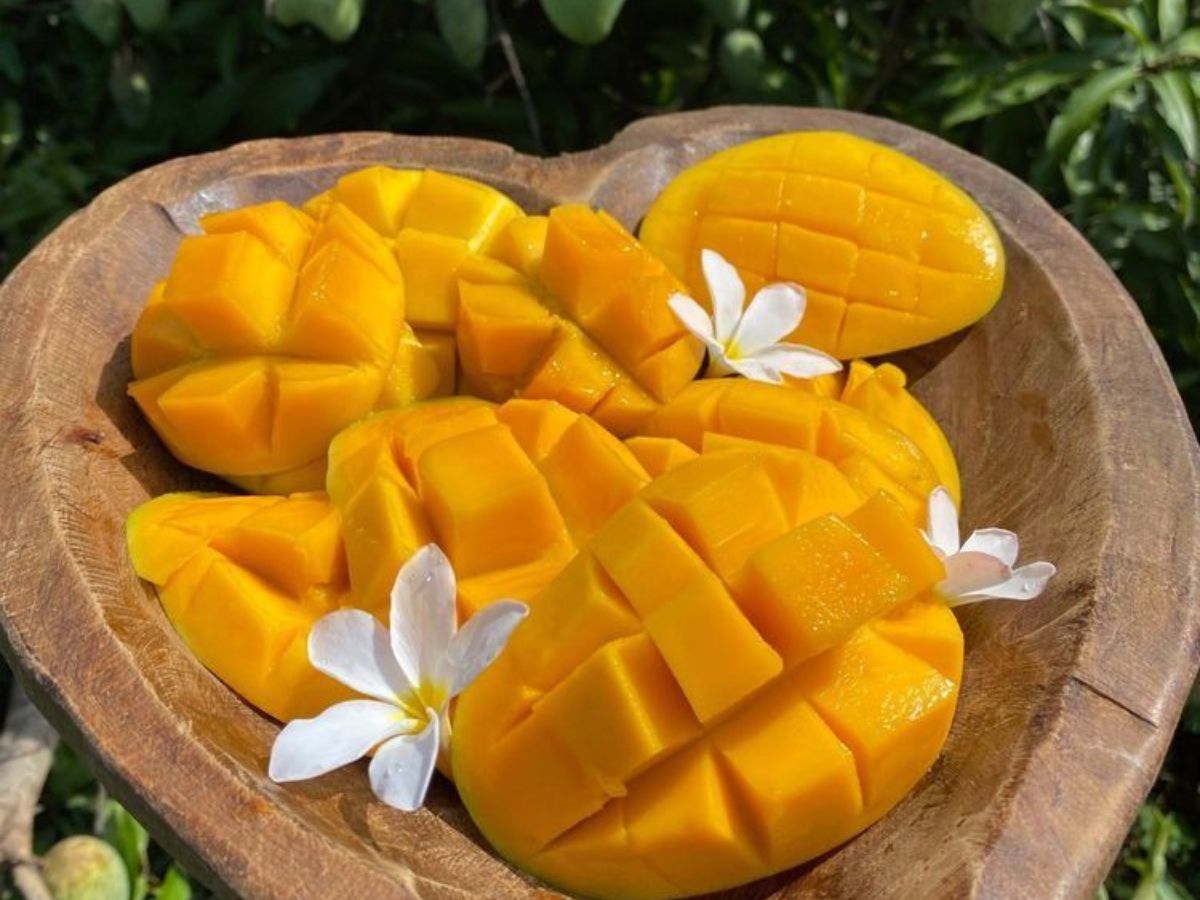

Portion Control is Key
To keep the glycemic load low, stick to small portions of mango. About half a cup of chopped mango contains roughly 12 to 15 grams of natural sugar, so it should be safe.
Pair Mango with Protein
Eat Mango along with a handful of nuts, boiled chana or curd. These help prevent a sudden sugar spike and slow digestion.
Avoid Juices and Smoothies
A whole mango is better than juice. Juice increases sugar concentration and removes fiber from the mango which leads to quicker glucose spikes.
Eat in the First Half of the Day
Consume mangoes before afternoon when your metabolism is higher and the body can process sugar better.
Don’t mix with other carbs
Avoid eating mango with rice, roti or sweets. This overloads the body with carbs and raises blood sugar level sharply.
Test your Blood Sugar after eating
Check your sugar level every two hours after eating mangoes to understand how your body reacts to it.
Choose Semi Ripe Mangoes
Fully ripened mangoes have more sugar level. Semi-ripe ones offer the same taste but with a slightly lower sugar content. So, prefer semi-ripe mangoes.
Stick to Seasonal Mangoes
Local seasonal varieties have fewer chemicals and are fresher, so go for them. They have a better sugar balance and are better for gut health.
Consult your doctor
If you are on medication or insulin, get your doctor’s advice before including mango regularly in your diet.
I am a content writer with 2.5 years of experience, currently working at ITV Digital. I specialize in entertainment journalism, covering the latest in Bollywood along with engaging healthy lifestyle stories. With a flair for storytelling and a keen eye for trends, I bring fresh, reader-friendly perspectives to every piece I write.




