
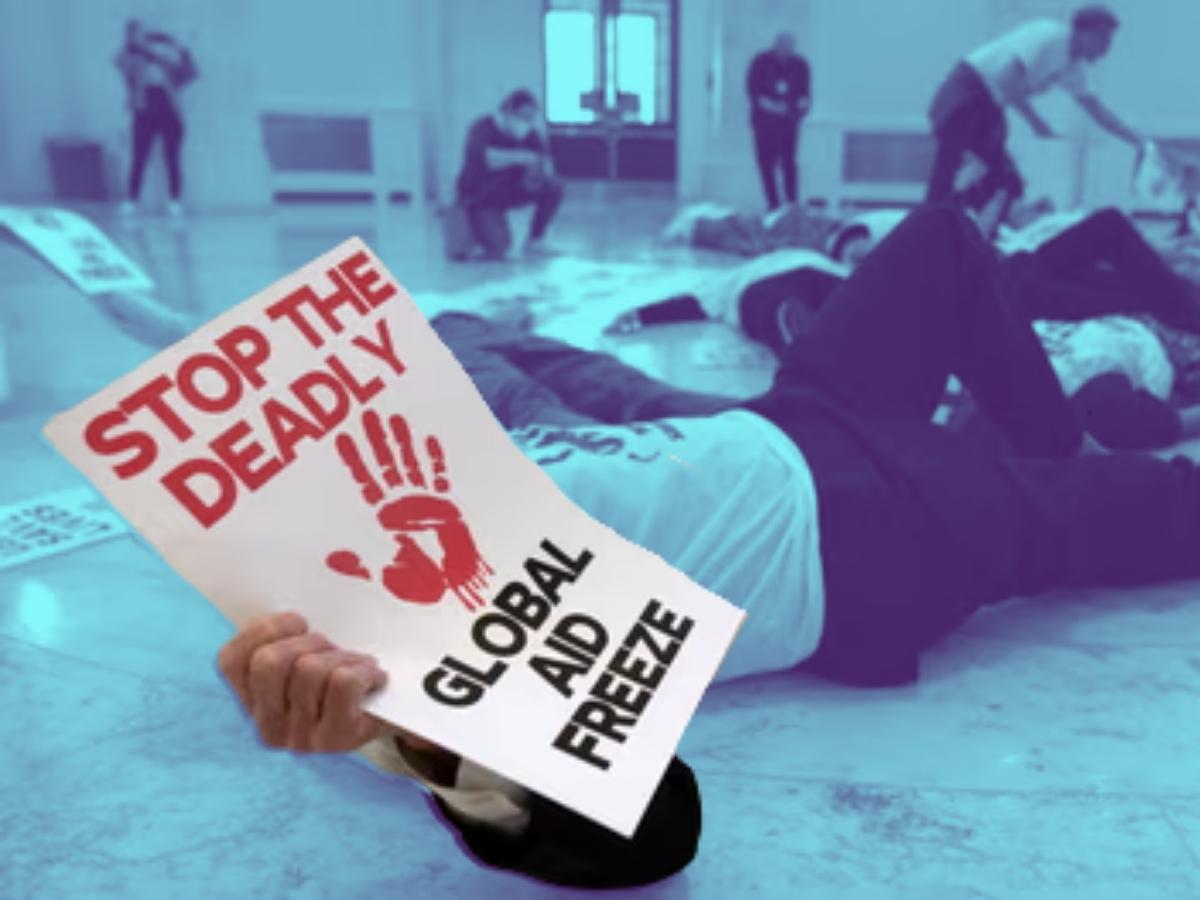

According to a new UNAIDS report published on Thursday, many years of US-led efforts have postponed the efforts to fight AIDS following a sudden suspension of the US foreign aid financing-a step that has disturbed important HIV programs and feared a public health crisis.
The report warned that more than 4 million AIDS -related deaths and 6 million new HIV infections can occur until 2029 if the financing is not restored immediately. A $ 4 billion obligation for 2025 was pledged by the United States for the first global HIV response, after President Donald Trump ordered all foreign aid suspension, disappeared overnight in January and began to destroy USAID, which was the most important administrative agency to help.
The sudden stop has reported a “systemic stroke”, disruptive supply chains, closing clinics, shutting health workers and suspends HIV prevention and testing efforts in weak areas, especially in Africa south of Sahara, where half of all new HIV infections have been reported.
The Pepfar (President’s Emergency Plan for AIDS Relief), which was launched in 2003 under George W Bush, was the foundation stein in the global match against AIDS. Unaids called it a “lifeline”, given that it supports HIV testing for more than 84 million people and treats for more than 20 million. In Nigeria, it funded 99.9% of the medicine budget for HIV prevention.
Experts like Andrew Hill from the University of Liverpool criticized the abrupt nature of the withdrawal. “Any responsible government would have given advance warning,” he said, noting that African patients were stranded when clinics closed with no notice.
Dr. Chris Beyrer, from Duke University, also expressed concern about the loss of HIV surveillance data much of which was paid for by US funds. Without accurate data on how the virus spreads, he warned, it will be nearly impossible to stop it.
While some poorer nations have started funding parts of their own HIV programs, organizations such as Doctors Without Borders say the funding gap left by the US is impossible to bridge. “There’s nothing we can do that will protect these countries from this sudden, vicious withdrawal,” said Tom Ellman, the group’s medical director in South Africa.
The crisis comes just as a breakthrough HIV prevention drug a twice-yearly injectable called Yeztugo by Gilead was approved by the US FDA. The drug has shown 100% effectiveness in preventing the virus, potentially marking a turning point in the fight against AIDS.
However, activists warn that the drug may be out of reach for many due to high pricing. While Gilead has agreed to provide generic versions to 120 poor nations, it has excluded most of Latin America, where infection rates are rising.
“We could be ending AIDS,” said Peter Maybarduk of Public Citizen, “but instead, the US is abandoning the fight.”
ALSO READ: 7 Reasons Why Journaling Your Thoughts Can Reset Your Brain




