
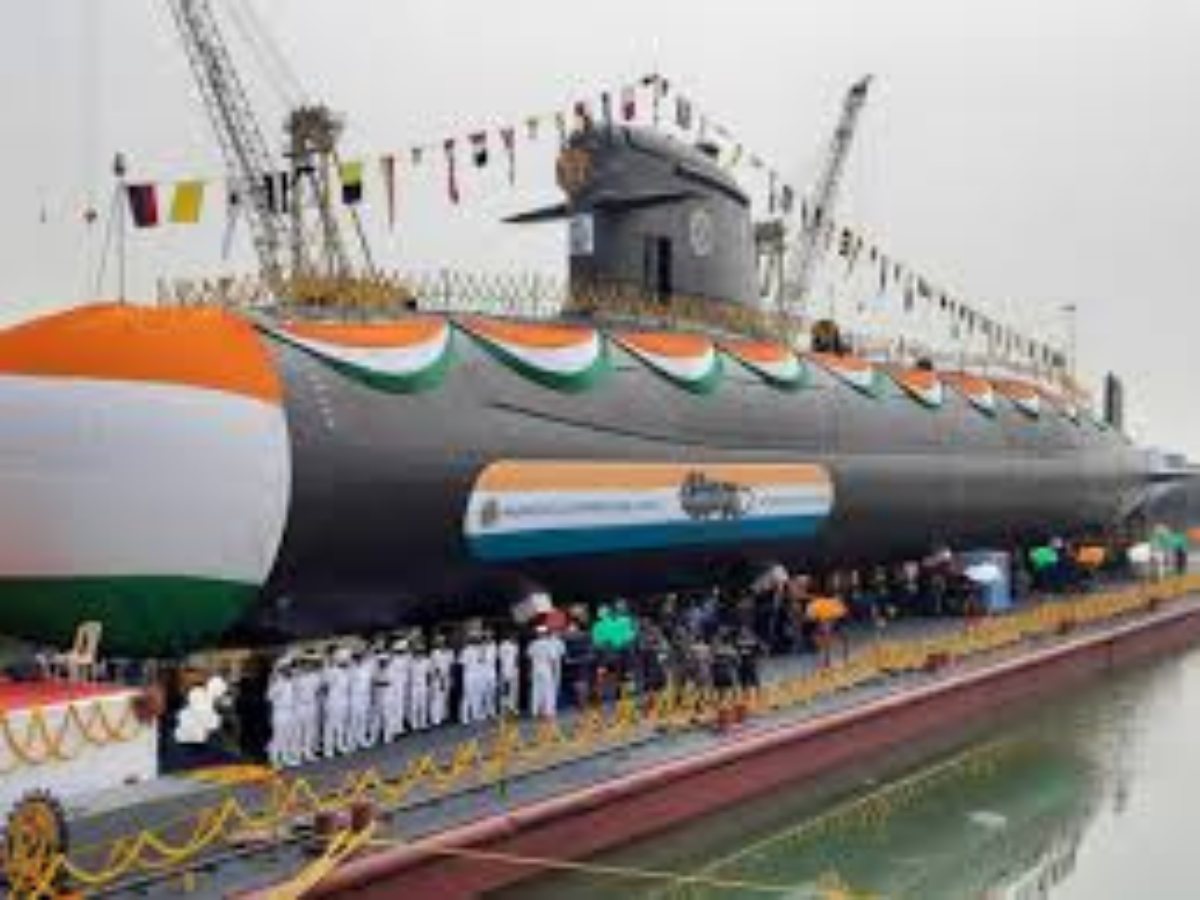

India and Germany are close to sealing a major submarine deal worth around $8 billion (₹72,000 crore), which could turn out to be India’s biggest defence contract ever. The plan is to jointly build six next-generation conventional submarines in India, which will give a big push to the country’s naval strength and defence manufacturing. These submarines will be fitted with air-independent propulsion (AIP) technology and, importantly, will come with full transfer of technology, something India has long been seeking in defence deals.
Talks have gained momentum ahead of German Chancellor Friedrich Merz’s visit to India on January 12–13, 2026, when both sides are expected to formally sign off on the agreement. Under the deal, Germany’s Thyssenkrupp Marine Systems (TKMS) will partner with Mazagon Dock Shipbuilders Ltd (MDL), which is a government-owned shipyard in Mumbai. This deal won’t be like previous deals that involved just imports, but the submarines will be built entirely in India.
Make in India
The most important part of the agreement is the complete sharing of submarine-building technology. This means India won’t just assemble parts but will gain the know-how to design, manufacture and maintain submarines on its own. Reports say such deep technology transfer has been a major hurdle in earlier negotiations, making this deal a potential game-changer for India’s defence industry.
The submarines will use AIP systems, which allow them to stay underwater for weeks instead of days, making them far harder to detect. This is a key advantage in modern naval warfare, given India’s tensions with Pakistan as India keeps a close watch on the Indian Ocean region, where the threat has been growing.
The deal falls under Project-75(I), India’s programme to replace its ageing submarine fleet, much of which is based on older Russian platforms. By building these submarines at home, India hopes to cut down on imports and strengthen its “Make in India” defence push.
The market has already reacted positively. Mazagon Dock’s shares jumped after reports that the deal was nearing completion which indicates that there is a strong investor confidence in India’s defence manufacturing future.
If finalised, the agreement will significantly boost India’s naval power while also taking India-Germany defence ties to a new level, marking a major step in the country’s long-term military and industrial plans.




