

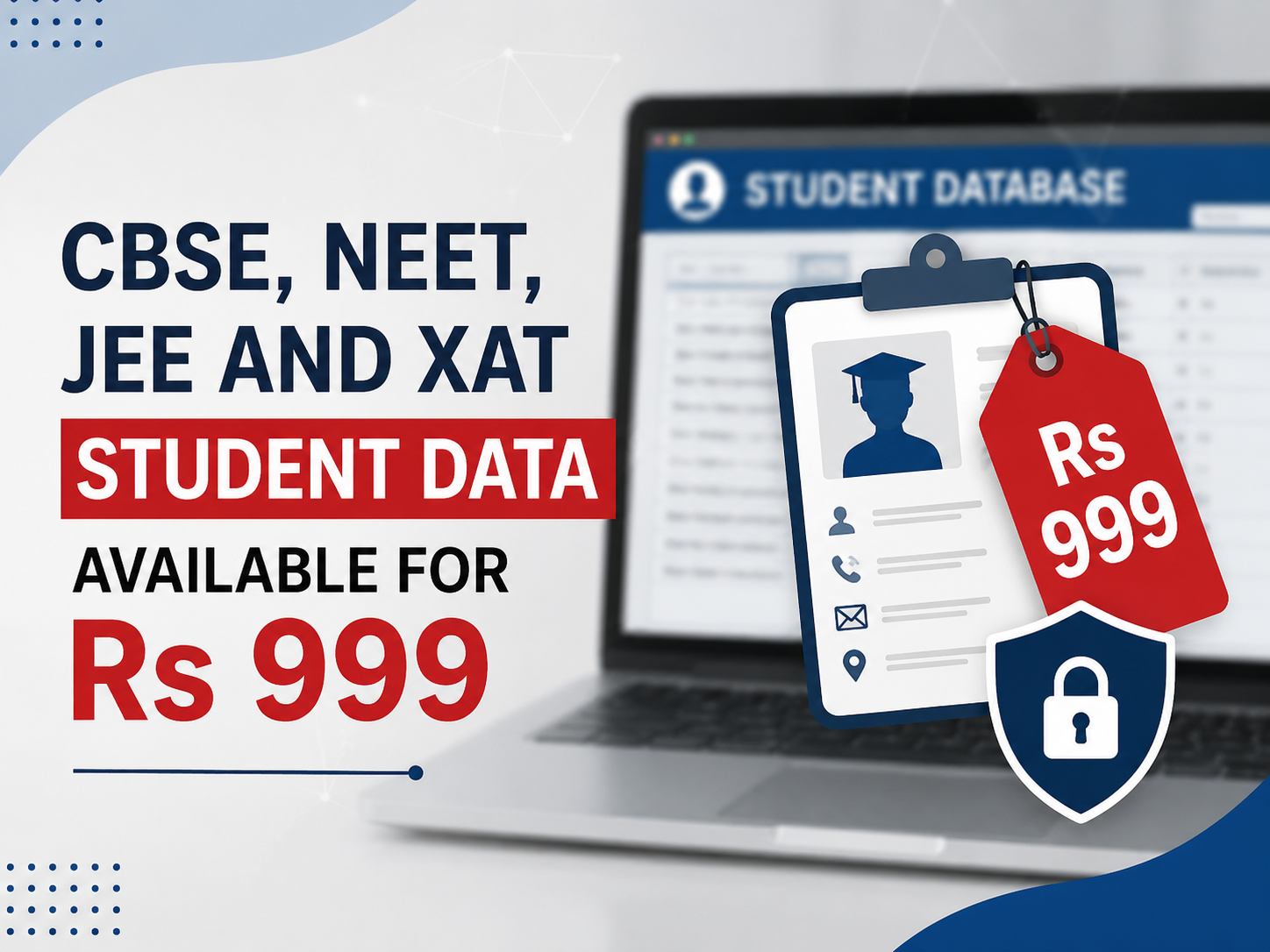
A spate of reports that databases of students appearing for CBSE examinations and major entrance tests such as NEET, JEE, and XAT are being openly marketed and sold online for as low as Rs 999 has reignited the discussion around student data privacy in India. The issue has gained prominence in the wake of recent concerns involving educational institutions and examination bodies, raising questions over the collection, storage, and eventual access to students’ information by third parties. Recent reports suggest that a broader student-data marketplace may be operating online, where personal and academic details are being offered for commercial purposes.
Why is the issue back in the spotlight?
Concerns over the safety of student data on educational platforms and testing systems have fueled the debate. Reports suggested that databases allegedly containing information of students of CBSE, NEET, JEE, MBA entrance exams, and other competitive examinations were being touted online by various data vendors.
The controversy emerges at a time when exam authorities are already under the scanner over cybersecurity practices. Recently, IIT Roorkee had to admit a data leak incident of JEE Advanced 2026 data after an alleged case of cloud storage configuration exposing candidate records and admit card documents.
What kind of information is supposedly being sold?
Many websites are claiming to sell student databases that offer access to information such as:
- Student names
- Mobile numbers
- Email IDs
- Parents details
- School details
- Academic streams
- Exam category
- Location and district data
Some websites display the pricing publicly and claim to provide databases segregated by the category of students, like CBSE students, NEET aspirants, JEE candidates, and MBA entrance exam aspirants, including XAT and CAT aspirants. In some cases, databases are sold for prices ranging from Rs 999 to a few thousand rupees, depending on the size and category of records.
JEE Advanced Data Exposure Adds To Recent Concerns
The recent concerns have been fueled by the JEE Advanced 2026 data exposure incident. As per reports, a publicly accessible cloud storage configuration related to the exam’s result infrastructure allegedly exposed approximately 1.79 lakh result records and over 1.87 lakh admit card PDFs. IIT Roorkee later accepted the incident and took corrective measures. Corrective action was taken, officials said, but cybersecurity experts say such incidents highlight the need for stronger safeguards around educational databases and candidate records.
Why Student Data Privacy Matters
Student data often contains information not only about candidates but also about their parents or guardians. If accessed or shared improperly, such data can be exploited for:
- Aggressive marketing campaigns
- Admission-related spam calls
- Phishing attempts
- Identity fraud
- Unauthorized profiling of students
Where Is the Data Coming From?
So far, there is no public evidence of examination bodies like CBSE, NTA, or XLRI selling students’ information directly. But the existence of websites selling databases neatly categorised by examination type has raised questions on how such information is procured and circulated in the first place. The controversy is a symptom of a bigger problem of India’s education ecosystem: keeping the personal information of millions of students secure in an increasingly digital world.
ALSO READ: Who Was Debosmita Paul? DU Assistant Professor Killed Inside East Delhi Apartment
Harshita is a journalist and digital content writer specializing in breaking news, current affairs, travel, education, and trending stories. She is focused on delivering accurate, timely, and engaging content with a strong emphasis on clarity and audience relevance.





