
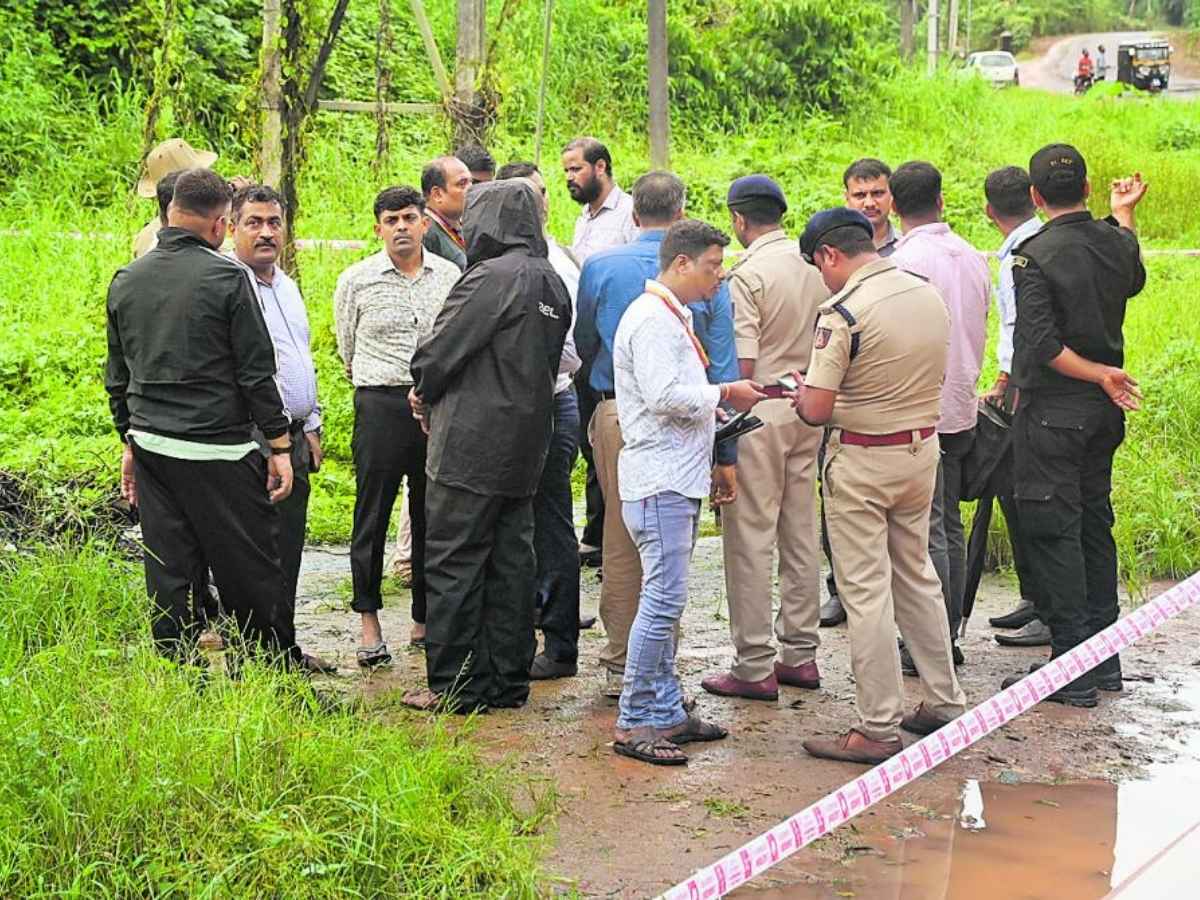

In a significant development in the ongoing investigation into the alleged mass graves near the Dharmasthala temple town, the Special Investigation Team (SIT) has recovered human bones from the sixth identified burial site in Mangaluru district, Karnataka.
Sources confirmed on Thursday that two bones were unearthed from a forested location marked as the sixth grave, leading to a heightened focus on the site and sparking renewed urgency in the probe.
According to SIT officials, the excavation has now become the focal point of the entire investigation. SIT chief DGP P. Mohanty and DIG M.N. Anuchet are en route to the site following the discovery. The site is being carefully excavated in the presence of forensic science experts, the Tehsildar, SIT officers, and the original complainant.
The unearthed bones will be documented and sent to the Forensic Science Laboratory (FSL) for further analysis, including DNA testing. Sources indicated that the whistleblower had claimed eight bodies were buried at this particular site.
Whistleblower’s Allegations Behind the Investigation
The probe was launched following explosive allegations made by an anonymous complainant who claimed he had been forced to bury multiple bodies of women and girls who were raped and murdered in Dharmasthala village. The whistleblower submitted a skull — allegedly retrieved from one of the burial sites — to the SIT, further escalating the urgency of the investigation.
On July 11, the complainant appeared before a court in Karnataka’s Mangaluru district to record his statement, in which he alleged that the bodies showed signs of sexual assault and were buried naked or without undergarments. He requested that the excavation be carried out in his presence.
These claims, including visible injuries on the bodies suggesting violent sexual acts, have triggered widespread outrage and led to demands from civil society and legal experts for a court-monitored investigation. A retired Supreme Court judge and several activists have called for a SIT probe overseen by either the Supreme Court or the High Court.
What Has Been Recovered So Far?
Although SIT chief Mohanty had earlier stated that no significant findings had been made during initial excavations, reports suggest otherwise. From the first burial site, officials reportedly recovered a torn red blouse and a PAN card belonging to a woman named Lakshmi.
The skull submitted by the whistleblower has also become a key piece of potential evidence as forensic teams continue to analyze the findings.
SIT Ramps Up Resources, Continues Digging Despite Rain
The SIT has deployed additional personnel to intensify the probe. DGP and IGP M.A. Saleem issued orders to assign nine more police officers, including a head constable, to assist the existing 20 officers already supporting the SIT.
Civic workers have been deployed to carry out the physical digging work at the excavation sites. As of Thursday, excavations continued despite intermittent rainfall. Out of the 13 burial sites marked for investigation, digging is currently active at sites numbered 6, 7, and 8.
The entire operation is being conducted under the watch of government officials, forensic experts, and the complainant, ensuring transparency and procedural adherence.
Investigation at a Crucial Juncture
With the recovery of bones at the sixth burial site, the investigation has reached a critical stage. Officials are proceeding cautiously, fully aware of the sensitivities surrounding the case, particularly due to the allegations of sexual violence and multiple murders.
The SIT’s future steps will depend on the forensic findings of the recovered remains, the DNA analysis, and further verification of the whistleblower’s claims.
The case continues to draw national attention, not only due to the horrifying nature of the allegations but also because it involves a revered Hindu pilgrimage town like Dharmasthala. Calls for justice and transparency are growing louder, as Karnataka awaits the SIT’s next findings.




