

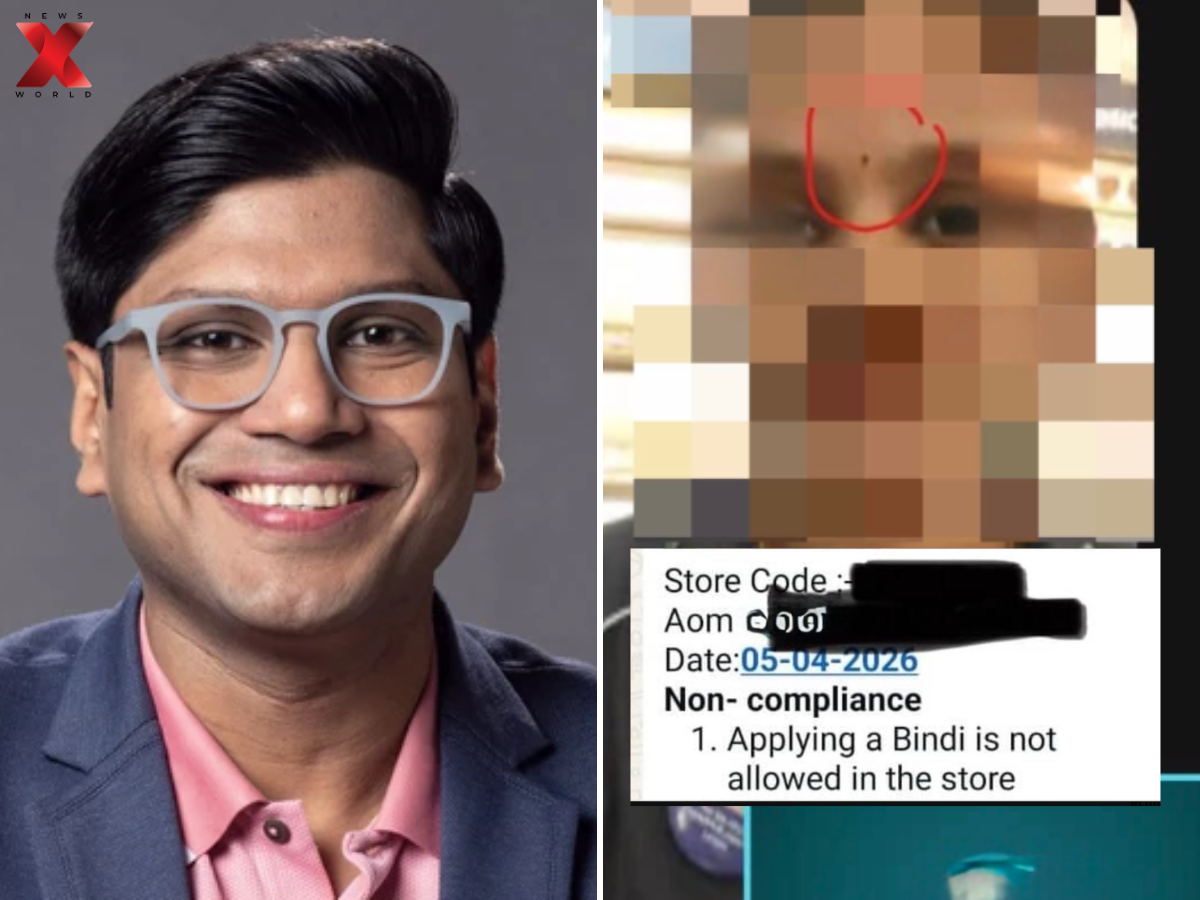
Lenskart Row: A post on social media has brought new charges against Peyush Bansal and his company Lenskart concerning an internal grooming guide. The post states that on April 5, audit pictures depict Hindu employees who supposedly were punished due to wearing bindis, and Muslim employees were specially reported on not wearing lipstick, but no comments were made about wearing a hijab.
This has caused claims of inconsistency and bias, particularly following the previous announcement by Bansal that the policy was already canceled on February 7. Nevertheless, these assertions are not confirmed and no official confirmation or retort has been made concerning the particular allegations.
More proof of @peyushbansal’s lies. Audit pics sent by employees, where Hindu employees were docked points for wearing bindi, but for M employees, the question was, ‘why no lipstick’. Nothing was said about a hijab. @Lenskart_com. This is on 5th April, but Bansal said his company… pic.twitter.com/hkMUUsk0OH
— Shefali Vaidya. 🇮🇳 (@ShefVaidya) April 19, 2026
Lenskart issues new guidelines
Lenskart, an eyewear retailer, has unveiled a new in-store style code following universal criticism of an earlier version that banned Hindu religious insignia such as bindi and tilak but did allow the hijab.
The scandal, which went viral, led to the claim of religious discrimination and the company clarified that the policy that was being circulated was old and was not in line with the present rules.
Peyush Bansal co-founded the brand, which posted the connection to the new style guide on X. They wrote: We have listened. It has been quite obvious and transparent. In the past few days, our community and customers have talked and we have heard them. Today, we are standardising our In-Store Style Guide and making it visible and publicly available.
About Lenskart
Peyush Bansal, Amit Chaudhary and Sumeet Kapahi started Lenskart in 2010. The brand was originally an online contact lens contact platform but has since expanded to become a vertically integrated, omnichannel giant, designing, manufacturing and selling its own products in its own retail stores. By 2026, Lenskart will have more than 2,500 stores in India and other foreign markets in places such as Japan, Southeast Asia and the Middle East.
With 13 years on the line, Ashish Kumar Singh loves everything when it comes to movies, music, travel and pop culture. Formerly employed at ANI, Pinkvilla, India Today and HT, Ashish has interviewed some of the top celebrities of India, including Shah Rukh Khan, Aamir Khan, Ranveer Singh, Ranbir Kapoor and Hrithik Roshan, among others. Breaking news excites him and deadlines are what he chases. Interviewing comes naturally to him. Hit him up at ashish.kumar02singh@gmail.com.





