
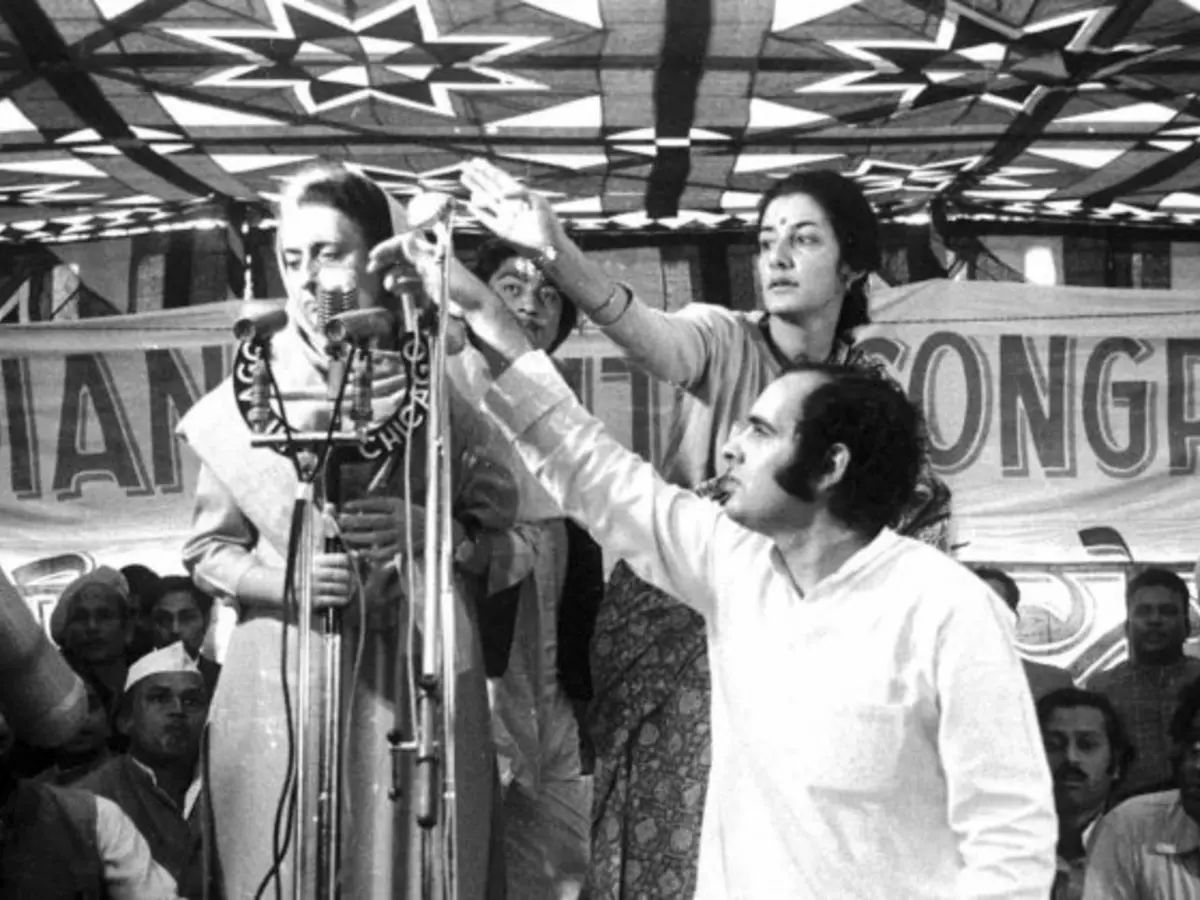

Rashtriya Swayamsevak Sangh (RSS) Sarkaryavah Dattatreya Hosabale stated that the Emergency was the biggest blow to democracy. During that period, terms like “socialism” and “secularism” were forcibly inserted into the Preamble of the Constitution. Today, we must reflect on whether these words should remain there. He also said that those who imposed the Emergency and suppressed the Constitution and democracy have never apologized. If they haven’t done so themselves, they should apologize on behalf of their ancestors. He emphasized that the Emergency was not just a misuse of power, but an attempt to crush the freedoms of citizens. He explained how voices were silenced during the Emergency, thousands were imprisoned, and many lives were permanently altered. He himself was also jailed during that period.
Union Minister of Road and Transport Nitin Gadkari said that the RSS and its ideology played a significant role in opposing the Emergency. It was through the sacrifice of RSS-inspired workers that the defense of democracy became possible. He accused Indira Gandhi of imposing the Emergency to cling to power and of altering the core spirit of the Constitution. Pressure was exerted on the press, the Parliament, and the judiciary. A climate of fear prevailed, to the extent that people could not even raise their voices for their rights. Every possible effort was made to suppress democratic voices. Gadkari stressed that it is important for the present generation to be made aware of the truth of that time.
Ram Bahadur Rai, Chairman of the Indira Gandhi National Centre for the Arts and Group Editor of Hindusthan Samachar, said that the Emergency should not be viewed merely as a political event, but its truth, reality, and conclusion must be deeply understood. He said the truth was that a frightened woman (Indira Gandhi) was trying to instill fear across the nation. The reality was that a parallel, controlled, and repressive regime was established alongside the democratic system. Ultimately, the people rejected this dictatorial setup and restored democracy.
Madhya Pradesh Deputy Chief Minister Rajendra Shukla described the Emergency as a dark chapter in Indian democracy. He said that June 25 marked a political crime in the country, which deeply hurt democratic values. He stressed the importance of making the new generation aware of the truths and events of that era, as it provides an opportunity to make democracy more robust and informed in the future.
At the “Samvidhan Hatya Divas” program, Arvind Mardikar, Chairman of Hindusthan Samachar, spoke about the agency’s history. He noted the contributions of great personalities like Vinayak Damodar Savarkar in the agency’s founding. During the Emergency, the agency suffered heavily and was forced to suspend its operations. It was only after the intervention of the High Court that operations could resume. He mentioned that RSS Sarsanghchalak Mohan Bhagwat once said that Hindusthan Samachar runs with the spirit of the volunteers.
On the 50th anniversary of the Emergency, a program was organized today at Dr. Ambedkar International Centre in Delhi under the joint auspices of the Ministry of Culture’s Indira Gandhi National Centre for the Arts (IGNCA), Ambedkar International Centre, and the multilingual dialogue organisation Hindusthan Samachar.
RSS Sarkaryavah Dattatreya Hosabale and Union Road Transport Minister Nitin Gadkari were the chief guests at the “Constitution Murder Day” program. Also present were IGNCA Chairman and Hindusthan Samachar Group Editor Ram Bahadur Rai, and National Swabhiman Movement Founder-President K.N. Govindacharya. During the event at Dr. Ambedkar International Centre, an exhibition and short film focused on the Emergency were presented under the aegis of IGNCA. The exhibition was inaugurated by Sarkaryavah Dattatreya Hosabale. It gave youth a chance to learn and understand the political and social realities of that time.
ALSO READ: Who Was the President of India During the 1975 Emergency and What Was His Role?




